
The interior minister says public opinion should determine whether Pakistan creates additional provinces, but a referendum alone cannot amend the Constitution. The debate raises a more fundamental question: can administrative restructuring improve governance without meaningful devolution of political, administrative and financial authority?
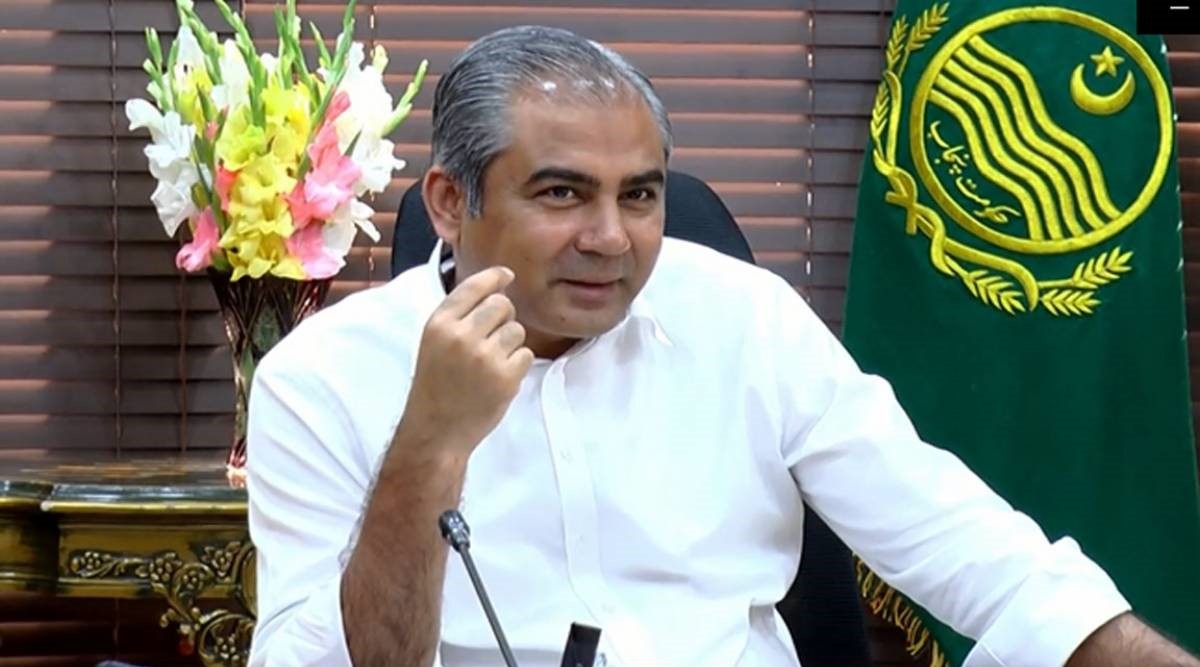
LAHORE: Pakistan’s debate over the creation of new provinces has entered a new phase after Interior Minister Mohsin Naqvi proposed holding a referendum to determine public opinion on the issue, arguing that a direct public mandate could help resolve a politically contentious question that has repeatedly resurfaced without producing a consensus.
Speaking to journalists during a visit to the National Cyber Crime Investigation Agency in Lahore on Thursday, Naqvi urged political parties to consult the public rather than allow their differences to keep the debate unresolved. He said that if voters supported the creation of new provinces, political parties should respect their decision, while a negative public verdict should equally be accepted.
The minister also assured political parties, particularly those within the governing coalition, that no decision would be taken against their wishes and that all stakeholders would be consulted before any arrangement was pursued.
The proposal comes after months of renewed discussion about Pakistan’s administrative structure. Naqvi has repeatedly argued that the existing governance system requires a fundamental reset, while Defence Minister Khawaja Asif has suggested that the country could have as many as 12 provinces if new units were established on administrative rather than linguistic, ethnic or political grounds.
The debate has also exposed differences among political parties. The Pakistan Peoples Party has strongly opposed proposals to divide Sindh, while its chairman, Bilawal Bhutto-Zardari, has called for a broader political reset and cooperation among political forces to address the country’s economic and governance challenges.
Naqvi said he was broadly aligned with Bilawal’s call for political reconciliation, adding that his own proposal extended beyond political arrangements to a wider restructuring of the system.
However, the referendum proposal raises questions that go beyond public opinion. Pakistan must determine what kind of administrative restructuring it needs, what constitutional process would be required, and whether the creation of additional provinces would actually improve the delivery of public services.
Referendum and the constitutional question
Naqvi has presented a referendum as a democratic mechanism through which the public could express its preference on the creation of new provinces. He referred to survey reports that, according to him, indicate public support for additional administrative units.
But a referendum and a constitutional amendment are two different processes.
Under Article 239 of Pakistan’s Constitution, an amendment must secure the support of not less than two-thirds of the total membership of each House of Parliament. Where an amendment changes the limits of a province, it must also receive approval from the relevant Provincial Assembly by a two-thirds majority of its total membership.
This means that even if a referendum were held and produced a clear public preference for new provinces, the result would not, by itself, establish those provinces. The constitutional process would still have to be completed through Parliament and the relevant provincial legislature.
The distinction is important because the creation of provinces involves more than a change in administrative boundaries. It affects representation in Parliament, provincial legislatures, the distribution of public resources, institutional arrangements, civil service structures and the relationship between the federation and its constituent units.
A referendum could provide political guidance and help establish public sentiment, but its scope, electorate, questions and legal consequences would need to be clearly defined. It would also be necessary to determine whether the public was being asked to endorse the general principle of creating more provinces or specific proposals involving particular geographical boundaries.
Without clarity on these matters, a referendum could generate another political dispute rather than settle the existing one.
The governance argument behind new provinces
Supporters of administrative restructuring argue that Pakistan’s existing provincial units have become too large to manage effectively, particularly in view of population growth, geographical diversity and unequal access to public services.
The argument is that smaller provinces could bring governments closer to citizens, improve administrative responsiveness and make elected representatives more directly accountable to their populations.
Khawaja Asif has maintained that the creation of additional provinces should be based on administrative requirements rather than ethnic or linguistic considerations. He has argued that a growing population requires smaller units capable of delivering services more efficiently.
Naqvi has similarly questioned the performance of the existing governance structure, suggesting that the current system requires a broader institutional reset.
These arguments point towards a genuine public policy question: whether Pakistan’s present administrative arrangements are adequate for governing a population whose needs, economic conditions and development requirements vary significantly across regions.
However, the relationship between the size of a province and the quality of governance is not automatic. Smaller provinces may improve administrative proximity, but they can also create additional layers of government, increase expenditure and reproduce existing institutional weaknesses at a different scale.
The creation of more provincial capitals, departments, legislatures and administrative offices would involve substantial financial and organisational commitments. Unless these arrangements are accompanied by clear improvements in public services and institutional accountability, administrative division alone may not deliver the promised benefits.
The central issue, therefore, is not simply how many provinces Pakistan should have, but how authority should be organised and exercised at every level of government.
Political resistance and the question of consensus
The political difficulties surrounding the proposal are already visible.
The PPP has strongly opposed the division of Sindh, making the question particularly sensitive for the governing coalition. Bilawal Bhutto-Zardari has previously argued that the debate should be taken to Parliament, indicating that constitutional and political deliberation must precede any move towards restructuring.
Naqvi has sought to address these concerns by assuring political parties that no decision would be imposed on them. He said that parties opposing the creation of new provinces should also present alternative proposals for consideration by the public.
His remarks suggest that the government would need to secure political consensus before proceeding. Yet consensus cannot be reduced to agreement among federal ministers or coalition partners. Any restructuring involving provincial boundaries would require the participation of the affected provinces and their elected representatives.
There is also a broader question of political representation. Provinces are not merely administrative territories; they are constitutional units with elected governments, legislative authority and a defined place in Pakistan’s federal structure.
Any proposal to alter them must therefore address concerns about political representation, regional identity, resource distribution and the constitutional balance between the federation and the provinces.
The debate will remain incomplete if it focuses exclusively on administrative efficiency while overlooking these constitutional and political dimensions.
New provinces or empowered local governments?
A particularly important dimension of the discussion is the relationship between provincial restructuring and local government.
Pakistan’s governance challenges are not confined to the distance between provincial capitals and remote districts. They also arise from the concentration of administrative, political and financial authority at higher levels of government.
Even within smaller provinces, decision-making may remain centralised if elected local governments lack control over their administrative structures, development priorities and financial resources.
Article 140-A of the Constitution requires each province to establish a local government system and devolve political, administrative and financial responsibility and authority to elected local government representatives.
This constitutional principle makes local government an essential part of any serious discussion about administrative reform.
Creating additional provinces without empowering elected local governments could simply shift the centre of authority from one provincial capital to another. Citizens might gain a geographically closer provincial administration without acquiring meaningful control over decisions affecting their neighbourhoods, towns and districts.
A functional system would require elected local governments with clearly defined responsibilities, predictable financial resources, administrative autonomy and mechanisms of accountability.
The creation of new provinces and the strengthening of local governments are not necessarily competing proposals. They can be complementary elements of a wider decentralisation framework. But the distinction between administrative restructuring and genuine devolution must remain clear.
Corruption and the wider institutional crisis
During the same interaction with journalists, Naqvi acknowledged that corruption remained widespread across Pakistan and said that allegations of wrongdoing should be investigated rather than dismissed.
His remarks came amid controversy surrounding allegations made by PML-Q federal minister Chaudhry Salik Hussain against the Punjab government. PML-N leaders, including members of the provincial leadership, had indirectly suggested that Naqvi was behind Salik’s criticism.
The interior minister did not accept that corruption was confined to any particular province or institution. Instead, he described it as a countrywide problem requiring recognition and action.
The acknowledgement is relevant to the wider debate about administrative restructuring. Corruption, weak accountability and poor public service delivery cannot be addressed merely by changing territorial boundaries.
Institutional reform requires transparent public procurement, professional administration, effective audit systems, independent oversight and clear responsibility for the use of public funds. Without these safeguards, additional administrative units could reproduce existing patterns of inefficiency and discretionary power.
The question is therefore whether the proposed restructuring would change the way public institutions function or simply create more offices within the same governance culture.
Political reset and the unresolved question of Imran Khan
Naqvi also responded to questions about Bilawal Bhutto-Zardari’s call for a political reset, saying the PPP chairman’s proposal was broadly consistent with his own view that the country needed wider systemic changes.
The comments come amid continuing political tensions between the government and opposition. Bilawal has called for political forces to put aside their differences and cooperate in addressing the economic crisis, while Naqvi has argued that the need for reform extends beyond political arrangements.
Asked about speculation surrounding a possible deal involving PTI founder Imran Khan, the interior minister dismissed reports of behind-the-scenes negotiations. He said Khan and his family members would receive whatever relief the courts granted under the law, while other matters remained unchanged.
Naqvi also defended a Capital Development Authority notice concerning the residence of JUI-F chief Maulana Fazlur Rehman, saying the enforcement campaign had been under way for months and was not directed against a particular individual.
These issues illustrate the wider political environment in which the debate over new provinces is unfolding. Any major constitutional restructuring would require a degree of political cooperation that remains difficult to achieve amid continuing disputes between the government and opposition.
From territorial restructuring to institutional reform
The proposal for a referendum has brought the question of new provinces back into national debate, but the country needs a more comprehensive discussion than a simple choice between retaining the existing structure and creating additional units.
Pakistan must first identify the governance failures that restructuring is expected to address. These include unequal access to public services, excessive centralisation, weak local governments, administrative delays, uneven development and limited accountability.
It must then establish whether new provinces would provide a practical solution to these problems and how their creation would affect public expenditure, federal transfers, provincial revenues and political representation.
A credible reform framework should also explain how provincial governments would share authority with elected local governments. Without such an arrangement, administrative restructuring risks changing the geography of government without changing the distribution of power.
Naqvi’s proposal has placed public opinion at the centre of the debate. That is an important starting point for democratic deliberation, but public consultation must be accompanied by constitutional clarity, institutional planning and political consensus.
Ultimately, the question is not whether Pakistan should have four provinces, twelve provinces or some other number. It is whether the country’s governance structure can ensure that authority is exercised closer to citizens, public resources are used transparently and elected institutions are held accountable for delivering essential services.
A referendum may help establish what people want. Constitutional procedures will determine how change can lawfully take place. But only meaningful institutional reform can determine whether that change improves the lives of citizens.