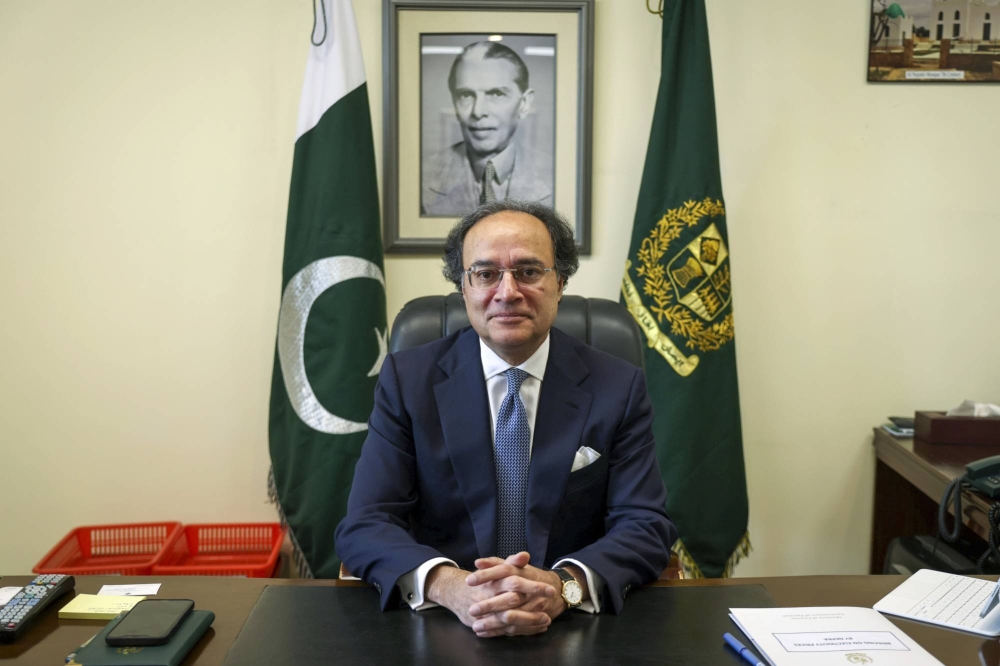
NEW YORK: Finance Minister Muhammad Aurangzeb has discussed Pakistan International Airlines’ fleet modernisation with Boeing Global President Dr Brendan Nelson, including the acquisition of new aircraft, earlier delivery options and financing arrangements.
The meeting took place during Aurangzeb’s visit to New York for the 81st session of the United Nations General Assembly.
The two sides reviewed opportunities for cooperation in Pakistan’s aviation sector, with particular attention to PIA’s plans to expand and modernise its fleet.
Boeing to Submit Revised Aircraft Acquisition Proposal
Aurangzeb welcomed Boeing’s confirmation that it would submit a revised proposal to PIA for the purchase of new aircraft.
The discussions also covered the possibility of securing earlier delivery slots and arranging aircraft leases to meet the airline’s requirements while awaiting new planes.
Financing assistance from the US Export-Import Bank was another important subject of the meeting.
The two sides discussed engine procurement, spare parts, aircraft maintenance and the restoration of grounded aircraft to operational service.
The finance minister briefed Boeing’s leadership on PIA’s privatisation process and the government’s plans to outsource the management of major airports.
He also acknowledged Boeing’s cooperation in strengthening aviation safety, supporting regulatory engagement and facilitating efforts to restore direct flights between Pakistan and the United States.
Aurangzeb emphasised Pakistan’s long-term potential for growth in the aviation sector.
Finance Minister Raises Slow Progress of Hepatitis C Elimination Programme
In a separate meeting with a representative of Abbott’s Pharmaceuticals Division, Aurangzeb reviewed the implementation of Pakistan’s Hepatitis C elimination programme and discussed broader challenges facing the pharmaceutical industry.
The finance minister expressed concern over delays in the programme, noting that only about 100,000 of the approximately three million diagnostic tests procured had been used.
He identified frequent changes in leadership, weaknesses in project management and limited public awareness as factors contributing to the slow progress.
Aurangzeb appreciated Abbott’s technical assistance, particularly its experience in supporting Egypt’s large-scale Hepatitis C screening initiative.
The meeting also addressed improvements in the regulatory capacity of the Drug Regulatory Authority of Pakistan, diversification of pharmaceutical exports and Abbott’s plans relating to cancer treatment.
The participants discussed delays in resolving hardship cases involving medicine prices.
Aurangzeb acknowledged the need to maintain a balance between affordable medicines, commercial sustainability and uninterrupted supply.
He assured Abbott’s representative that he would raise the programme’s implementation difficulties with the relevant authorities in Pakistan to accelerate progress.
Aurangzeb Calls for Easier Access to International Climate Finance
The finance minister also participated in the United Nations-hosted Solutions Dialogue on Climate Finance, where he highlighted Pakistan’s vulnerability to climate change and the need for stronger national disaster preparedness.
He stressed that governments must establish credible climate adaptation and disaster-response frameworks, develop effective early-warning systems and prepare viable projects capable of attracting financing.
Aurangzeb said climate resilience should be supported by domestic macroeconomic stability and sufficient fiscal and external financial buffers.
He emphasised that international climate assistance should supplement, rather than replace, resources mobilised within vulnerable countries.
The finance minister outlined Pakistan’s approach to climate financing, which combines domestic resources with support from the World Bank and the International Monetary Fund’s Resilience and Sustainability Facility.
He also highlighted opportunities to raise funds through green financial instruments and partnerships with private investors.
Aurangzeb expressed concern over delays in making the Loss and Damage Fund fully operational.
He urged the Green Climate Fund and other international financial institutions to simplify accreditation, project approval and fund disbursement procedures so that climate-vulnerable countries could obtain financing more efficiently.