
Prime Minister Shehbaz Sharif said Tuesday that water, described as the region’s lifeblood, must never be weaponised or used as a tool of political coercion, calling terrorism one of the gravest threats facing the region.
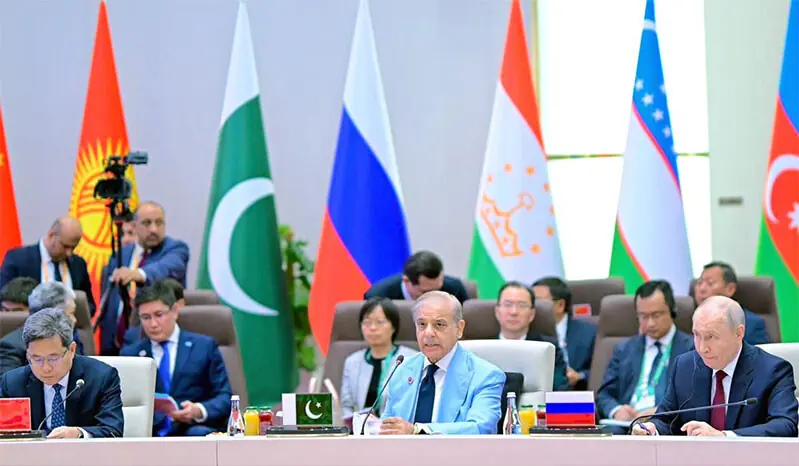
Addressing the Shanghai Cooperation Organisation (SCO) Council of Heads of States meeting in Bishkek, Kyrgyzstan, Sharif said the region cannot achieve its full potential without lasting peace. Without naming India directly, he called for the Indus Waters Treaty (IWT) to be honoured. “Water is the lifeblood of our region. It sustains millions of lives, nourishes our land and secures the very future of our coming generations,” he said, stressing that treaties governing shared waters are binding international commitments, not matters of political convenience, and must be respected in both letter and spirit.
His remarks came a day after the Permanent Court of Arbitration ordered India to uphold the IWT and suspend work on a hydroelectric project in occupied Kashmir.
‘Terrorism One of the Gravest Threats’
On terrorism, Sharif said it remains one of the gravest threats affecting the region in its various forms. As chair of the SCO Regional Anti-Terrorist Structure, he said Pakistan has worked actively to strengthen regional counter-terrorism cooperation, noting that few nations have fought terrorism as resolutely, having lost more than 90,000 lives and suffered economic losses exceeding $150 billion over the past two and a half decades.
He said Pakistan wants a peaceful, stable Afghanistan, but stressed that lasting peace will remain out of reach so long as terrorists continue using Afghan soil to target Pakistani and other civilians. He also referenced Pakistan’s mediation efforts in the US-Iran war before outlining the country’s plans as incoming SCO chair. Sharif was received by the Kyrgyz president upon arrival and later joined other world leaders for a group photo.
SCO Chair
Pakistan has assumed the SCO Council of Heads of States chairmanship for 2026-27, with next year’s summit to be hosted in Islamabad. Sharif said Pakistan’s chairmanship would prioritise sectors including IT and AI, energy development, poverty reduction, disaster management, health, culture, and sports, under the theme “Turning vision into action, connectivity, innovation and shared prosperity.”
As part of this agenda, Pakistan proposed establishing an SCO framework for sovereign AI infrastructure and governance, aimed at promoting responsible, inclusive AI development while ensuring no member state is left behind. Sharif reiterated his longstanding view that regional connectivity is key to prosperity, calling it now a strategic necessity rather than a choice, and noting that the recent regional crisis has underscored the importance of diversified transport networks, secure energy corridors, and resilient supply chains for collective security.
He said the China-Pakistan Economic Corridor (CPEC) continues to serve as a gateway linking regional economies to the Arabian Sea, and called for full implementation of the SCO Development Strategy through 2035, describing the establishment of an SCO Development Bank as a critical step in that effort. As permanent chair of the SCO’s Special Working Group on Poverty Reduction, he pledged Pakistan would continue strengthening social protection and promoting inclusive, sustainable development across the region.
‘Intensifying Geopolitical Tensions’
Sharif said today’s global landscape is marked by intensifying geopolitical tensions, a fragmenting global economy, escalating climate crises, and rapid technological change, describing the SCO as representing a collective resolve to navigate these challenges together. He noted that Pakistan and the wider international community have borne heavy economic costs from the closure of critical energy supply routes, an apparent reference to the Strait of Hormuz, and said Pakistan has consistently acted as an honest, sincere mediator throughout the crisis.
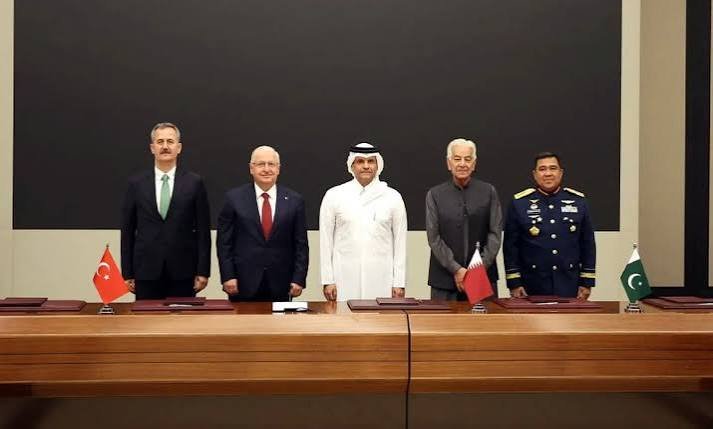
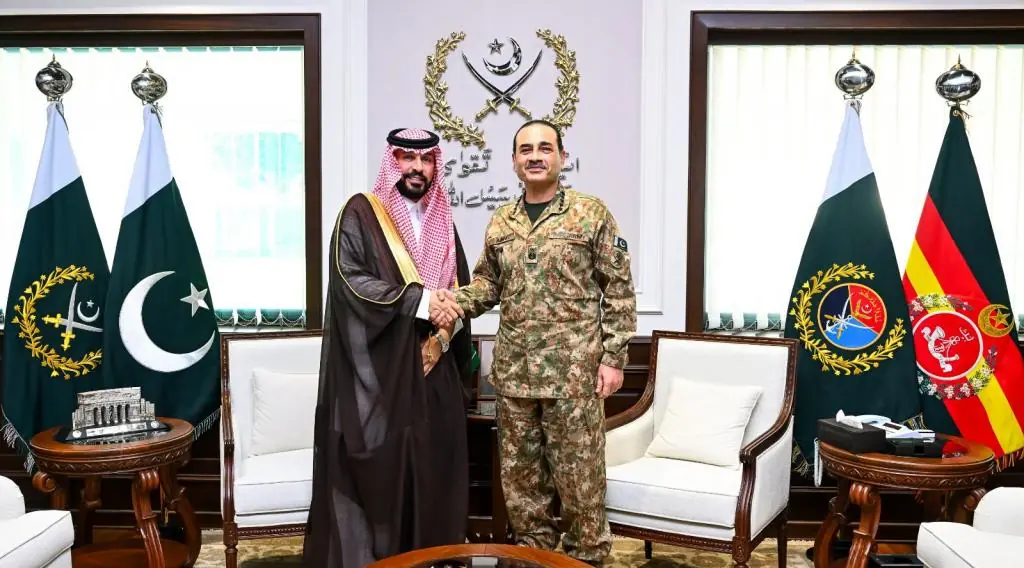
On the Makkah Joint Defence Agreement, Sharif reiterated that the pact is fundamentally defensive in nature, neither directed against any state nor intended to create confrontation or division.
UN Reforms
Addressing the expanded SCO Plus summit, Sharif said Pakistan has remained fully committed to the UN Charter over the past eight decades, describing the rise of a multipolar world as an opportunity to build a more equitable, democratic, and just international system. He said the UN urgently needs reform to become more accountable and responsive.
On the summit’s sidelines, Sharif met Belarusian President Aleksandr Lukashenko. According to a statement from the Prime Minister’s Office, both leaders pledged to boost cooperation in trade, industry, agriculture, IT, and vocational training, with Sharif extending an invitation for Lukashenko to visit Pakistan.