
Hafeez Ahmed Advocate
When journalist Anwar Hussain Samra published his report on the decoration of the Chief Secretary House lawn and the Civil Secretariat in Lahore, the Government of Punjab responded swiftly. The allegations, it said, were fabricated. But the government’s denial, however loud, cannot silence the questions the report has raised. This is not merely a story about flowers and fountains. It is a story about who governs Punjab, and in whose interest.
Let us begin with what is being disputed. The central issue is one of public expenditure. No accusation of personal corruption has been formally levelled. The question is simpler, and in some ways more damning: was this money spent? And if so, who approved it, and under what process? Governments build things. That is unremarkable. What is remarkable is when a bureaucracy builds things for itself, with public funds, while the public it supposedly serves goes without.
The Civil Secretariat itself tells this story visually. It has been revamped in a manner that evokes a Mughal durbar. Ornate, vast, majestic. And yet, in the very process of this beautification, several departments have been relocated away from the building. What remains is largely S&GAD, the Home Department, and the Finance Department, along with the Commissioner’s Office in Lahore. One must ask the honest question: does a building require the grandeur of a royal court simply to house three departments and a divisional office? If the answer is no, then the expenditure demands justification that has not yet been provided.
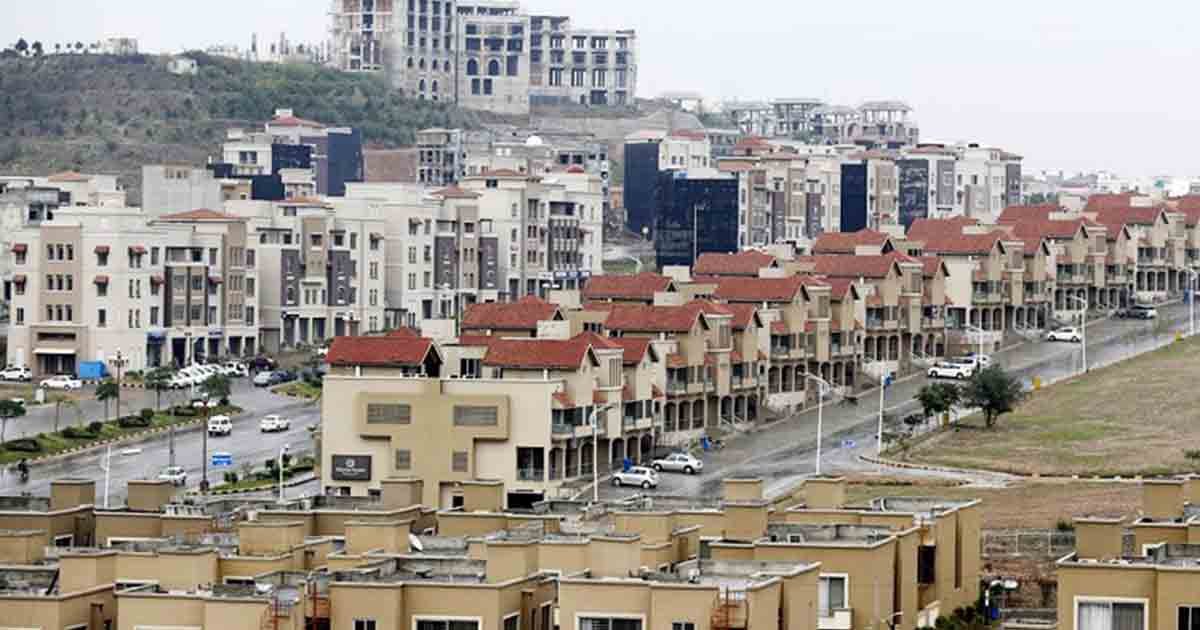
The Civil Secretariat controversy is not an isolated incident. It sits within a broader pattern that has defined the past three and a half years of Punjab’s administrative culture. Houses have been constructed in DHA in the style of Government Officers Residences. Luxury vehicles have been procured. A new transport policy has been formulated that invites condemnation. GOR complexes across the province have been refurbished. Gymkhana Clubs have been renovated. Even the Punjab Civil Officers’ Mess, a club that the bureaucracy effectively owns and manages for itself, has been revamped. A system spending public money on its own amenities, and then adjudicating its own propriety, is not a system that inspires confidence.
One Supreme Court ruling after another has affirmed that public expenditure must be free of unnecessary extravagance. Punjab’s development budget exceeds one trillion rupees. This is not abstract money. It is the savings, the taxes, and the deferred consumption of a people, a third of whom live in poverty. In this province, over ten million children are not in school. Institutions of public education are being handed off to private operators under the language of reform. Against this backdrop, the construction of elegant residential quarters in DHA for the civil service is not a neutral administrative decision. It is a political act. It tells the people where they stand in the priorities of the state.
The response from the Government of Punjab has been curious. Rather than the Chief Secretary addressing these allegations in a personal capacity, the government itself stepped forward to defend him. This conflation of the institution with the individual is itself an admission of something. It suggests that the boundaries between the political executive and the permanent bureaucracy have become uncomfortably blurred. The Chief Secretary has served through both the caretaker government and the current elected administration. Throughout this period, the expansion of bureaucratic perks and privileges has continued without interruption. That continuity is not incidental. It reflects a structural reality: the bureaucracy, in Punjab, has learnt to perpetuate itself regardless of who nominally holds power.
The elected institutions of Punjab have a responsibility here that they have not discharged. The Standing Committee on S&GAD exists for precisely this purpose. The Public Accounts Committee has the mandate to scrutinize public expenditure. Yet neither body appears to have meaningfully engaged with these questions. The Punjab Assembly’s silence on this matter is not neutrality. It is a failure of oversight.
What is required is not a political skirmish or a media war between journalists and government spokesmen. What is required is an independent commission with the authority and the autonomy to review developmental projects undertaken across Punjab. Such a commission should examine whether projects were appropriate, whether they were approved through merit-based processes, whether they were free from conflict of interest, and whether the repeated appearance of the same names in multiple projects reflects procurement integrity or something rather less wholesome.
This is the essence of the matter. Governance is the right and the responsibility of the political executive. The bureaucracy exists to implement policy, not to formulate its own privileges and then defend them through institutional capture. When a civil service begins to govern itself, to design its own accommodations, procure its own vehicles, renovate its own clubs, and silence its own critics through official denial, it has crossed a line that the Constitution does not permit it to cross.
The people of Punjab deserve an accounting. The politicians of Punjab owe them one.