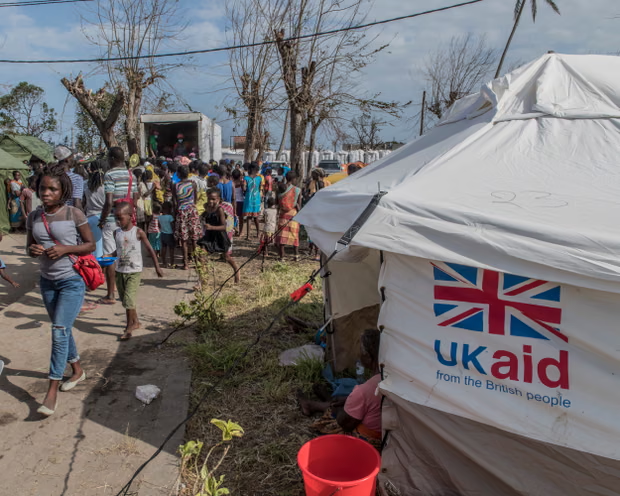

New Foreign Office figures show that Labour’s aid cuts will hit some African countries far harder than previously understood, with bilateral support to certain nations set to fall by as much as 90% over the next three years.
The department’s annual report, released this week, offers the first detailed country-by-country breakdown of how the shrinking aid budget will play out. According to analysis by Bond, the umbrella group for development charities, Mozambique and Malawi face cuts of 90% by 2029, Rwanda and Sierra Leone will see reductions of 80%, and Somalia will lose nearly half of its support.
Bond’s chief executive, Romilly Greenhill, warned that the government is walking away from communities caught between conflict and the climate crisis and risks tipping vulnerable populations into deeper poverty and instability across countries, including Ethiopia, Uganda, and the others named in the report.
The reductions trace back to Keir Starmer’s decision last year to divert aid spending toward defense, a move that prompted development minister Anneliese Dodds to resign in protest. Since then, labor’s strategy has leaned toward funneling money through multilateral institutions like the World Bank rather than direct country-to-country support, on the argument that it stretches limited resources further. Foreign secretary Yvette Cooper told parliament in March that Britain would move away from high levels of grant-based aid in many countries while still working through what she called modernized partnerships.
Aid groups aren’t convinced the shift makes up for the shortfall. Save the Children’s director of global outcomes, Lisa Wise, said the funding choices amount to a signal about the kind of role Britain wants to play on the world stage, at a moment when the countries losing support are often the ones needing it most.
Responsibility for what comes next will land with incoming prime minister Andy Burnham’s choice of foreign secretary, with current energy secretary Ed Miliband widely seen as a likely pick. A number of Labour MPs have already pressed Burnham to reassert the party’s development credentials, including by charting a path back toward the long-standing 0.7% of national income target for overseas aid.
With Britain set to chair the G20 next year, Greenhill argued the platform should be used to push for global reforms that tackle poverty and inequality among the world’s most marginalized communities.
Development minister Jenny Chapman defended the approach, pointing to how conflict in the Middle East has pushed up food and fertilizer prices this year and how the Ebola outbreak that began in the Democratic Republic of Congo underscores why global health security still matters. She said the government was not turning away from these challenges but trying to make every pound of development spending count, for people facing the toughest crises and for taxpayers at home.