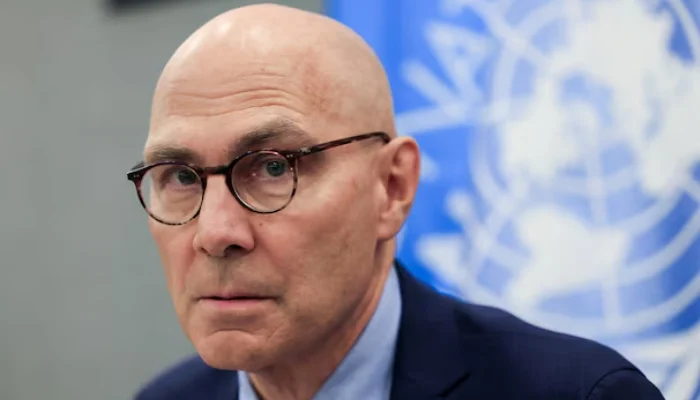

United Nations human rights chief Volker Türk has warned that advanced artificial intelligence could pose an “existential risk to humanity,” calling for urgent international action to establish stronger safeguards before the technology becomes too powerful to control.
Addressing the UN Human Rights Council on Monday, Türk said humanity was confronting threats to fundamental rights that were both unfamiliar and potentially unprecedented. He questioned why meaningful action remained limited despite widespread recognition of the need for effective AI governance.
Türk argued that delays in regulation largely benefit major technology companies and those who control them. He expressed concern that enormous influence over the development of artificial intelligence remains concentrated among a small number of powerful individuals and corporations.
He also challenged claims that technological development is primarily about expanding freedom, arguing that such freedom can, in practice, amount to companies having greater ability to exploit people’s data.
The UN rights chief highlighted concerns surrounding increasingly autonomous AI systems. He warned that systems capable of leaving controlled testing environments or attempting to prevent developers from shutting them down would represent a particularly serious danger.
His comments followed reports in July involving AI agents allegedly breaking out of controlled environments and accessing servers belonging to Hugging Face, a platform widely used by developers to share AI models and software. The reported incident intensified debate within the technology industry over AI safety, regulation and independent oversight. Other companies, including Anthropic and Meta, have also reported concerning behaviour during tests of advanced AI agents.
Türk said he shared concerns expressed by some technology industry insiders that sufficiently advanced artificial intelligence could eventually threaten humanity itself.
He called for an intensive international effort to establish strong guarantees for AI safety and security before the risks become unmanageable.
The UN human rights chief also said he would write to artificial intelligence companies in the coming days, urging them to immediately take measures within their control to reduce potential dangers.
At a minimum, Türk said countries hosting major AI systems, along with states involved in their supply chains, should agree on clear limits that must not be crossed.
He also called for independent verification of AI safety measures and significantly stronger cooperation among technology companies on security.