
The United States has launched a fresh wave of air strikes against Iran for a ninth consecutive night, with US Central Command saying the operation is aimed at continuing to degrade Iranian military capabilities used to threaten commercial shipping in the Strait of Hormuz. The renewed bombardment came as Washington confirmed the death of another American service member, killed in northern Iraq during the controlled detonation of unexploded ordnance from a downed Iranian drone, bringing the US military’s total losses in the conflict to 17.
CENTCOM said the latest casualty adds to a grim tally from recent days, with a second service member injured and human remains recovered in Jordan that may belong to a soldier previously listed as missing, following Friday’s Iranian retaliatory strike there. Despite the mounting toll, the command shows little sign of pulling back, continuing both its strikes on Iranian targets and its naval blockade on Iranian imports. Defense Secretary Pete Hegseth said the losses have only hardened US military resolve, even as pressure builds at home for the administration to bring the war to a close. President Trump, returning to Washington from the World Cup final, told reporters the US had hit Iran “very hard” again in honor of the American service members killed, adding that those lost were fighting so Iran could never obtain a nuclear weapon.
The war’s reach is widening beyond the battlefield. The US embassy in Bahrain warned Americans of a possible Iranian attempt to target locations in central Manama, urging vigilance and immediate shelter if sirens or explosions are heard. In Kuwait, officials say Iranian strikes have damaged power, oil, and water infrastructure, including a desalination plant the country depends on for its water supply, a development observers in the region describe as raising the risk of a humanitarian crisis layered on top of the military one. The concern echoes an earlier flashpoint in March, when threats to strike civilian facilities on both sides sparked regional alarm before being walked back.
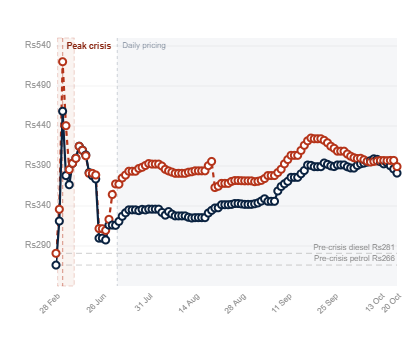
Energy markets registered the escalation swiftly. Brent crude jumped more than 3% in early Monday trading, rising $2.75 to $90.85 a barrel, while US West Texas Intermediate crude climbed a similar margin to settle at $85.05. The move follows Tehran’s decision to suspend its commitments under an interim peace agreement and effectively close the strait, a chokepoint that carries roughly a fifth of the world’s oil and liquefied natural gas supply. Analysts expect continued volatility as traders price in supply risk and rising insurance costs for vessels transiting the Gulf.
Elsewhere in the region, the UK Maritime Trade Operations agency reported a vessel on fire roughly eight nautical miles northwest of Kumzar, Oman, with the cause still unverified. In Washington, a visit by Lebanese President Michel Aoun was described by a former US diplomat as unlikely to resolve much beyond a commitment to keep talking, given the difficulty of implementing a memorandum of understanding that requires the Lebanese army to disarm Hezbollah as a precondition for Israeli withdrawal, a step considered highly volatile domestically. A voluntary handover of weapons by Hezbollah in exchange for state guarantees remains theoretically possible, though seen as a remote prospect for now.
Overnight, the Tasnim news agency reported explosions in five Iranian cities, including Tabriz and two major ports, shortly after CENTCOM confirmed the new wave of strikes had begun. US forces also redirected six commercial vessels and disabled another as part of the ongoing blockade, while Kuwait’s government formally accused Iran of causing fires and serious damage to its infrastructure, drawing condemnation from other Gulf states.