
Tariq Mahmood Awan
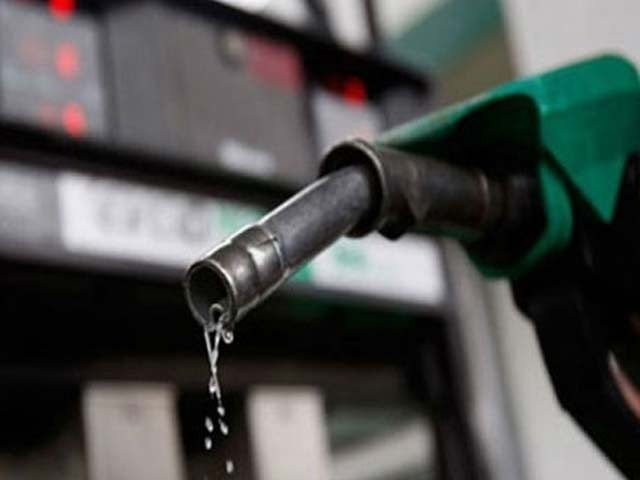
The war in the Middle East was never going to stay in the Middle East. Wars of this magnitude, fought over terrain that sits astride the world’s most critical energy arteries, have a way of reaching into distant economies with extraordinary speed. Pakistan has now felt that reach. When the United States and Israel struck Iran, and Tehran responded by targeting American bases across the Gulf while menacing traffic through the Strait of Hormuz, the consequences for a country as energy-dependent as Pakistan became not merely probable but inevitable. What followed was a government decision to raise petrol and high-speed diesel prices by Rs55 per litre: petrol climbing from Rs266.17 to Rs321.17, and HSD from Rs280.86 to Rs335.86. It was the steepest single adjustment in recent memory, and it landed on a population that was already struggling to breathe.
Critics have not been silent. They argue the government moved too early, that Pakistan reportedly held fuel stocks sufficient for twenty to twenty-five days and could have waited before passing on the full weight of international price movements to consumers. They argue, further, that the sheer scale of the hike was disproportionate, and that the timing was suspicious: the previous fortnightly revision had come on February 28, yet this increase arrived just a week later, effectively giving oil marketing companies windfall profits on inventories they had purchased at lower international prices. These are not trivial objections. They speak to a government that is either poorly coordinated or, at minimum, indifferent to how its decisions fall on ordinary households.
And yet the government’s position is not without merit. The problem with waiting, in a country with Pakistan’s market psychology, is that waiting becomes its own catastrophe. Expectations of a dramatic price increase had become widespread before the announcement was made. Petrol pumps and distributors were already reported to be withholding supplies, sitting on inventory in anticipation of higher margins. Motorists were rushing to fill their tanks, and long queues had formed at fuel stations in the days before the revision. In such circumstances, delay does not moderate the shock: it amplifies it. The decision to act, then, was partly a decision to stabilise expectations, prevent hoarding from spiralling into a full market disruption, and preserve availability. These are legitimate considerations, even if the execution left questions unanswered.
But the immediate policy argument, important as it is, can distract from the far more consequential question. Pakistan’s vulnerability to this crisis is not accidental. It is the product of decades of structural choices: or, more precisely, the failure to make choices. Brent crude crossing a hundred dollars per barrel for the first time in four years is a market fact. Pakistan’s inability to absorb or cushion that fact without immediately translating it into a debilitating domestic shock is a governance failure. Transportation costs have already risen by up to twenty percent following this adjustment, hitting goods carriers, intercity buses, railways, and airlines alike. Food prices will follow. The industrial sector, already burdened by exorbitant operational costs, faces further compression of margins. Households that were already spending the overwhelming share of their incomes on essentials now find those essentials more expensive still.
The structural weakness at the centre of this predicament is Pakistan’s near-total dependence on the Middle East for its energy supply. This was not a dependency that crept up unnoticed. It has been visible, discussed, and flagged for years. The Strait of Hormuz, through which roughly a fifth of global oil supplies pass, has been a known chokepoint, a single thread on which Pakistan’s energy security has hung with unsettling complacency. Saudi Arabia’s ability to reroute some shipments through the Red Sea may provide marginal breathing room, but it changes nothing fundamental. Higher freight costs and elevated insurance premiums on shipments will continue to compound the underlying price pressure.
Diversification of energy sources is not a novel recommendation. It has been made before, by economists, by think tanks, by editorial boards. The failure is not one of imagination but of will: the political will to make longer-term strategic investments when short-term fiscal pressures and electoral cycles push everything toward the immediate. Africa and North America represent credible alternative supply corridors. Liquefied natural gas agreements with non-Gulf producers, long-term bilateral frameworks with energy-surplus nations outside the region, and domestic renewable energy development are all instruments that could reduce this exposure. None of them can be built quickly, but none of them will ever be built if the moment of crisis is always treated as a moment for emergency management rather than structural rethinking.
Equally important is the question of demand. Pakistan’s economy runs on diesel-powered road transport to a degree that is itself a policy failure. The infrastructure for freight pipelines, more efficient rail networks, and alternative logistics systems has been neglected for the same reason that energy diversification has been neglected: it requires sustained investment and long time horizons that do not match the rhythms of Pakistani politics. Remote work arrangements and compressed work weeks are not fantasies imported from wealthier economies. They are practical demand-reduction tools that could be explored seriously, particularly in urban centres where commuting is a large component of fuel consumption.
What this crisis ultimately reveals is a country that has built its economic architecture on borrowed stability: dependent on regional calm it cannot guarantee, on import corridors it cannot control, and on pricing mechanisms that pass every external shock directly to the most vulnerable. The government’s fuel price adjustment may have been defensible in the narrow tactical sense. But tactical defensibility is not the same as strategic competence. Pakistan has absorbed this blow as it has absorbed previous ones: reactively, painfully, and without any serious commitment to ensuring the next blow does not land in the same place.
Every geopolitical tremor in distant waters will continue to translate into an economic crisis at home until the country decides, seriously and with follow-through, to build the structures that protect it. That decision has been deferred before. The cost of deferring it again will be borne, as always, by those least able to afford it.