
Arshad Mahmood Awan
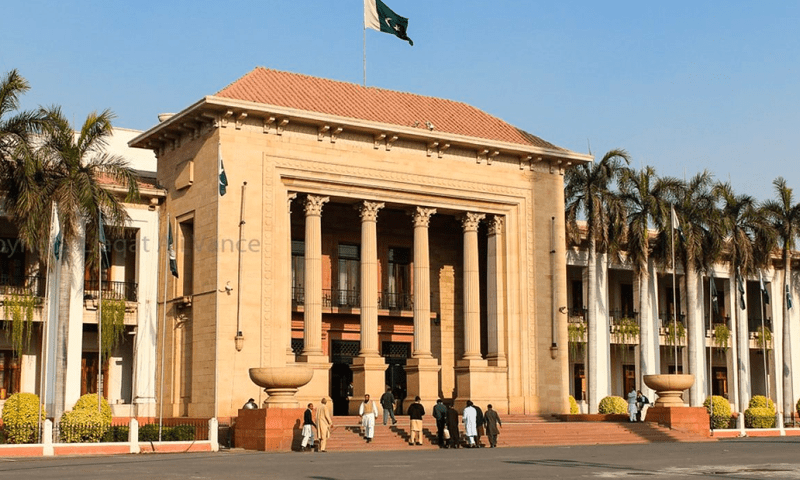
There are moments in a legislature’s life when it does the right thing not because it is easy but because it is necessary. The Punjab Assembly’s committee approval of the Child Marriage Restraint Bill, 2026, is one such moment. By fixing eighteen as the minimum legal age for marriage for both boys and girls, Punjab has chosen the harder path over the convenient one, and in doing so, has sent a signal that the province is ready to stop treating the futures of its children as negotiable. The bill must now complete its journey and be passed by the full assembly before the existing ordinance lapses. That window is narrow. The assembly cannot afford to blink.
The word “custom” has long been used to shelter harmful practices from scrutiny. Child marriage is a case in point. Generations of silence have allowed it to be described as tradition, as community practice, as the natural order of things in the villages and the poorer quarters of the cities. But silence does not make a wrong right. Early marriage is not a harmless passage from one life stage to another. It is a trap, and it springs shut with particular cruelty on girls. A girl married at thirteen or fourteen is almost certainly a girl who has left school. She is a girl who will carry a pregnancy before her body is ready for it. She is a girl who faces a measurably higher risk of dying in childbirth or losing her infant in the first months of life. These are not abstractions. These are documented outcomes, replicated across districts and decades, and they demand a legislative response that matches their severity.
The consequences do not end with the individual. When girls are pulled out of classrooms and pushed into early marriages, the loss belongs to the entire society. An uneducated girl becomes a woman with limited earning capacity. A woman with limited earning capacity cannot lift her household out of poverty. A household that cannot escape poverty will, in all probability, make the same choices with its daughters in the next generation. This is the cycle that child marriage feeds, and it is a cycle that no nation serious about development can afford to sustain. Female labour participation in Pakistan already lags far behind regional benchmarks. Every girl denied an education is one more absence from the workforce, one more vacancy in the skilled economy that the country needs to build. Child marriage is not simply a human rights concern, though it is emphatically that. It is an economic problem that bleeds into every development indicator the state cares about.
What makes this bill worth defending is not merely its intent but its construction. Earlier iterations of child marriage laws in Pakistan were undone by the gaps within them. Vague language created space for interpretation. Exceptions created space for exploitation. The 2026 bill is designed with a different logic. By criminalising those who facilitate underage marriages, including the nikah registrars who solemnise them, the law goes after the machinery of the practice, not merely its participants. By refusing to carve out exceptions, it acknowledges that exceptions are the first refuge of those who wish to continue doing what the law is trying to stop. A law that says “eighteen, unless” is not a law in any meaningful sense. It is an invitation to find the “unless.”
There is a familiar argument that rises whenever laws of this kind come up for debate. It goes like this: poverty compels families to marry their daughters young. Remove the economic pressure and the marriages will not happen. Therefore the law is not the answer; poverty reduction is. This argument sounds reasonable until you examine what it actually asks the state to do, which is to wait. It asks the law to stand aside while one more generation of girls is sacrificed to circumstances that may or may not improve in some indeterminate future. The correct response to poverty is not to leave girls unprotected. It is to protect them and address poverty at the same time. The two are not in competition. The law’s job is to draw a line. The state’s broader job is to make life on the right side of that line more livable. Punjab can pursue both simultaneously.
The provincial picture across Pakistan remains uneven in ways that should trouble everyone who thinks about law and equal citizenship. Sindh moved ahead of the rest of the country back in 2013, setting eighteen as the minimum age for both genders. Islamabad followed only last year. Yet Khyber Pakhtunkhwa and Balochistan still permit girls to be married at sixteen. This patchwork is not simply an administrative inconsistency. It means that a girl born in Quetta carries fewer legal protections than a girl born in Karachi. It means that the accident of geography determines the degree of state protection a child receives. That is not a federation. That is a hierarchy of childhoods, and it has no justification. The federal government and the remaining provinces must align their laws. Eighteen years, no exceptions, enforced uniformly across all jurisdictions. Anything less is a partial answer to a complete problem.
Passing the law is necessary but it is not sufficient. Sindh proved this. Sindh passed its law more than a decade ago. Child marriage in Sindh has declined, but it has not disappeared. The law set the standard. Enforcement has been the variable. Punjab must learn from that experience and build the enforcement architecture alongside the legislation: trained officials, accessible complaint mechanisms, community education, and penalties that are actually applied. A law that exists only on paper protects no one.
Punjab is moving. The rest must follow, and they must follow quickly. Children do not have the luxury of waiting for political convenience.