
Arshad Mahmood Awan
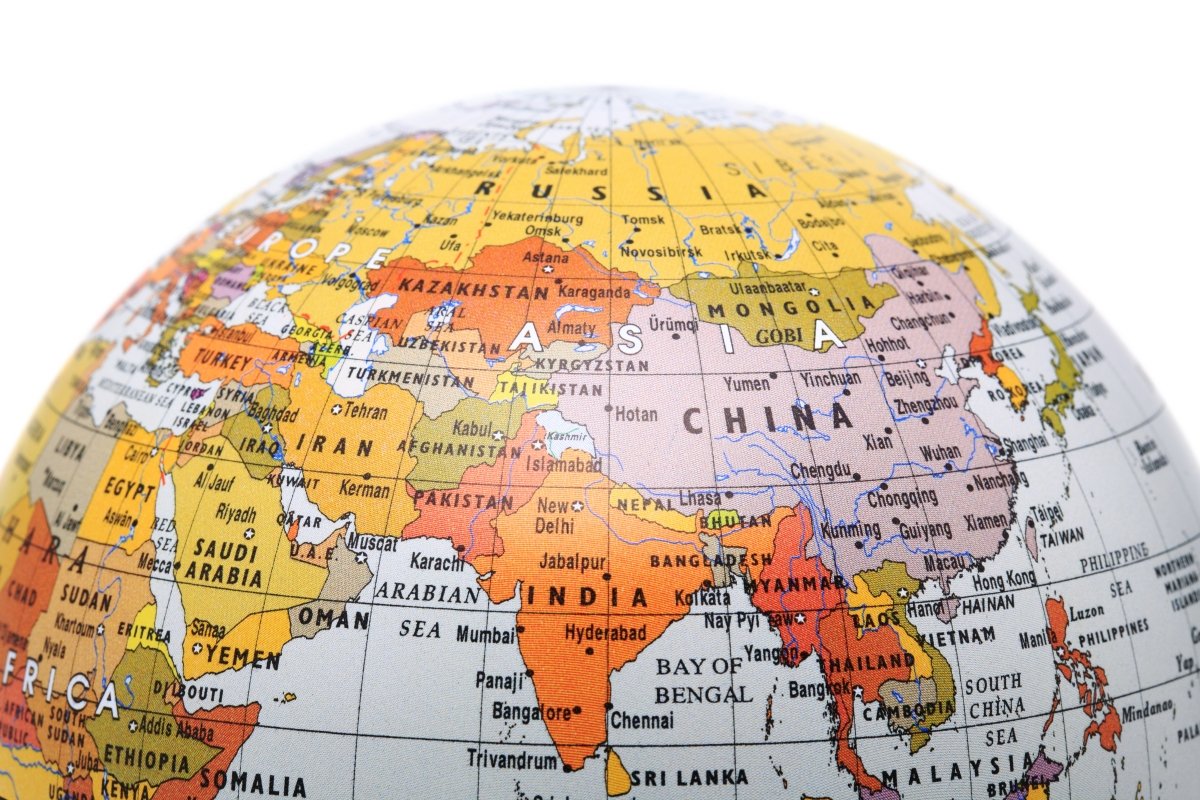
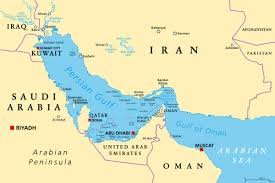
There is a narrow strip of water between Iran and Oman, roughly fifty kilometres wide at its narrowest point, through which the modern world’s energy lifeline flows. The Strait of Hormuz is not a metaphor. It is a physical fact, and for decades the global economy has been built around the assumption that it would remain open. On the twenty-eighth of February 2026, that assumption was shattered. When American and Israeli forces launched coordinated strikes on Iran, they did not merely ignite a military conflict. They lit a fire under the most critical energy artery on earth, and the world has been burning ever since.
The head of the International Energy Agency did not reach for cautious language. He called it the greatest global energy security challenge in history. That is a large claim from an institution not given to exaggeration, and the numbers justify it. Within the first few days of the conflict, Brent crude jumped between ten and thirteen percent, settling around eighty to eighty-two dollars per barrel. Markets registered the shock, absorbed it, and then braced for what came next.
What came next was worse.
Iran moved to close the Strait of Hormuz. The consequences were immediate and devastating. Flows through the Strait, which had been running at approximately twenty million barrels per day, collapsed to a trickle. Gulf production was cut by at least ten million barrels per day. Saudi Arabia, the UAE, Iraq, and Kuwait, the backbone of the world’s exportable oil supply, found themselves unable to move their product to global refiners. Tehran targeted commercial shipping in the Strait directly, striking tankers and making passage a calculated risk that most operators were unwilling to take. Roughly one-fifth of global crude oil and natural gas supply was disrupted not through gradual attrition but almost at once.
The price response was not merely significant. It was historic. By the end of March, Brent crude had climbed to nearly one hundred and twenty dollars per barrel, approaching the all-time high of one hundred and forty-seven dollars reached in July 2008. In March alone, Brent rose approximately fifty-five percent, the largest single monthly gain since the benchmark began trading in 1988. The previous record was a forty-six percent rise in September 1990, during the first Gulf War, a conflict that now looks contained by comparison. By the close of last week, Brent had settled above one hundred and five dollars per barrel, having started the year at around seventy.
The speed of this escalation is important. These are not price movements generated by gradual supply tightening or speculative positioning. They reflect a real, physical disruption to the movement of energy across the globe. The world’s refiners, utilities, airlines, and manufacturers cannot simply absorb a fifty-five percent increase in energy costs in a single month and continue operating as before. The knock-on effects spread through industrial production, transport, food supply chains, and household energy bills with a speed and force that monetary policy cannot immediately counter.
Volatility has not been uniform. Prices have swung sharply in both directions, and one of the more striking features of this crisis has been the degree to which President Trump’s public statements have moved markets. When Trump has suggested the conflict might cool, or that American forces might withdraw within weeks, prices have eased. This pattern, which traders describe as jawboning, reflects a market operating under profound uncertainty. It does not know how long this war will last, whether a ceasefire framework will be accepted, or whether the Strait will reopen through diplomacy or force. In the absence of reliable information, it is pricing the political mood of a single man, and that is a dangerous way for the global economy to function.
Analysts who study energy supply chains are not reassured by the temporary stabilisations. They point to the fact that strategic reserves, drawn down to manage the initial shock, are not inexhaustible. Alternative supply sources, including American shale producers and non-Gulf exporters, have limited spare capacity and cannot rapidly replace the volume lost from Gulf disruption. If the conflict deepens further, or if the Strait remains effectively closed for several more months, the supply losses could become one of the largest sustained disruptions in the recorded history of the oil market. The world has never faced a scenario quite like this, where a single chokepoint was simultaneously targeted by an active belligerent and rendered impassable to commercial shipping.
The economic prognosis is serious. Economists have consistently found that oil shocks of this magnitude are among the most reliable precursors to global recession. The current fear is not simply inflation, though inflation is already rising across most major economies. The deeper concern is stagflation: the combination of higher prices and weaker growth that plagued the 1970s and proved so difficult to escape. Central banks, which spent years fighting inflation after the pandemic and only recently began cutting rates, now face a situation where tightening to control energy-driven inflation risks accelerating economic contraction. There is no clean policy response to stagflation, and the tools available are blunt.
What makes this crisis qualitatively different from the Russia-Ukraine energy shock of 2022 is that the Russian disruption, severe as it was, offered partial workarounds. European countries rerouted supply, accelerated renewable deployment, and survived a difficult winter. The Hormuz disruption offers no such escape. There is no pipeline alternative that can move twenty million barrels per day around the blockage. There is no renewable energy source that can immediately replace the industrial volumes affected. The world simply depends on this waterway, and the world currently cannot use it freely.
That is the critical lesson of these five weeks, and it is one the global energy establishment will be forced to confront long after the shooting stops. The transition away from fossil fuel dependence has been discussed for decades. The vulnerability of concentrated supply routes has been mapped, modelled, and warned against in policy papers that gathered dust on ministerial shelves. The world chose the cheaper, easier option: to keep buying Gulf oil, to keep flowing it through Hormuz, and to call that energy security.
It was not security. It was a wager. And the wager has just been called.