
Barrister Naveed Qazi
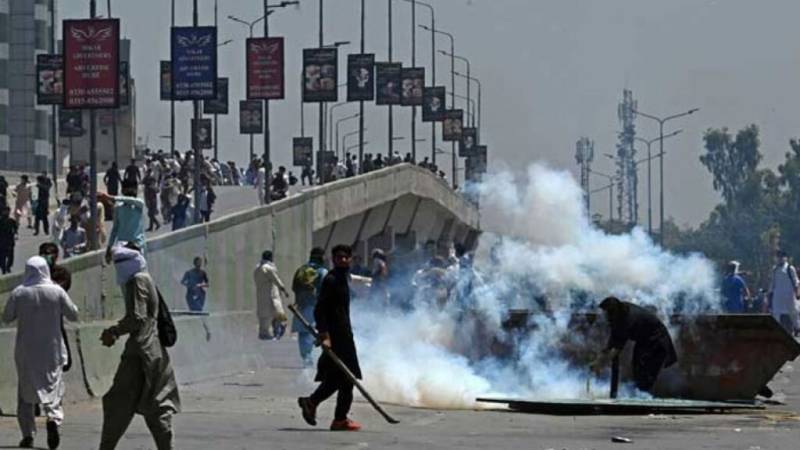
There is a moment in every failing state when the boundary between law enforcement and lawlessness dissolves. Pakistan has been approaching that moment for years. In Punjab, it appears that moment has already arrived.
The numbers are not statistics. They are people. Nine hundred and twenty-four suspects killed in so-called “encounters” by Punjab’s Crime Control Department in just eight months of 2025. That figure, documented by the Human Rights Commission of Pakistan in a fact-finding report released earlier this year, should have stopped the country in its tracks. It did not. The killings continued. The provincial leadership, rather than expressing alarm or ordering accountability, celebrated the CCD’s record as evidence of the state protecting citizens’ life, property, and honour. This is the language of impunity dressed as public service. It is a dangerous and deeply dishonest framing.
An encounter, in the vocabulary of Pakistani law enforcement, is supposed to describe a genuine armed confrontation between police and criminal suspects. What it has become, in Punjab particularly, is a bureaucratic euphemism for execution. The phrase “shoot first, ask questions later” was once used as a criticism of reckless policing in other parts of the world. In Punjab, it has become operational doctrine. Officers who kill are not investigated. They are promoted. A culture that rewards extrajudicial killing does not accidentally produce nine hundred deaths. It manufactures them.
The FIA’s recent report, submitted to the Lahore High Court, adds a second layer of horror to this picture. Punjab does not merely lead Pakistan in encounter killings. It leads the country in custodial torture and custodial deaths as well. More than seventy percent of all inquiries registered under the Torture and Custodial Death Prevention and Punishment Act of 2022 have been initiated against authorities in Punjab. The FIA has launched more than five times as many inquiries in Punjab as it has in Khyber Pakhtunkhwa, which itself holds the second-worst record in the country. These are not marginal discrepancies. They represent a systemic pattern of state violence concentrated in Pakistan’s most populous province, operating in plain sight, with almost no consequences for anyone responsible.
The question of consequences is central to understanding why this crisis has reached its current scale. So far, there appear to have been none. No senior officer held accountable. No departmental reform ordered. No prosecution of perpetrators who operated outside every legal and constitutional boundary the state is supposed to uphold. The judiciary, which exists precisely to protect citizens from this kind of state excess, appears to have watched from the sidelines as one of the most foundational principles of justice, the presumption of innocence, has been systematically violated and publicly mocked. A suspect killed in a staged encounter never appears before a court. He never receives a charge sheet, a lawyer, or a hearing. The state simply decides he is guilty and executes the sentence itself, without trial, without appeal, and without any of the procedural safeguards that distinguish a justice system from a death squad.
Part of why this has continued without adequate national outrage is deeply uncomfortable to acknowledge. Most of the victims come from the poorest and most marginalised sections of society. They are young men from low-income neighbourhoods, from communities with no political connections, no media access, and no lawyers willing to take their cases. Their families grieve quietly because they have learned that grieving loudly achieves nothing and sometimes invites further reprisal. The powerful look away because the powerful are not yet the targets. Civil society organisations, bar associations, media anchors, and political commentators have collectively failed to match the scale of their response to the scale of the abuse. Nine hundred and twenty-four killings in eight months is not a policing problem. It is a massacre. It deserves to be named as one.
But history offers a warning that those who are currently comfortable should not ignore. A state that develops the habit of killing with impunity does not confine that impunity to one social class forever. The mechanisms of extrajudicial violence, once normalised and institutionalised, expand their reach. The encounter culture that today targets street criminals and marginalised suspects can tomorrow be turned toward political opponents, journalists, activists, or anyone the state finds inconvenient. This is not speculation. It is the lesson of every authoritarian trajectory in modern history. Those who remain silent while the powerless are killed on the assumption that their own position protects them are making a calculation that history repeatedly proves wrong.
Civil society in Pakistan cannot afford to wait for a victim who looks like them before they resist. The resistance must come now, grounded not in class solidarity but in constitutional principle. Every Pakistani citizen, regardless of background, possesses rights that the state is constitutionally obligated to respect. The right to life. The right to a fair trial. The right not to be tortured. These are not privileges extended by a generous government. They are fundamental rights, and their systematic violation in Punjab is a constitutional emergency.
What is required now is not another committee or another report. Accountability must be real, visible, and felt by those who give and follow unlawful orders. Senior officers who preside over encounter cultures must face prosecution, not transfers. The provincial leadership that celebrates extrajudicial killings must be publicly challenged and legally held responsible for the environment of impunity they have actively encouraged. The Lahore High Court, which now has the FIA’s damning report before it, must act with the urgency the situation demands.
Punjab’s law enforcement agencies are not above the law. They are servants of it. When they forget that, it is the judiciary’s obligation to remind them. When the judiciary hesitates, it is civil society’s obligation to insist. And when civil society stays silent, the state wins, and the killing continues.
Nine hundred and twenty-four people paid for that silence with their lives. The question now is how many more will before Pakistan decides it has seen enough.