
Arshad Mahmood Awan
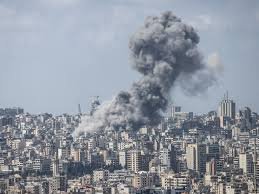
The ink was barely dry on the Pakistan-brokered truce between Washington and Tehran when Israel launched one of its most ferocious assaults on Lebanon in recent memory. Over two hundred people were killed in a single day of strikes. Infrastructure was shattered. Civilians bore the brunt, as they almost always do when Israel decides to act. The attacks continued the following day, and the question that now shadows the entire diplomatic achievement is stark and urgent: can a ceasefire between Iran and the United States survive if Israel is allowed to wage war on Lebanon without restraint?
This is not a marginal question. It sits at the heart of whether the fragile peace process holds or collapses under the weight of Tel Aviv’s fury.
Israel went into this conflict expecting a decisive outcome. It had convinced Washington, through intelligence that now appears to have been either dangerously flawed or deliberately manipulated, that Iran could be quickly defeated. The campaign would be swift, the victory clean, and Iranian power in the region would be broken. None of that happened. Iran held. The war ended not in Israeli triumph but in a negotiated truce that Pakistan helped broker, leaving Israel with nothing to show for months of brutal engagement except a region-wide crisis and a damaged relationship with the very ally it had pushed into the fight.
The Israeli media has not been kind about this. Criticism of the political and military leadership has been sharp. The regime is being held to account domestically for failing to deliver on its promises. And in that atmosphere of internal anger and external humiliation, Israel appears to have made a decision: if it cannot destroy Iran directly, it will punish Lebanon instead.
The so-called Dahieh Doctrine, named after the Beirut suburb reduced to rubble in 2006, is not a military strategy in any conventional sense. It is a doctrine of deliberate collective punishment. Under its logic, civilian infrastructure is a legitimate target. Civilian casualties are not collateral damage; they are the point. The goal is to inflict enough suffering on the population that political will to resist eventually breaks. International law calls this a war crime. Israel calls it deterrence. The rest of the world has been calling it out for decades without effect.
Hezbollah is the stated justification for the current assault. As Iran’s most capable regional ally, it represents everything Israel wants to dismantle. But anyone watching the pattern of Israeli military conduct in Lebanon over the years understands that Hezbollah is the pretext, not the cause. Israel has long held territorial and strategic ambitions over Lebanon. The vision of a Greater Israel, which serious Israeli scholars and political figures have discussed openly for generations, encompasses territory well beyond the current borders. Lebanon, with its geography, its water resources, and its proximity to the Galilee, has always featured in that calculus. What is happening now is not simply a counter-terror operation. It is an attempt to reshape facts on the ground while the world is distracted by diplomacy.
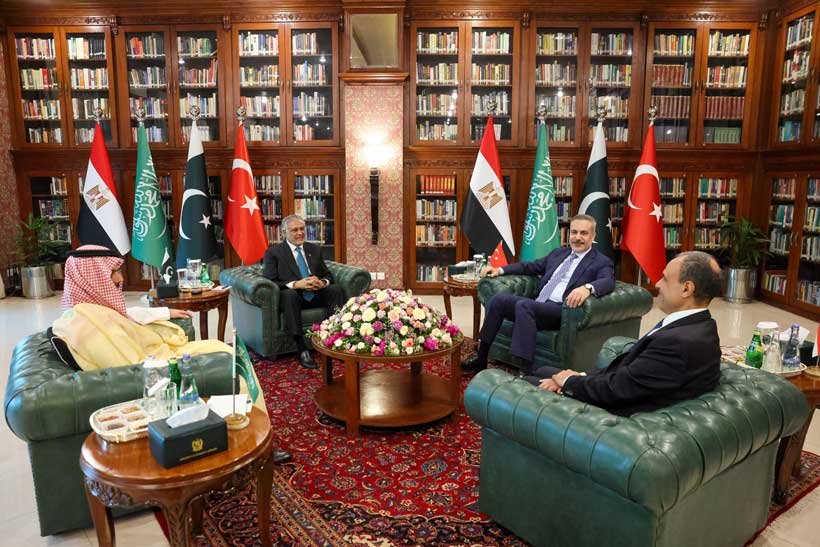
The diplomatic confusion surrounding Lebanon’s status in the truce only deepens the danger. Iran has been clear: Lebanon is an inseparable part of any ceasefire arrangement. Prime Minister Shehbaz Sharif, whose government played a central role in bringing the two-week truce about, has said the same. Pakistan’s position as facilitator carries weight here. When Islamabad asserts that Lebanon was included in the framework, that is not a rhetorical flourish. It reflects the substance of what was negotiated.
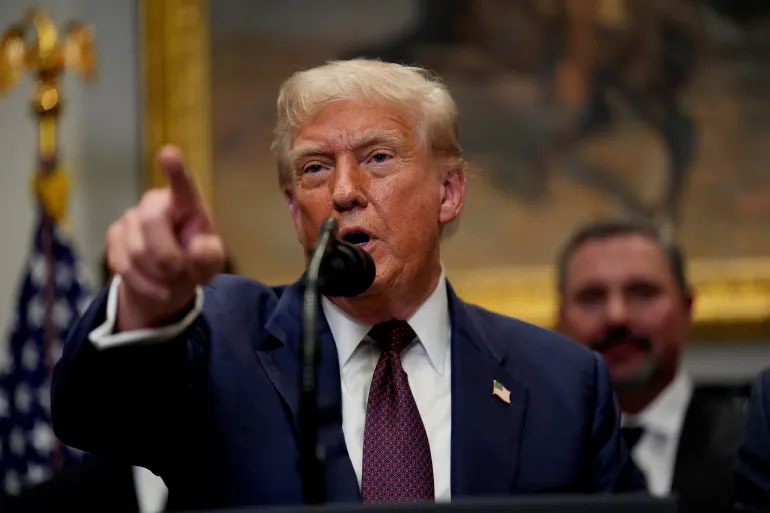
Yet President Trump has described Lebanon as a “separate skirmish,” a formulation that gives Israel exactly the space it needs to continue its operations without triggering American pressure to stop. If Washington adopts that framing as official policy, it will not only abandon Lebanon. It will effectively signal that the peace process itself is conditional, that Iran and its allies can be attacked even as negotiations proceed, and that America’s word as a guarantor of any agreement cannot be trusted. That would not just kill this truce. It would make the next one nearly impossible to broker.
The international community is not silent. The United Nations has called for a ceasefire in Lebanon. The United Kingdom, France, Japan, and several other American allies have added their voices. The chorus is loud. What is missing is the one voice that actually matters in Tel Aviv: Washington’s.
The United States has more leverage over Israel than it publicly acknowledges. Military assistance, intelligence sharing, diplomatic cover at the Security Council, the entire architecture of the bilateral relationship rests on American decisions. When Washington chooses to apply that leverage, Israel responds. The problem is not capability. It is will.
Trump came into office promising to put America first. That slogan has meant different things in different contexts, but its core logic is straightforward: American interests, American lives, and American resources should not be subordinated to the preferences of foreign governments. Applying that logic to the current situation is not difficult. A wider war in the Middle East does not serve American interests. Rising oil prices, a destabilised Gulf, a collapsed peace process, and a deeper American entanglement in regional conflict all represent the opposite of America first. They represent America dragged along by a partner whose goals and Washington’s goals have visibly diverged.
Israel fed the United States faulty intelligence and pushed it toward a war that did not end as promised. Now it is doing everything it can to destroy the peace that followed. If Trump allows that to continue, he will not be putting America first. He will be handing Israel a veto over American foreign policy, just as every administration before him effectively did.
Lebanon cannot wait for that calculation to change on its own. The Lebanese people are paying in blood for a geopolitical dispute that was never theirs to begin with. The United States must act now. It must tell Israel, without ambiguity, that the attacks on Lebanon must stop. The broader peace process, the credibility of Pakistan’s facilitation, and the lives of Lebanese civilians all depend on that message being delivered with the full weight of American power behind it.
The truce between Iran and the United States is one of the most consequential diplomatic developments in years. It would be a tragedy of historic proportions to let Israel burn it down.