
Dr Bilawal Kamran
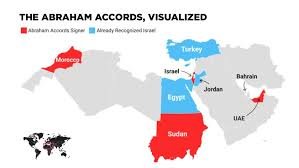
The Abraham Accords were sold to the world as a breakthrough for peace in the Middle East. In practice, they were something far more modest and far more troubling. Brokered during Donald Trump’s first presidency, these agreements secured diplomatic normalisation between several Arab states and Israel without addressing, let alone resolving, the central question that has defined Middle Eastern politics for over seven decades: the rights of the Palestinian people and their right to a sovereign state. That foundational dishonesty was buried beneath ceremony, congratulations, and the language of historic achievement. Now, with Trump back in power and emboldened by the recent conflict with Iran, the same dishonest project is being revived and expanded, with greater pressure and greater recklessness than before.
Trump is once again pushing Muslim-majority countries to join the Abraham Accords, this time using the Iran conflict as political cover. The logic being offered is that shared regional anxieties about Iran have created a new opening for Muslim countries to deepen ties with Israel. This reasoning is not merely flawed. It is a deliberate sleight of hand. The tensions surrounding Iran are rooted in decades of regional rivalry, military miscalculation, and the consequences of American interventionism. They are a separate and distinct crisis. They do not dissolve the Palestinian issue. They do not make occupation acceptable. They do not make the denial of statehood to millions of people any less of a moral and political catastrophe. To use one crisis as a vehicle for burying another is not diplomacy. It is manipulation dressed in the language of statecraft.
The pressure behind this push does not come from a genuine desire for regional stability. It comes from two powerful forces operating within Washington: the Israeli lobby and the American hard-line pro-Israel right. These groups have long worked to shield Israel from international accountability, to redirect diplomatic energy away from Palestinian rights, and to build a regional architecture in which Israel is normalised, celebrated, and integrated into the Muslim world without ever being required to make meaningful concessions to those it has displaced and occupied. For these actors, the Abraham Accords are not a peace initiative. They are a containment strategy, designed to make the Palestinian cause appear marginal and to reward Israel with diplomatic legitimacy it has not earned through justice.
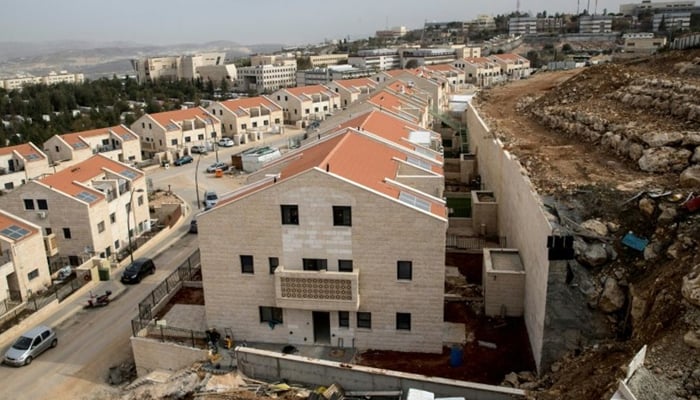
The facts on the ground make the hollowness of this project impossible to ignore. Illegal Israeli settlements continue to expand across occupied Palestinian territory in direct violation of international law, and in direct defiance of every diplomatic framework that has sought to keep a two-state solution alive. Gaza has been subjected to a campaign of bombardment and collective punishment whose human cost has shocked the conscience of the world. The destruction of civilian infrastructure, the deaths of tens of thousands of people, and the collapse of basic humanitarian conditions in Gaza represent one of the most documented and most condemned episodes of collective suffering in recent memory. Violence in the West Bank continues with persistent impunity. In the face of all this, the suggestion that Muslim countries should deepen ties with Israel, offer it diplomatic legitimacy, and present this as a contribution to peace is not serious. It is an insult to the intelligence of the very nations being asked to sign.
Pakistan’s position in this regard is not extreme. It is not unreasonable. It is not ideologically driven. Pakistan has stated consistently for many years that recognition of Israel is not possible until there is a fair and durable settlement for Palestinians and a credible, independent Palestinian state. This is a position grounded in principle and in political realism. Lasting peace cannot be constructed by papering over the grievances of an entire people. It cannot be sustained by agreements that leave the core injustice untouched. History has demonstrated repeatedly that arrangements which ignore legitimate grievances do not produce stability. They produce a temporary silence that eventually breaks under the weight of accumulated resentment and injustice. Pakistan understands this. Most of the Muslim world understands this. Washington, under the influence of its most pro-Israel voices, appears unwilling to.
There is also a profound misreading of public sentiment at play. Governments across the Muslim world may calculate their diplomatic positions on the basis of strategic interests, economic incentives, and security considerations. But the populations of those countries have not abandoned the Palestinian cause. Across the Arab world, across South Asia, across Muslim communities on every continent, the question of Palestine remains a matter of deep moral conviction. It is not a manufactured grievance. It is a living, breathing issue that ordinary people engage with every day. Any agreement that ignores Palestinian statehood may generate headlines and handshakes in Washington. It will not generate legitimacy in the streets of Karachi, Cairo, Ankara, or Amman. And a peace that lacks popular legitimacy is not peace at all. It is a fragile arrangement waiting for its moment of collapse.
What makes this latest push particularly cynical is its timing. The region is emerging from a devastating conflict. Iran and the United States remain locked in a dangerous and unstable standoff over the Strait of Hormuz. Civilian populations across multiple countries have absorbed the consequences of military escalation that no one has yet managed to permanently stop. In this environment, to prioritise the expansion of the Abraham Accords, to use regional fear and exhaustion as a lever for advancing Israeli diplomatic standing, is to place the interests of a particular political agenda above the actual needs of an entire region.
Genuine peace in the Middle East has one unavoidable prerequisite. That prerequisite is justice for Palestinians. Not symbolic gestures. Not carefully worded declarations that speak of a Palestinian state while doing nothing to create one. Not normalisation ceremonies that reward Israel with diplomatic gains while Palestinians continue to live under occupation, bombardment, and blockade. Real accountability. Real statehood. Real recognition that the Palestinian people possess the same rights as every other people on earth.
Until that foundation is in place, any structure built upon its absence will remain unstable, illegitimate, and ultimately doomed. The Abraham Accords, as currently conceived and as currently being expanded, are built on that absence. That is why they will not bring peace. And that is why the Muslim world is right to resist them.
“The Republic Policy Think Tank’s special work on governance reforms in Pakistan is now available in the form of four important books at bookstores across Pakistan:
- Fixing the Executive Branch of Government
- Fixing the Legislative Branch of Government
- Fixing the Judicial Branch of Government
- The Bureaucratic Coup
These books are available at Vanguard Books and other bookstores across Pakistan.”