
The international system is changing, but not in the simple way often suggested by talk of a new Cold War. Countries are not necessarily abandoning the United States to join a Chinese or Russian camp. Instead, many are building relationships with several centres of power at the same time. The Shanghai Cooperation Organisation (SCO) provides one of the clearest examples of this emerging approach.
Perhaps the most revealing development at this year’s SCO summit was Turkish President Recep Tayyip Erdoğan’s suggestion that Turkey could seek full membership. Turkey remains a NATO member, and Erdoğan made clear that closer engagement with the SCO would not require abandoning the West. That is precisely why the possibility is significant: a NATO country increasingly sees no contradiction between maintaining its Western alliances and participating in an organisation in which China and Russia are the leading powers.
This would have been much harder to imagine at the height of the post-Cold War order. For decades, American alliances did more than provide military security. They helped define the architecture of global diplomacy, finance and strategic cooperation. Countries could disagree with Washington and trade with its competitors, but the United States remained the principal centre around which much of the international system operated.
That assumption is weakening. The change does not necessarily mean that countries have become anti-American or pro-Chinese. Rather, more governments appear reluctant to organise their entire foreign policy around a single great power.
Ashok Swain, professor of Peace and Conflict at Uppsala University, argues that President Donald Trump’s “America First” approach has accelerated this process. In his assessment, pressure on alliances, unpredictable tariffs, scepticism toward multilateral institutions and a more transactional approach to traditional partners have raised doubts about the reliability of American commitments.
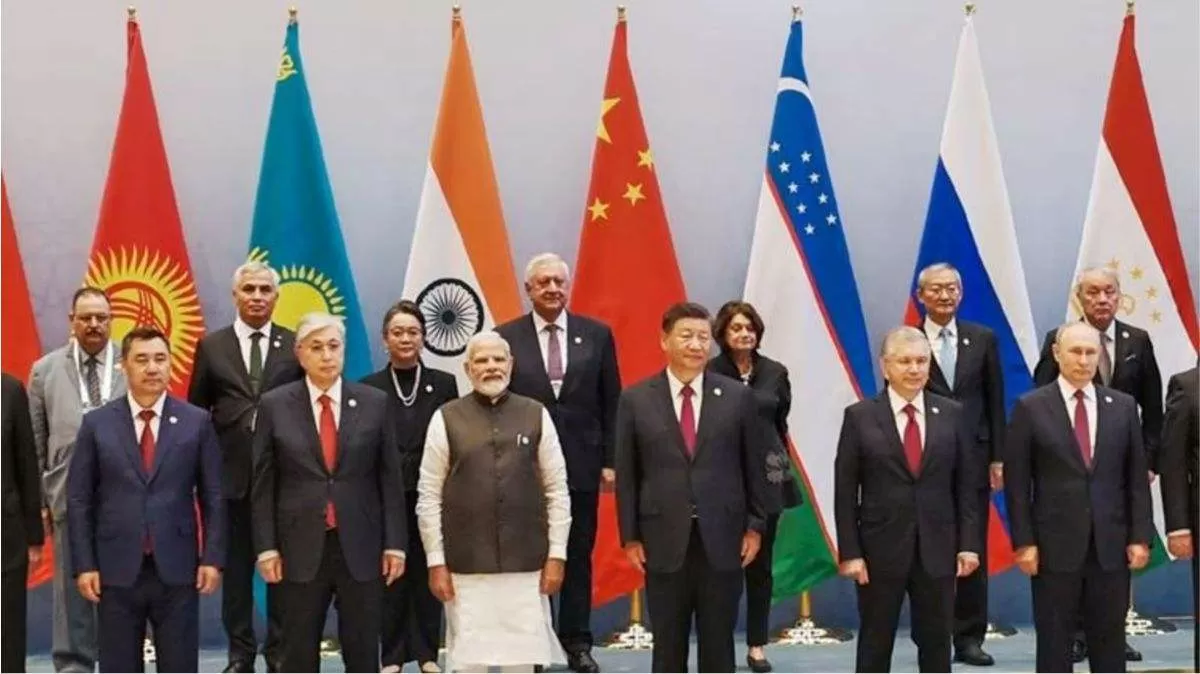
The SCO summit in Bishkek illustrated what may be replacing the older model. The organisation brings together China, Russia, India, Pakistan, Iran, Belarus and the Central Asian states. These countries do not constitute a unified political bloc. India and Pakistan remain rivals. China and India have significant differences of their own. Russia and China cooperate closely without being formal allies. Yet all find value in participating in the same organisation.
This may be one of the defining characteristics of the emerging international order: countries can cooperate without becoming allies and compete without completely separating from one another.
China appears particularly comfortable with this model.
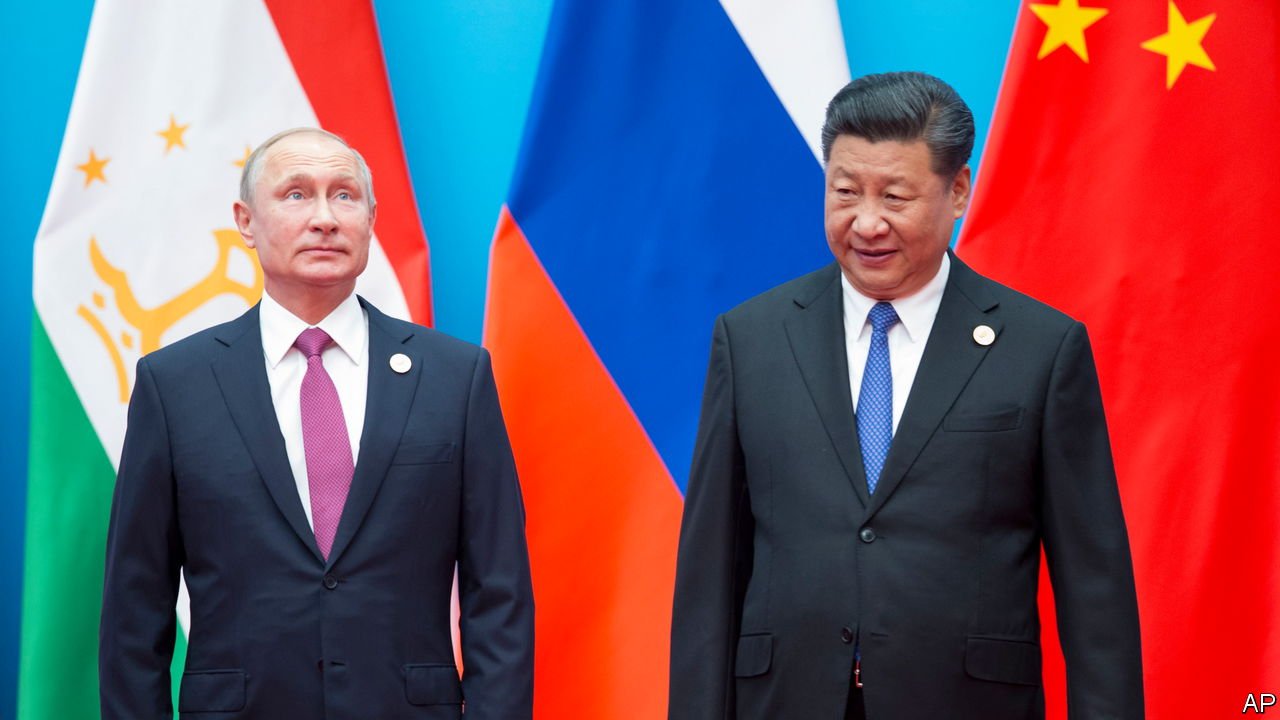
President Xi Jinping presented the SCO as an organisation based on non-alignment and non-confrontation while calling for a greater international role for the Global South and a more representative global system. More importantly, Beijing is attempting to translate these ideas into practical cooperation through trade, investment, transport, technology, energy and financial links among SCO countries.
This approach matters because international influence is ultimately built through institutions and relationships, not declarations alone. Ports, railways, energy projects, technology partnerships, financial arrangements and trade corridors can gradually create networks in which countries become increasingly connected to one another.
Russia is pursuing a similar objective from a different position. President Vladimir Putin has advocated greater use of national currencies and supported the establishment of an SCO development bank independent of financial systems that Moscow believes can be used for political pressure. Russia has strong incentives to pursue such alternatives because Western sanctions have restricted its access to parts of the dollar-centred financial system.
China, however, possesses considerably greater economic capacity to support such arrangements. Its manufacturing base, capital, technology, domestic market and extensive commercial relationships give Beijing tools that Moscow does not possess on the same scale.
This helps explain why the SCO may ultimately be more useful to China as a flexible platform than as an explicitly anti-American alliance. Countries can expand their relationships with Beijing without formally accepting Chinese leadership or cutting ties with Washington.
Turkey demonstrates this logic particularly well. Ankara wants to preserve its NATO membership and relations with Europe and the United States while maintaining economic and energy ties with Russia and expanding its engagement with China and Central Asia. The objective is not necessarily to exchange dependence on Washington for dependence on Beijing. It is to maintain enough relationships that Turkey does not become excessively dependent on either.
Other middle powers increasingly follow variations of the same strategy.
This is where American policy becomes important. Washington remains extraordinarily powerful, but uncertainty surrounding the durability of its commitments can encourage governments to develop alternatives. If an ally believes American support could become more conditional in the future, it has an incentive to diversify before a crisis arrives.
Diversification does not require abandoning the United States. A country can continue purchasing American weapons while joining another international organisation. It can maintain security cooperation with Washington while signing trade agreements with China, developing alternative payment arrangements or attracting investment from several competing powers.
Over time, these apparently separate decisions can alter the structure of international power.
For decades, American influence benefited from a powerful network effect: the more governments relied on US-led institutions, financial systems and security arrangements, the more valuable those institutions became.
China does not necessarily need to reproduce that system institution by institution. Instead, it can connect different mechanisms already developing around it. The SCO provides political and security cooperation; the Belt and Road Initiative supports infrastructure and trade; BRICS provides another forum for economic coordination; currency arrangements can facilitate transactions outside traditional systems; and Chinese industrial capacity can support alternative supply chains. None needs to replace the Western system by itself. Together, however, they expand the choices available to governments.
That distinction is crucial.
The emerging world may not be divided neatly into an American bloc and a Chinese bloc. It may instead consist of overlapping networks in which states cooperate with different powers on different issues.
Nor should American decline be exaggerated. The United States retains an extensive alliance network, enormous military capabilities, deep financial influence and advantages that China cannot easily reproduce. Washington will remain central to international affairs for the foreseeable future.
The deeper question is therefore not simply whether China will replace the United States as the world’s leading power.
The more important contest may be over which power becomes most indispensable to the choices other countries make.
China has spent years developing infrastructure, trade routes, industrial links, technology networks and diplomatic forums across Asia, Africa, the Middle East and beyond. The SCO forms one part of that wider architecture. Its members are not constructing a NATO-style alliance. They are developing a more flexible system in which governments can cooperate in one area while remaining competitors in another.
That may ultimately be the defining feature of the era of new alliances.
The old international order asked countries, implicitly or explicitly, which side they belonged to. The emerging one increasingly allows them to answer: several at once.
The SCO is therefore important not because it has already replaced the Western-led system, but because it reveals how the next international system may work—more multipolar, more transactional and more flexible.
Washington will remain a major architect of that world. But increasingly, it may no longer be its only centre of gravity.