
Every generation seems convinced that the media habits of the next generation are destroying young minds. Comic books were once blamed for juvenile delinquency. Television was accused of turning children into passive couch potatoes. Video games and rap music were feared as sources of violent behaviour. Later, the internet was portrayed as a place where young people would isolate themselves and interact with dangerous strangers.
Today, the same anxiety has found a new target: “brain rot.”
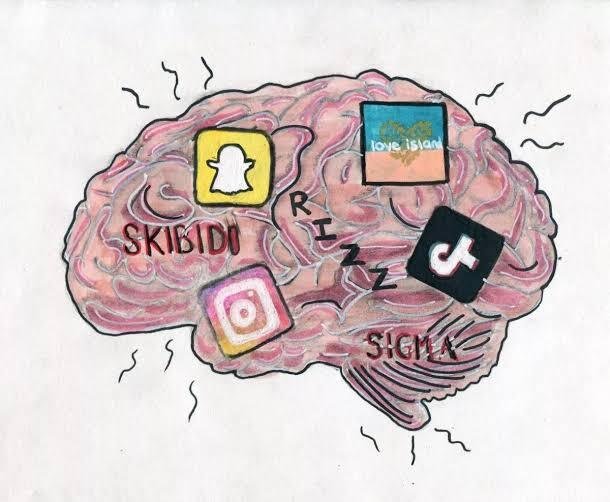
The term describes the strange mental state associated with endlessly scrolling through short, absurd and highly stimulating videos on TikTok, Instagram and similar platforms. Dancing cappuccinos, singing toilets, muscular fruit, flashing images, meaningless sounds and rapidly changing visual effects have become part of an online culture that often appears deliberately nonsensical.
From the outside, the conclusion seems obvious: young people are consuming meaningless content, and that content must be damaging their minds.
But this explanation may have the relationship backwards.
Research into how digital environments shape human behaviour suggests that young people themselves are often highly conscious of what endless scrolling is doing to them. In a recent study, the author and co-author Anna Götzfried interviewed members of Generation Z between the ages of 13 and 26 about their experience of brain rot — why they watch such content, how they feel while consuming it and what it means to them.
The interviews revealed something important. These young people were not simply passive consumers unaware of the consequences of their behaviour. Many understood perfectly well that endless scrolling was affecting their concentration, mood and ability to choose what they wanted to watch. They recognised the problem and, in many cases, wanted to escape it.
This changes how brain rot should be understood.
The popular explanation assumes a straightforward chain of events: young people watch low-quality content, and repeated exposure gradually produces a degraded mental state. Yet the participants described something closer to the reverse. The “brain-rot feeling” often develops before the most mindless consumption begins.
After scrolling through algorithmically selected feeds for long enough, users can enter a foggy, mentally passive state. Their selectivity declines. Instead of actively deciding what deserves their attention, they simply accept whatever appears next on the screen. One video leads automatically to another.
At that point, the strange videos are not necessarily creating the mental state from nothing. They are feeding a state that the design of the platform has already helped produce.
This distinction matters because it shifts attention from individual pieces of content to the digital system in which that content is consumed.
Platforms such as TikTok and YouTube operate through competition for attention. Millions of videos, creators and advertisers are fighting for a limited resource: the user’s focus. Content that fails to capture attention disappears quickly, while content that keeps people watching is rewarded with greater visibility.
The result is a powerful evolutionary pressure on online content. Videos become shorter, faster, louder and more visually intense. They need to communicate immediately because users can swipe away within seconds. Complexity becomes a disadvantage, while novelty, repetition, shock, humour and instant stimulation become increasingly valuable.
In such an environment, simple content has an important advantage: it is easy to consume when the viewer is already mentally tired.
The deeper problem, therefore, lies in the economics behind the platforms.
Social-media companies make money from attention. The longer users remain on their platforms, the more opportunities there are to show advertisements, collect behavioural information and generate revenue. Human attention is consequently transformed from a personal capacity into an economic commodity.
The platform does not necessarily benefit when a user finds the most thoughtful, meaningful or educational piece of content. It benefits when the user continues watching.
That creates a fundamental conflict between the interests of the platform and the interests of the individual. A person may want to spend 20 minutes online and then return to studying, reading, working, exercising or sleeping. The platform, however, benefits economically if those 20 minutes become two hours.
Algorithms are therefore built around engagement. They learn what keeps users watching and continuously supply similar material. Each swipe produces information about preferences and behaviour, allowing the system to become increasingly effective at predicting what might hold a person’s attention for a few more seconds.
Brain rot emerges within this environment.
This does not mean that young people have no responsibility for their media habits, nor does it mean that all short-form content is harmful. The more important point is that individual self-control is operating against systems specifically designed to reduce the likelihood that users will leave.
That is why simply telling young people to “stop scrolling” misses much of the problem.
Many already know they are scrolling too much. They know that an hour has disappeared. They know they are no longer enjoying what they are watching. They may even recognise that they feel mentally exhausted afterward. Yet they continue because the digital environment has made passive consumption extraordinarily easy.
Seen from this perspective, brain rot begins to look less like evidence of intellectual decline and more like a form of distress.
The absurd videos are only the visible surface of a deeper problem: a generation growing up inside an attention economy that constantly competes for its concentration while simultaneously asking individuals to take full responsibility for protecting it.
The appropriate response, therefore, should not be another moral panic about young people and their supposedly declining minds. Previous generations also consumed forms of entertainment that older adults struggled to understand. The more useful question is whether today’s digital environment differs in an important way: it can observe behaviour continuously, personalise content instantly and optimise itself around keeping individual users engaged.
If that is the problem, the solution cannot rest entirely on personal discipline. Digital literacy matters, as do healthier habits and greater awareness. But platforms themselves must also be examined — particularly the incentives, algorithms and design choices that encourage endless consumption.
Parents, educators, policymakers and technology companies should therefore focus less on condemning strange videos and more on understanding the system that makes endless scrolling so difficult to resist.
Young people describing their own minds as suffering from “brain rot” may already be telling us something important. Rather than dismissing the phrase as another internet joke, we should listen to what lies underneath it.
Brain rot may not be proof that a generation has stopped thinking. It may be a generation’s way of telling us that the digital world is making it increasingly difficult to control what receives its attention.