
NEW YORK: Pakistan’s diplomatic efforts to bring the United States and Iran back to negotiations remained a major focus of activity at the United Nations on Tuesday, as world leaders gathered for the 81st session of the General Assembly.
Prime Minister Shehbaz Sharif and Deputy Prime Minister and Foreign Minister Ishaq Dar held a series of meetings with international leaders and senior officials, seeking support for a negotiated settlement to the US-Iran conflict, which has disrupted global trade and energy markets.
Pakistan’s diplomatic role also received public recognition from US President Donald Trump and UN Secretary-General António Guterres, while regional foreign ministers reiterated their support for the Islamabad Memorandum of Understanding as a framework for lasting peace.
Trump Praises Shehbaz Sharif and Reveals Meeting With Iranian Delegation
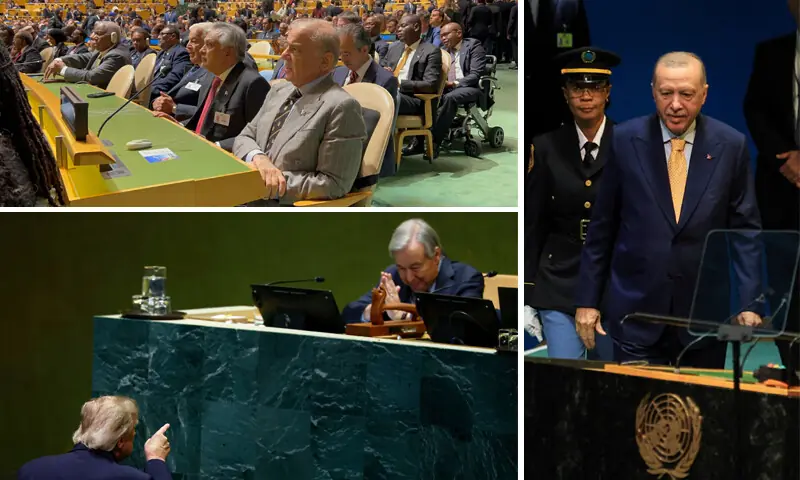
Prime Minister Shehbaz Sharif, who is scheduled to address the General Assembly on Thursday, received a mention during President Trump’s speech to the UN.
Describing the Pakistani prime minister as a “terrific man”, Trump referred to Shehbaz’s earlier remarks crediting him with helping prevent a major loss of life.
Trump made the reference while discussing conflicts he claimed to have helped resolve, including those involving Pakistan and India, Thailand and Cambodia, Armenia and Azerbaijan, and Gaza.
The remarks came as Pakistan continued its efforts to encourage Washington and Tehran to return to diplomacy despite uncertainty surrounding a possible meeting between Trump and Iranian President Masoud Pezeshkian in New York.
Later, following talks with Ukrainian President Volodymyr Zelensky, Trump told reporters that American officials had met an Iranian delegation on the sidelines of the General Assembly.
According to the US president, the meeting lasted three hours and had concluded approximately an hour before he spoke to reporters.
Trump described the discussions as productive and said another meeting was expected in the near future.
He also suggested that Iran faced a choice between reaching an agreement and confronting further escalation.
The disclosure followed mixed signals from Washington about the prospects for renewed engagement with Tehran.
Earlier on Tuesday, US Secretary of State Marco Rubio said no meeting with Iranian representatives was scheduled at that stage, although Washington remained willing to hold talks if they offered a realistic prospect of progress.
Iran, meanwhile, indicated that its delegation in New York had the authority to pursue diplomatic engagement. Tehran had also communicated proposals to Washington through intermediaries, leaving open the possibility of further negotiations.
Pakistan Encourages Washington and Tehran to Maintain Contact
Diplomatic sources at the United Nations said Pakistan had been consistently encouraging the United States and Iran to preserve indirect communication and remain receptive to direct negotiations.
Islamabad’s mediation efforts have involved engagements in both capitals as well as consultations with regional and international partners.
A day earlier, Interior Minister Mohsin Naqvi visited Tehran, where he met Iranian President Masoud Pezeshkian and Interior Minister Eskandar Momeni.
The discussions included efforts to facilitate mediation between Iran and the United States.
Iranian officials expressed appreciation for Pakistan’s continuing diplomatic engagement aimed at reducing tensions and restoring regional stability.
The visit formed part of Islamabad’s wider efforts to prevent further escalation and create conditions for renewed talks.
UN Secretary-General Recognises Pakistan’s Mediation Efforts
Pakistan’s role also drew praise from UN Secretary-General António Guterres.
Speaking at a news briefing in New York a day earlier, UN spokesperson Stéphane Dujarric said the secretary-general appreciated the efforts of Pakistan’s leadership to help end the fighting between Washington and Tehran.
Dujarric described Pakistan’s contribution as critical and called the understanding reached in Islamabad a significant achievement.
He said Guterres had maintained close contact with Pakistani leaders as part of the broader diplomatic effort to bring the conflict to an end.
Asked specifically about the mediation efforts of Prime Minister Shehbaz Sharif and Pakistan’s army chief, Dujarric acknowledged that several countries had participated in the process while emphasising Pakistan’s role.
The spokesperson also reiterated the United Nations’ support for renewed direct engagement between the United States and Iran.
He said dialogue offered a means of addressing a conflict that continued to affect large numbers of people.
Iranian President Masoud Pezeshkian is expected to address the General Assembly on Wednesday and hold bilateral meetings with other world leaders.
Pakistan, Türkiye, Saudi Arabia and Egypt Reaffirm Support for Islamabad Understanding
Deputy Prime Minister Ishaq Dar also participated in a ministerial meeting of the Regional-4 group, which brings together Pakistan, Türkiye, Saudi Arabia and Egypt.
The group emerged in March amid regional efforts to facilitate mediation between the United States and Iran and has continued to focus on security and diplomatic coordination.
During the meeting in New York, Dar reaffirmed Pakistan’s commitment to the R-4 framework and called for sustained engagement to promote regional peace and economic prosperity.
According to the Foreign Office, the participating ministers reviewed recent developments and expressed support for efforts to resolve the conflict through peaceful means.
A statement issued by Pakistan’s Permanent Mission to the United Nations said the ministers also discussed regional and international developments during their consultations on September 21.
They emphasised that dialogue and diplomacy remained essential for achieving a sustainable settlement and stressed the importance of upholding the Islamabad Memorandum of Understanding.
The ministers presented continued adherence to the understanding as an important element of efforts to establish lasting regional peace and stability.
Prime Minister Holds Bilateral Meetings With World Leaders
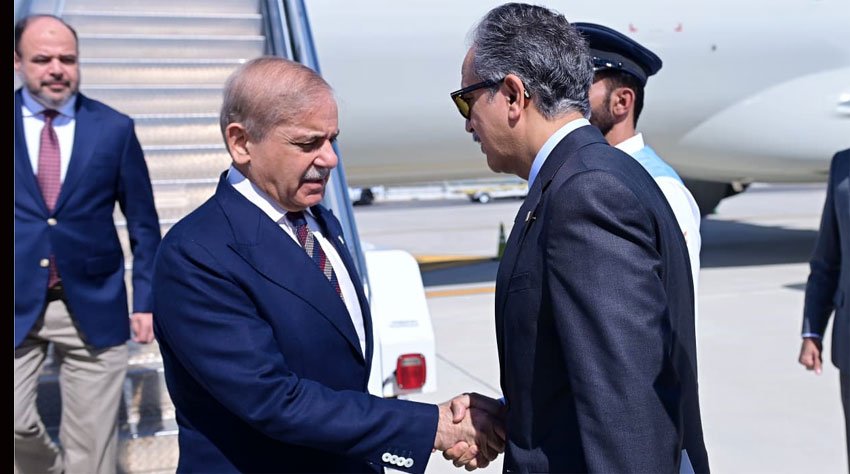
Alongside Pakistan’s mediation efforts, Prime Minister Shehbaz Sharif continued a series of bilateral engagements on the sidelines of the General Assembly.
He met Somali President Hassan Sheikh Mohamud, Austrian Chancellor Christian Stocker, Kenyan President William Ruto and Kuwait’s Crown Prince Sheikh Sabah Khaled Al-Hamad Al-Sabah.
The meetings formed part of Pakistan’s wider diplomatic programme in New York, where its leadership has been engaging international partners on regional security, bilateral relations and major global challenges.
With the US-Iran conflict still unresolved, Islamabad’s immediate diplomatic focus remains on maintaining communication between the two sides and supporting negotiations aimed at ending the war.