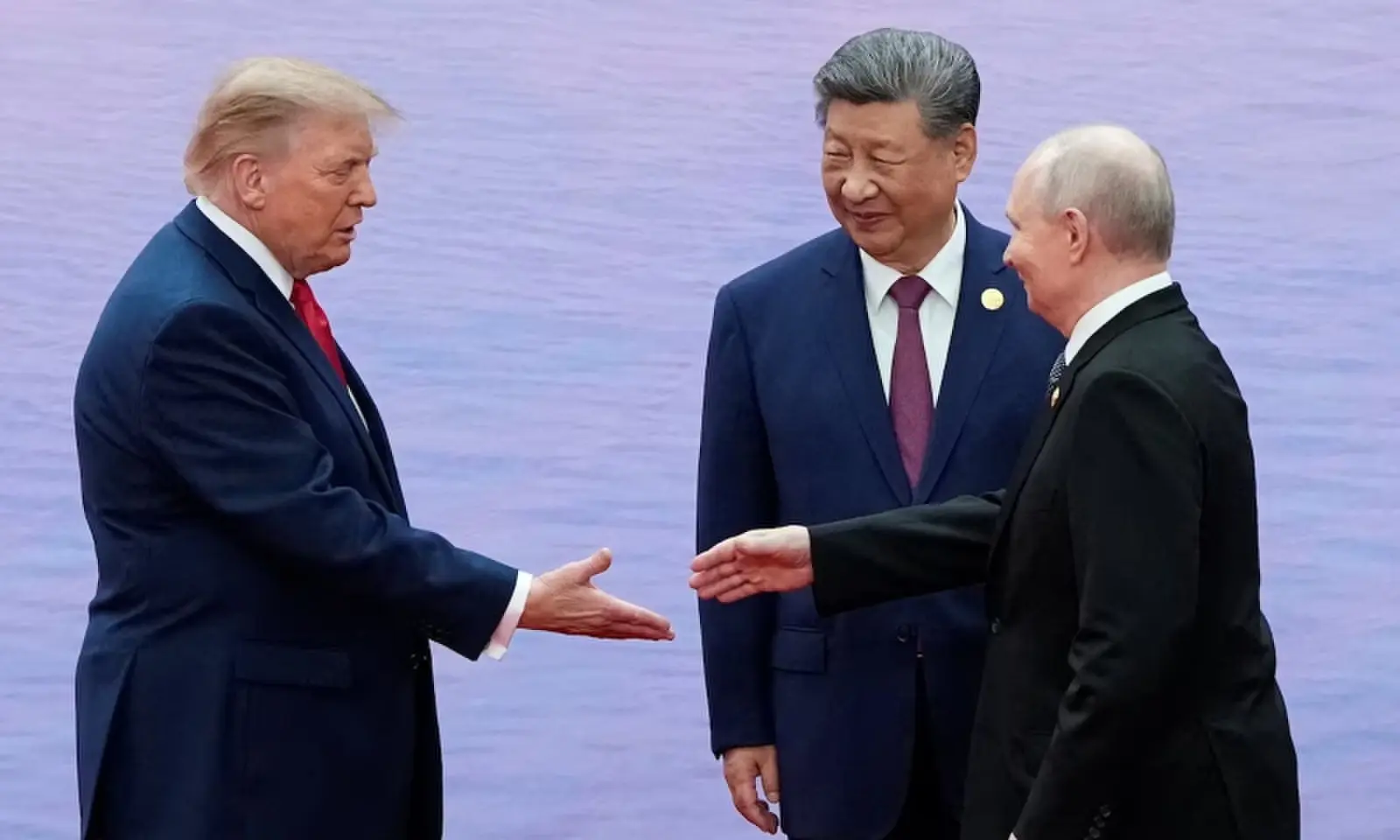

The unprecedented trilateral meeting offered diplomatic legitimacy, strategic visibility and confidence-building for all three leaders, but Beijing and Moscow appear to have gained the most from a summit dominated by symbolism rather than substantive agreements.
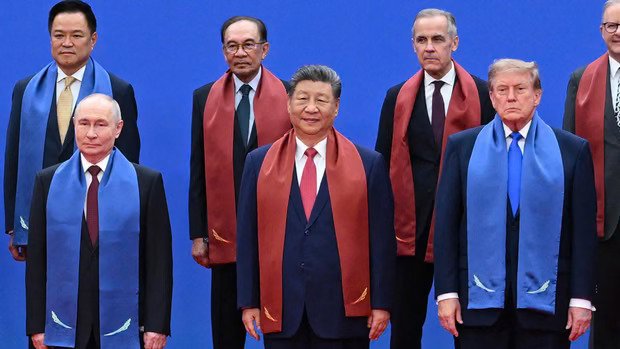
SHENZHEN: The first-ever trilateral meeting between US President Donald Trump, Chinese President Xi Jinping and Russian President Vladimir Putin has reshaped diplomatic optics among the world’s major powers, bringing together three leaders whose relations have been marked by strategic rivalry, confrontation and competing visions of the international order.
Held on November 19 on the sidelines of the Asia-Pacific Economic Cooperation (APEC) summit, the 90-minute meeting produced a joint peace declaration and commitments to maintain strategic stability, strengthen international dialogue and address nuclear risks. However, it offered little concrete progress on the major conflicts and geopolitical disputes confronting the international community.
While the summit was presented as a diplomatic success, its most significant outcome may have been political rather than substantive. China and Russia appear to have gained the greatest strategic advantage from the gathering, with Beijing demonstrating its diplomatic influence and Moscow securing an opportunity to challenge the perception of its international isolation.
China’s diplomatic advantage
For Xi Jinping, hosting the unprecedented meeting was an opportunity to position China at the centre of global diplomacy. Bringing the American and Russian presidents together reinforced Beijing’s image as a major power capable of facilitating dialogue among countries with competing strategic interests.
The summit also strengthened China’s international standing at a time when relations with Washington remain shaped by economic competition, technological rivalry, security tensions and disagreements over the global balance of power.
Beijing’s advantage was not necessarily a breakthrough on any particular issue, but the opportunity to demonstrate that the international system cannot easily be managed without Chinese participation.
China has increasingly sought to portray itself as a supporter of multilateralism, diplomatic engagement and a more balanced international order. The trilateral meeting offered an opportunity to reinforce that narrative while placing Xi at the centre of an event involving the world’s two other major nuclear powers.
Putin breaks through diplomatic isolation
For Putin, the meeting carried a different but equally important significance. Sitting alongside Trump and Xi at an international summit sends a message that Russia remains a major geopolitical actor despite Western efforts to isolate Moscow following its invasion of Ukraine.
The Russian president’s participation in a high-profile diplomatic gathering with the American and Chinese leaders provides political visibility and reinforces Moscow’s claim that it remains indispensable to discussions concerning international security.
Putin also used the opportunity to raise the Ukraine conflict, an issue central to Russia’s diplomatic priorities. Although the summit did not produce an agreement on the war, direct engagement with Trump and Xi provided Moscow an additional platform to present its position and pursue its strategic interests.
The symbolism of the meeting may therefore be more consequential for Russia than any immediate diplomatic outcome. International recognition, access to major-power dialogue and the ability to participate in discussions about global security all strengthen Moscow’s position.
Trump and the politics of global leadership
Trump also benefited from the meeting, particularly through its political and diplomatic optics. His willingness to engage directly with Xi and Putin reinforces his image as a president who seeks to pursue unconventional diplomacy and position himself at the centre of major international negotiations.
Trump has repeatedly presented direct engagement with world leaders as an instrument for resolving conflicts and advancing American interests. The trilateral format allowed him to demonstrate his willingness to communicate with strategic rivals rather than rely exclusively on traditional alliances or established diplomatic frameworks.
However, the summit also raises questions about the direction of American foreign policy. Engagement with China and Russia may offer opportunities for de-escalation, but it could also create uncertainty among traditional American allies, particularly in Europe, who remain concerned about Russia’s war in Ukraine and the future of international security arrangements.
Symbolism without substantive agreements
Despite the historic nature of the gathering, the joint declaration largely remained within the boundaries of broad diplomatic commitments.
The three leaders agreed to maintain dialogue, discuss nuclear-risk reduction, support reform of the United Nations and address issues relating to energy supplies and international institutions. They also expressed concerns about the jurisdiction of the International Criminal Court.
Yet the declaration did not resolve the war in Ukraine, establish a framework for ending the US-Iran conflict or produce binding commitments on nuclear disarmament.
The summit therefore demonstrated the distinction between diplomatic engagement and substantive negotiations. Bringing leaders together can reduce tensions, establish communication channels and build confidence, but it cannot replace negotiations involving the parties directly engaged in conflicts.
The meeting may have created momentum for future dialogue, particularly if the three countries pursue regular high-level exchanges and establish crisis communication mechanisms. Its longer-term significance will depend on whether these commitments translate into practical cooperation.
The concerns of smaller countries
Perhaps the most important implication of the summit concerns countries that were not represented at the table.
As major powers increasingly engage in direct negotiations over international security, trade, conflicts and global institutions, smaller and middle-sized countries face the risk of being marginalised in decisions that affect their sovereignty and security.
A world in which the United States, China and Russia manage their differences through direct arrangements may reduce the risk of confrontation among major powers. However, it could also reinforce a hierarchy in which powerful states determine the rules while weaker countries bear the consequences.
This is particularly concerning for Europe, where the future of Ukraine and the credibility of international legal institutions remain central questions. The summit’s criticism of the International Criminal Court may also deepen concerns about the weakening of international accountability mechanisms.
The international order cannot remain stable merely through agreements among powerful states if the interests and sovereignty of other countries are disregarded.
A new diplomatic reality?
The Trump-Xi-Putin meeting may eventually become a recurring diplomatic format, particularly if the leaders pursue regular engagement and crisis-management mechanisms. Such a development could provide opportunities to manage strategic competition and reduce the risks of miscalculation among nuclear powers.
But the summit also exposes the changing nature of international politics. Global diplomacy is increasingly shaped by personal relationships among powerful leaders, strategic bargaining and arrangements between major powers rather than exclusively through established multilateral institutions.
China and Russia appear to have emerged as the biggest beneficiaries of the meeting, although Trump also gained an opportunity to project himself as a central figure in global diplomacy.
The summit was historic because it brought together leaders who represent competing interests and different visions of the international order. Its real significance, however, will not be determined by photographs, declarations or diplomatic praise.
It will depend on whether this engagement produces a more stable international system—or merely strengthens the influence of the world’s most powerful states over a global order in which smaller nations have increasingly limited voices.