
Republic Policy | Politics. Public Order. Social Justice.
Around 320,000 people demonstrate across France over living costs, inequality and public services. Police arrest 565 people as violence erupts in several cities, while youth-led protests in Germany also turn confrontational.
PARIS, October 31, 2026 — Tens of thousands of people took to the streets across France on Saturday in a third wave of demonstrations over the rising cost of living, widening inequalities and deteriorating public services. Although most marches remained peaceful, clashes broke out in Paris, Marseille and other cities as masked groups confronted police towards the end of the rallies.
France’s Interior Ministry estimated that approximately 320,000 people participated in demonstrations nationwide, down from around 410,000 the previous weekend. Some 70,000 protesters marched in Paris, following a route along the boulevards on the city’s south-eastern outskirts rather than through the centre.
Interior Minister Laurent Nuñez said around 150 planned demonstrations had passed peacefully. However, he described the violence committed by some groups as extraordinary. By late Saturday, police had arrested 565 people nationwide.
Nuñez said one police officer in Paris had been struck by a Molotov cocktail, describing the incident as an attempted murder. Four police officers and one gendarme were injured in the capital.
Clashes erupt as peaceful marches end
The Paris demonstration began peacefully at Porte de Bagnolet, near the city’s ring road. Protesters carried placards criticising the cost of living and police tactics, including slogans such as “No need for teargas to make our future look bleak”.
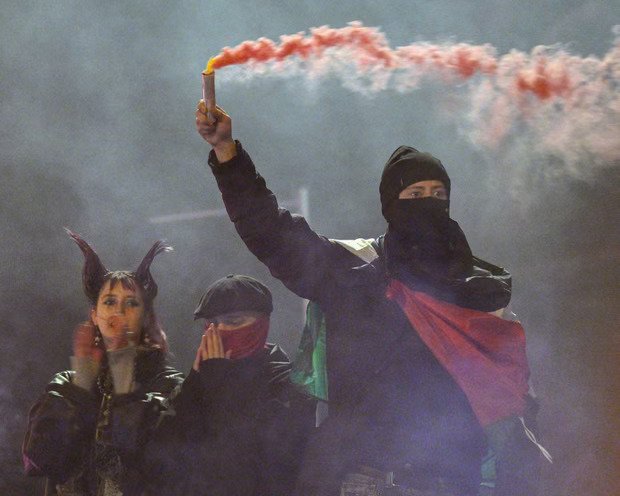
However, violence erupted near the march’s destination at Porte de Charenton. Groups of masked individuals dressed in black reportedly used hammers to remove paving stones and throw them at police. At least one incendiary device was also directed at security forces.
Police responded with tear gas and baton charges. The Paris police prefecture said several hundred hard-core rioters had attacked officers with projectiles, prompting police to intervene to restore public order.
Similar confrontations occurred elsewhere. In Lyon, police fired tear gas after protesters threw projectiles. In Toulouse, officers used water cannon against an unauthorised demonstration attended by several thousand people, many of them young protesters.
Authorities had anticipated the possibility of violence. Nuñez said earlier in the week that approximately 70,000 police officers and gendarmes, including specialised units, would be deployed nationwide. He had described Saturday as a high-risk day.
Students, unions and yellow vests join demonstrations
The demonstrations brought together high school students, trade unions and supporters of the yellow vest movement, united by concerns over household costs, inequality and the performance of President Emmanuel Macron’s government.
Some protesters used Halloween costumes to draw attention to their grievances. In Lyon, demonstrators dressed as historical and fictional characters carried placards criticising economic hardship and political leadership.
Jérôme Rodrigues, a protester in Paris, criticised the government’s economic management, arguing that families were struggling with everyday expenses while public authorities handled billions in public funds.
In Nantes, demonstrator Camille Guérin said the movement opposed the rising cost of living and the far right, while supporting students’ demands and greater public participation in decision-making.
The latest rallies followed widespread street violence and looting on October 17, during the first wave of mass demonstrations, which marked one of the most serious episodes of civil unrest in France in recent years.
Student organisations have announced plans for further high school and university blockades on Tuesday and Thursday. They also intend to join a workers’ and trade union demonstration scheduled for November 5.
Germany sees youth-led protests and police action
Unrest also spread to Germany, where youth-led demonstrations organised by the group “Gen Z regelt!” — translated as “Gen Z will sort this” — took place in dozens of cities.
The protests called for improvements in education, healthcare, climate policy and living standards. Most demonstrations were peaceful, but confrontations developed in several locations as evening approached.
In Frankfurt, at least two shops were looted and several others damaged, according to a Reuters witness. Police attempted to regain control after protesters set off fireworks, temporarily interrupting a march.
In Cologne, police used water cannon after demonstrators reportedly targeted officers with fireworks. In Berlin, protesters threw bottles and eggs, while barricades were set alight in Hamburg. German newspaper Bild also reported the use of pepper spray by police in some locations.
Demonstrations continue elsewhere
Anti-government protests also took place in Albania’s capital, Tirana, where demonstrators renewed calls for Prime Minister Edi Rama to resign.
The gathering began peacefully outside the education ministry but later turned violent when masked youths threw paving stones and firebombs at police and set rubbish bins alight.
Police were also on alert in Barcelona after an anonymous TikTok network called Blocus urged people to gather. Italian authorities remained watchful following recent clashes in Milan, Turin and Bologna.
A wider test of public trust and social stability
The protests across Europe reflect a range of national grievances, but the recurring concerns include the cost of living, public services, inequality and demands for greater political accountability.
The violence accompanying some demonstrations has also placed pressure on governments to maintain public order while protecting the right to peaceful assembly. The distinction between peaceful protesters and groups engaged in violence remains central to any assessment of the demonstrations.
For European governments, the challenge extends beyond managing street confrontations. Addressing the economic and institutional grievances driving public discontent will be essential to restoring confidence and preventing recurring unrest.
Source: The Guardian; Reuters. Figures and accounts of incidents are attributed to the respective authorities and news reports. Information reflects the situation reported on October 31, 2026.
Slideshow: Protests and Clashes Across Europe
Slide 1 — 320,000 Demonstrate Across France
Protesters take to the streets over living costs, inequality and declining public services.
Slide 2 — 565 Arrested Nationwide
France’s Interior Ministry reports 565 arrests as clashes erupt in several cities.
Slide 3 — Violence in Paris
Masked groups throw paving stones and incendiary devices at police. Officers respond with tear gas and baton charges.
Slide 4 — Students and Unions Join Forces
High school students, trade unions and yellow vest protesters unite around economic and political grievances.
Slide 5 — Germany Faces Youth-Led Unrest
Demonstrations over education, healthcare, climate and living costs turn confrontational in several German cities.
Slide 6 — Protests Spread Beyond France and Germany
Demonstrations also take place in Albania, while authorities remain alert in Spain and Italy.
Slide 7 — The Wider European Challenge
Governments face the twin task of protecting peaceful protest and addressing the economic grievances driving public discontent.Around 320,000 people demonstrate across France over living costs, inequality and public services. Police arrest 565 people as violence erupts in several cities, while youth-led protests in Germany also turn confrontational.
PARIS, October 31, 2026 — Tens of thousands of people took to the streets across France on Saturday in a third wave of demonstrations over the rising cost of living, widening inequalities and deteriorating public services. Although most marches remained peaceful, clashes broke out in Paris, Marseille and other cities as masked groups confronted police towards the end of the rallies.
France’s Interior Ministry estimated that approximately 320,000 people participated in demonstrations nationwide, down from around 410,000 the previous weekend. Some 70,000 protesters marched in Paris, following a route along the boulevards on the city’s south-eastern outskirts rather than through the centre.
Interior Minister Laurent Nuñez said around 150 planned demonstrations had passed peacefully. However, he described the violence committed by some groups as extraordinary. By late Saturday, police had arrested 565 people nationwide.
Nuñez said one police officer in Paris had been struck by a Molotov cocktail, describing the incident as an attempted murder. Four police officers and one gendarme were injured in the capital.
Clashes erupt as peaceful marches end
The Paris demonstration began peacefully at Porte de Bagnolet, near the city’s ring road. Protesters carried placards criticising the cost of living and police tactics, including slogans such as “No need for teargas to make our future look bleak”.
However, violence erupted near the march’s destination at Porte de Charenton. Groups of masked individuals dressed in black reportedly used hammers to remove paving stones and throw them at police. At least one incendiary device was also directed at security forces.
Police responded with tear gas and baton charges. The Paris police prefecture said several hundred hard-core rioters had attacked officers with projectiles, prompting police to intervene to restore public order.
Similar confrontations occurred elsewhere. In Lyon, police fired tear gas after protesters threw projectiles. In Toulouse, officers used water cannon against an unauthorised demonstration attended by several thousand people, many of them young protesters.
Authorities had anticipated the possibility of violence. Nuñez said earlier in the week that approximately 70,000 police officers and gendarmes, including specialised units, would be deployed nationwide. He had described Saturday as a high-risk day.
Students, unions and yellow vests join demonstrations
The demonstrations brought together high school students, trade unions and supporters of the yellow vest movement, united by concerns over household costs, inequality and the performance of President Emmanuel Macron’s government.
Some protesters used Halloween costumes to draw attention to their grievances. In Lyon, demonstrators dressed as historical and fictional characters carried placards criticising economic hardship and political leadership.
Jérôme Rodrigues, a protester in Paris, criticised the government’s economic management, arguing that families were struggling with everyday expenses while public authorities handled billions in public funds.
In Nantes, demonstrator Camille Guérin said the movement opposed the rising cost of living and the far right, while supporting students’ demands and greater public participation in decision-making.
The latest rallies followed widespread street violence and looting on October 17, during the first wave of mass demonstrations, which marked one of the most serious episodes of civil unrest in France in recent years.
Student organisations have announced plans for further high school and university blockades on Tuesday and Thursday. They also intend to join a workers’ and trade union demonstration scheduled for November 5.
Germany sees youth-led protests and police action
Unrest also spread to Germany, where youth-led demonstrations organised by the group “Gen Z regelt!” — translated as “Gen Z will sort this” — took place in dozens of cities.
The protests called for improvements in education, healthcare, climate policy and living standards. Most demonstrations were peaceful, but confrontations developed in several locations as evening approached.
In Frankfurt, at least two shops were looted and several others damaged, according to a Reuters witness. Police attempted to regain control after protesters set off fireworks, temporarily interrupting a march.
In Cologne, police used water cannon after demonstrators reportedly targeted officers with fireworks. In Berlin, protesters threw bottles and eggs, while barricades were set alight in Hamburg. German newspaper Bild also reported the use of pepper spray by police in some locations.
Demonstrations continue elsewhere
Anti-government protests also took place in Albania’s capital, Tirana, where demonstrators renewed calls for Prime Minister Edi Rama to resign.
The gathering began peacefully outside the education ministry but later turned violent when masked youths threw paving stones and firebombs at police and set rubbish bins alight.
Police were also on alert in Barcelona after an anonymous TikTok network called Blocus urged people to gather. Italian authorities remained watchful following recent clashes in Milan, Turin and Bologna.
A wider test of public trust and social stability
The protests across Europe reflect a range of national grievances, but the recurring concerns include the cost of living, public services, inequality and demands for greater political accountability.
The violence accompanying some demonstrations has also placed pressure on governments to maintain public order while protecting the right to peaceful assembly. The distinction between peaceful protesters and groups engaged in violence remains central to any assessment of the demonstrations.
For European governments, the challenge extends beyond managing street confrontations. Addressing the economic and institutional grievances driving public discontent will be essential to restoring confidence and preventing recurring unrest.
Source: The Guardian; Reuters. Figures and accounts of incidents are attributed to the respective authorities and news reports. Information reflects the situation reported on October 31, 2026.
Slideshow: Protests and Clashes Across Europe
Slide 1 — 320,000 Demonstrate Across France
Protesters take to the streets over living costs, inequality and declining public services.
Slide 2 — 565 Arrested Nationwide
France’s Interior Ministry reports 565 arrests as clashes erupt in several cities.
Slide 3 — Violence in Paris
Masked groups throw paving stones and incendiary devices at police. Officers respond with tear gas and baton charges.
Slide 4 — Students and Unions Join Forces
High school students, trade unions and yellow vest protesters unite around economic and political grievances.
Slide 5 — Germany Faces Youth-Led Unrest
Demonstrations over education, healthcare, climate and living costs turn confrontational in several German cities.
Slide 6 — Protests Spread Beyond France and Germany
Demonstrations also take place in Albania, while authorities remain alert in Spain and Italy.
Slide 7 — The Wider European Challenge
Governments face the twin task of protecting peaceful protest and addressing the economic grievances driving public discontent.