
Republic Policy | Political and Governance Affairs
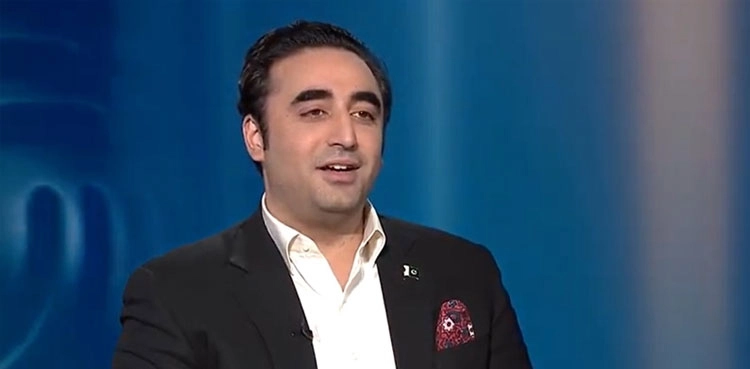
KARACHI: Pakistan Peoples Party (PPP) Chairman Bilawal Bhutto-Zardari has reiterated his party’s opposition to the division of Sindh, declaring that the provincial assembly has already expressed the will of the people and that further debate over creating new administrative units in the province should end.
Speaking to journalists on Tuesday after inaugurating the expansion of Spencer Eye Hospital in Karachi, Bilawal maintained that decisions concerning Sindh’s territorial and administrative future belonged exclusively to its people and their elected representatives.
He said the PPP and the Sindh Assembly had repeatedly rejected proposals to divide the province, arguing that the assembly’s position reflected the democratic mandate of Sindh’s population.
Bilawal criticised political figures advocating territorial division, accusing them of encouraging political discord instead of addressing pressing public concerns.
His remarks come amid renewed disagreements between the PPP and the Muttahida Qaumi Movement-Pakistan (MQM-P) over the creation of additional administrative units, particularly in urban Sindh.
Constitutional Amendment and Provincial Autonomy
Responding to questions about a possible 28th Constitutional Amendment, Bilawal denied that the federal government or its coalition partners had discussed proposals to alter the 18th Amendment.
The 18th Amendment, enacted in 2010, significantly expanded provincial autonomy by transferring several responsibilities from the federal government to the provinces.
Any proposal to redraw provincial boundaries would also face substantial constitutional requirements.
Under Article 239(4) of the Constitution, a constitutional amendment altering a province’s boundaries cannot be presented for presidential assent without approval by a two-thirds majority of the total membership of the affected provincial assembly.
The constitutional provision makes the consent of the provincial legislature central to any proposal for territorial reorganisation.
The Sindh Assembly unanimously adopted a resolution on September 3 rejecting proposals to divide the province or separate any of its districts.
The PPP considers the resolution a decisive expression of the province’s political position, although the broader debate over administrative restructuring remains unresolved.
MQM-P Advocates Administrative Reorganisation
MQM-P leaders have maintained that Pakistan’s expanding population and growing urban pressures require a more responsive administrative structure.
Party chairman Khalid Maqbool Siddiqui and senior leaders Mustafa Kamal and Farooq Sattar have advocated additional administrative units and stronger local governments, arguing that existing arrangements have failed to provide adequate public services and effective representation.
Their proposals particularly concern Karachi, Hyderabad and other urban centres, where demands for greater control over municipal resources, development planning and service delivery remain politically significant.
Federal Interior Minister Mohsin Naqvi has also supported reconsidering Pakistan’s existing administrative structure.
He has argued that creating additional provinces or administrative units could strengthen accountability, improve access to opportunities and promote a fairer distribution of resources.
The PPP, however, maintains that Sindh’s historical, cultural and constitutional identity must remain intact.
The disagreement reflects a wider governance question: whether administrative efficiency requires territorial restructuring or whether stronger institutions and meaningful decentralisation can improve public services within existing provincial boundaries.
Creating new provinces and empowering local governments are distinct constitutional and administrative approaches, although both feature prominently in Pakistan’s continuing debate over governance reform.
Bilawal Calls for Greater Federal Support for Karachi
During the media interaction, Bilawal also criticised what he described as inadequate federal support for Karachi.
He emphasised that Pakistan’s principal economic centre requires coordinated efforts by federal, provincial and local authorities to address its development challenges.
According to the PPP chairman, Karachi’s administrative arrangements make cooperation among government institutions essential for improving public services.
He urged the federal government and relevant institutions to give greater attention to infrastructure development and the needs of the provincial capital.
Bilawal also expressed concern about the worsening electricity situation, observing that consumers faced either inadequate supply or unaffordable tariffs.
He said high energy costs and continuing economic difficulties were placing additional pressure on households throughout Sindh and other parts of Pakistan.
Spencer Eye Hospital Expansion Inaugurated
Bilawal made the remarks while inaugurating improvements to the historic Dr Kaikhusrow Nanabhoy Spencer Eye Hospital, developed through a public-private partnership.
The hospital has been equipped with solar power facilities to reduce its dependence on grid electricity.
Bilawal expressed interest in extending similar energy arrangements to other parts of Lyari to provide residents with more affordable electricity.
He welcomed the hospital’s restoration and its provision of free medical treatment, noting that rising healthcare expenses had made access to affordable services increasingly important.
Karachi Mayor Barrister Murtaza Wahab said the hospital’s foundation stone was laid in 1938 and that it began operating in 1940.
He explained that the historic institution had remained closed for a period before restoration work was undertaken.
The upgraded facility now provides free medical examinations and outpatient services. Its operating theatre has also been made functional, while medicines and spectacles are available at discounted rates.
Wahab said further improvements would be undertaken to strengthen healthcare services.
Governance Debate Remains Unresolved
Bilawal’s latest remarks underline the continuing political disagreement over Sindh’s administrative future.
While the PPP regards territorial integrity and provincial autonomy as fundamental principles, advocates of administrative restructuring argue that smaller, more responsive governing units could improve accountability and public service delivery.
The controversy also raises questions about the relationship between provincial authority, local government empowerment and the constitutional structure of Pakistan’s federation.
For now, the Sindh Assembly’s opposition to territorial division remains clear, but competing proposals for administrative reform continue to shape the national political debate.