
REPUBLIC POLICY | ENERGY & ECONOMY
ISLAMABAD: Pakistan and the United States have agreed to explore deeper cooperation in the energy sector, with discussions focusing on fuel security, long-term supply arrangements, refinery modernisation and investment opportunities as the continuing conflict in the Middle East creates uncertainty across international energy markets.
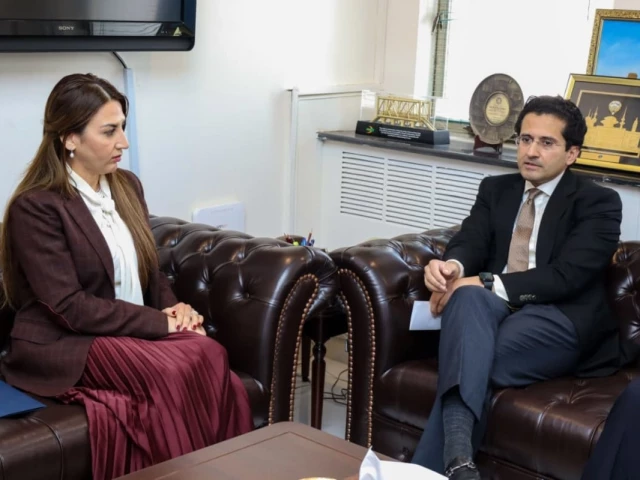
Federal Minister for Petroleum Ali Pervaiz Malik met US Chargé d’Affaires Natalie Baker on Monday to discuss ways of expanding bilateral energy cooperation and strengthening Pakistan’s capacity to withstand disruptions in global fuel supplies.
The meeting took place against the backdrop of mounting geopolitical tensions that have complicated energy planning for countries dependent on imported petroleum products and liquefied natural gas (LNG).
Malik briefed the American diplomat on measures undertaken by the government to maintain uninterrupted fuel supplies despite the challenging regional environment. He said the Middle East conflict had created difficulties for fuel availability, making advance planning and coordinated government action increasingly important.
Baker praised Pakistan’s management of the situation, observing that the country had avoided fuel shortages despite the pressures generated by regional instability.
The discussions reflected a broader effort by Islamabad and Washington to move beyond immediate supply concerns and establish a more durable partnership involving investment, technology and commercial energy arrangements.
Energy Security Becomes a Strategic Priority
For Pakistan, reliable access to energy remains closely connected to economic stability, industrial production and household welfare.
Disruptions in international fuel markets can affect transportation, electricity generation, manufacturing and agriculture. Rising import costs can also place additional pressure on foreign exchange resources and increase inflationary risks.
The Middle East conflict has made these vulnerabilities particularly significant, highlighting the importance of diversified supply arrangements and stronger domestic energy infrastructure.
During the meeting, Malik reaffirmed Pakistan’s commitment to securing its energy requirements and emphasised that technical teams from both countries were already engaged in identifying potential areas of cooperation.
He stressed the importance of maintaining reliable supplies while exploring opportunities that could strengthen Pakistan’s energy system over the longer term.
The discussions also indicated that energy cooperation is becoming an increasingly important component of economic engagement between Pakistan and the United States.
US Companies Explore Long-Term Energy Supply Agreements
A central element of the meeting was the possibility of establishing long-term energy supply contracts involving American companies.
Baker expressed Washington’s willingness to work closely with Pakistan in addressing its energy requirements and emphasised the importance of creating commercial opportunities for US businesses.
She conveyed optimism about developing long-term supply arrangements that could benefit both countries.
Such agreements could potentially provide Pakistan with greater predictability in energy procurement while creating sustained business opportunities for American suppliers.
However, the commercial viability of any future arrangements would depend on pricing, contractual terms, infrastructure capacity and Pakistan’s evolving energy demand.
Senior officials from Pakistan State Oil and Pakistan LNG Limited also participated in the discussions.
The managing directors of both companies briefed the participants on interest expressed by American businesses in supplying LNG to Pakistan.
Their participation underscored the practical commercial dimensions of the proposed cooperation, particularly in the procurement and transportation of imported energy.
While the meeting demonstrated mutual interest, no final supply agreement or investment commitment was announced.
Refinery Modernisation Offers Investment Opportunities
Pakistan’s refinery upgradation programme emerged as another important area for potential cooperation.
Malik highlighted opportunities for American financial institutions to participate in investments associated with modernising Pakistan’s existing refining infrastructure.
Refinery modernisation is significant because ageing facilities can limit operational efficiency and the production of higher-quality petroleum products.
Investment in improved refining technology could help strengthen domestic processing capacity, improve operational performance and support the country’s longer-term energy requirements.
For Pakistan, attracting foreign investment into refinery development would also provide an opportunity to combine international financing with technological expertise.
The minister presented the programme as a potential avenue for expanding economic engagement with the United States beyond conventional fuel imports.
Nevertheless, the success of such investments would depend on commercially sustainable projects, regulatory clarity and financing arrangements acceptable to participating institutions.
Mining and Energy Investment Form Part of Wider Cooperation
The meeting also addressed investment opportunities beyond petroleum supply.
Malik invited American companies to participate in the forthcoming Pakistan Minerals Investment Forum, presenting the event as an opportunity to explore the country’s investment potential.
The invitation reflects Pakistan’s broader effort to attract international capital into energy, mining and mineral development.
Recent engagements between the two countries suggest growing interest in these sectors.
On October 25, Gilgit-Baltistan Chief Minister Advocate Amjad Hussain Azar said the United States had expressed interest in investing in the region’s energy sector.
He also disclosed that a public-private partnership unit had been established to facilitate investment initiatives.
Earlier, during a February 22 meeting in Washington between Finance Minister Muhammad Aurangzeb and US Secretary of Commerce Howard Lutnick, American interest was expressed in Pakistan’s information technology, mining, minerals and energy industries.
Together, these engagements illustrate the range of sectors being discussed as part of the wider bilateral economic relationship.
American Technology to Support Domestic Oil and Gas Production
Cooperation in energy technology has already produced a significant commercial agreement.
On September 2, Oil and Gas Development Company Limited (OGDCL) signed a contract with American energy technology company Baker Hughes to improve production from ageing oil and gas fields.
Under the agreement, Baker Hughes is expected to deploy its Mature Assets Solutions technology to help identify additional production opportunities and improve the performance of established hydrocarbon assets.
Mature oil and gas fields naturally experience declining output over time. Advanced technical assessments and production technologies can help operators identify recoverable resources and improve extraction efficiency.
The agreement forms part of OGDCL’s broader Production Optimisation Drive, which seeks to improve domestic hydrocarbon output.
Baker, who attended the signing ceremony, described the partnership as an important milestone in bilateral energy cooperation.
She emphasised the relationship between energy availability and economic security, noting that technological collaboration could contribute to Pakistan’s efforts to strengthen its domestic energy position.
From Diplomatic Engagement to Practical Outcomes
The latest discussions demonstrate a shared interest in strengthening Pakistan-US economic relations through energy cooperation.
For Pakistan, the potential benefits include more diversified fuel supplies, improved refining infrastructure, foreign investment and access to advanced production technologies.
For American companies, Pakistan represents opportunities in energy supply, infrastructure financing, technical services and mineral development.
However, diplomatic discussions alone cannot guarantee energy security. Sustainable progress will require commercially viable agreements, transparent investment frameworks, effective implementation and coordination among public institutions and private investors.
Malik expressed appreciation for American support and said stronger bilateral engagement could contribute to Pakistan’s long-term energy security.
As uncertainty in the Middle East continues to affect international markets, Pakistan faces the immediate challenge of maintaining fuel availability alongside the longer-term task of reducing its vulnerability to external supply disruptions.
The significance of the emerging Pakistan-US energy partnership will ultimately depend on whether these discussions translate into dependable supplies, productive investment and stronger domestic energy capacity.