

Opinion | Naeem Afzal
Public transport in Pakistan is frequently judged by a narrow financial question: how much revenue does it generate, and how much does the government have to spend to keep it running? By this measure, many public transport systems appear to be expensive and inefficient. Yet this approach overlooks the fundamental purpose of public transport. It is not merely a commercial service designed to recover its operating costs through ticket sales. It is essential economic infrastructure that connects people to employment, education, healthcare and the wider opportunities of urban life.
The real question, therefore, is not whether public transport requires subsidies. It is whether the economic and social benefits generated by those subsidies justify public expenditure—and whether governments are designing systems that deliver those benefits efficiently.
The scale of public expenditure makes this question particularly important. Estimates discussed for FY2026 suggest that the Punjab and Khyber Pakhtunkhwa governments together spent more than Rs40 billion on the day-to-day operating costs of public transport projects. In Punjab’s mass-transit systems, subsidies reportedly cover around 75 per cent of operating costs, leaving only 25 per cent to be recovered through passenger fares. In FY2025, estimated subsidies included approximately Rs22 billion in Punjab, Rs4 billion in Khyber Pakhtunkhwa and Rs4 billion in Sindh.
These figures invite scrutiny, but they do not, by themselves, establish that public transport is wasteful. Public transport systems across the world commonly operate with government support. New York’s public transit system, for example, has been cited as recovering only about 34 per cent of its operating costs through fares. The principle is straightforward: passengers pay part of the cost, while the wider public benefits from improved mobility, reduced congestion and greater economic activity.
Pakistan’s own fare structures reflect this model. During FY2025, fares on mass-transit systems reportedly ranged between Rs20 and Rs100, while estimated operating costs were between Rs80 and Rs110 per passenger. Farebox recovery has been estimated at up to 50 per cent in Sindh, 35 per cent in Peshawar and around 25 per cent in Punjab. Such differences deserve examination, but fare recovery alone cannot determine whether a system is delivering value. A service that enables low-income workers to reach employment, allows students to attend educational institutions and makes cities more accessible may generate returns that never appear in its ticket revenue.
Mobility is an economic opportunity
The economic value of public transport begins with access. A person who cannot afford private transport may be effectively excluded from jobs located beyond walking distance. A student may lose educational opportunities because daily commuting is unaffordable or unreliable. Women may face additional barriers when public transport is unsafe, inconvenient or poorly connected to residential areas.
Public transport can reduce these barriers and expand the effective economic geography of a city. It allows workers to access a wider labour market, businesses to draw from a larger workforce and educational institutions to serve students from more distant neighbourhoods.
Evidence from Pakistan points to the importance of this function. Figures attributed to research on Peshawar’s Bus Rapid Transit system suggest that women, students and lower-income passengers constitute approximately 80 per cent of its ridership. Women reportedly account for around 30 per cent of ridership on BRT systems, compared with approximately 15 per cent on conventional buses and vans. If these estimates are supported by consistent passenger data, they demonstrate why public transport policy must consider who benefits, not simply how much revenue is collected.
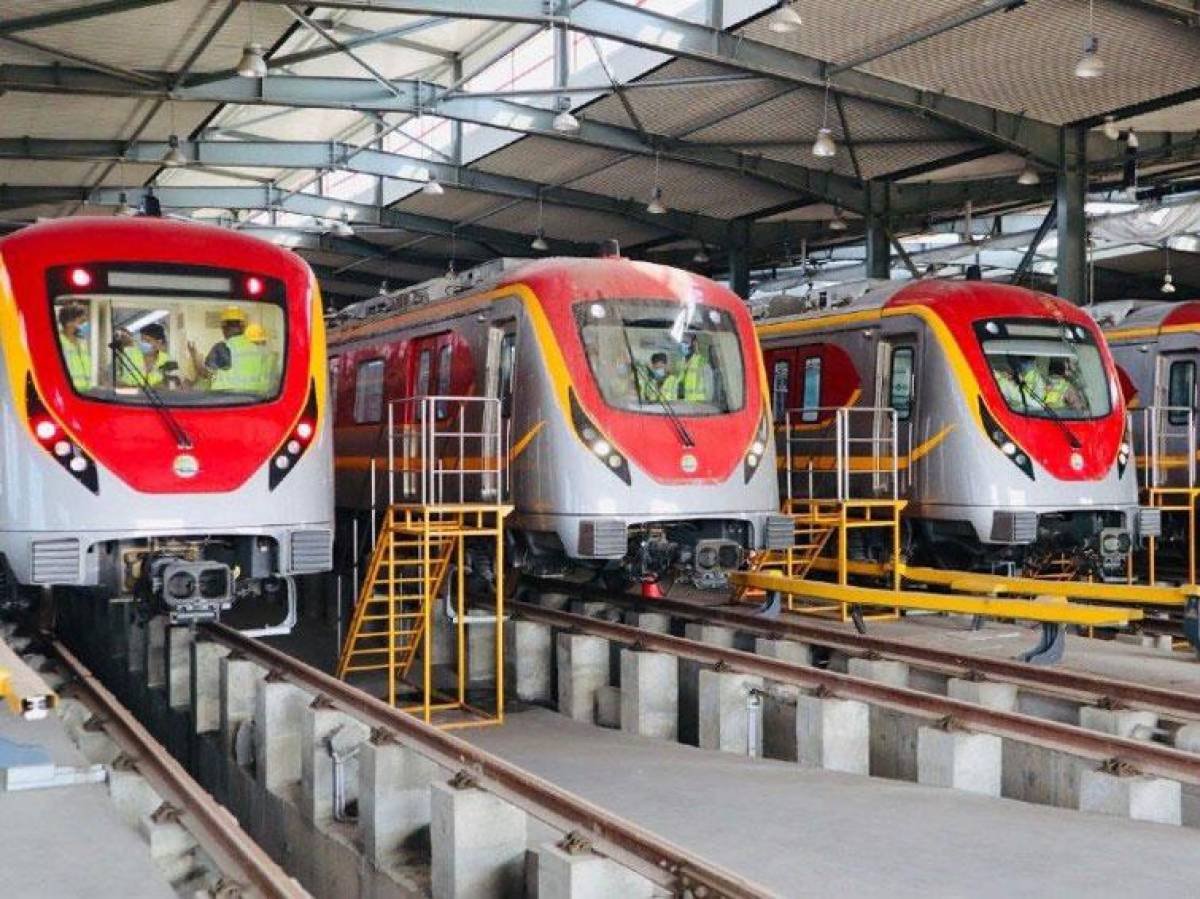
The benefits extend beyond individual passengers. Better public transport can reduce the number of private vehicles on roads, lower congestion and improve urban air quality. Research cited on Lahore’s Metrobus system estimates that it has displaced approximately 12.2 million miles of private vehicle travel annually, generating savings estimated at US$4.5 million. Other estimates suggest that an average passenger saves around 23 minutes per trip, translating into substantial economic value when aggregated across thousands of daily journeys.
These figures should be evaluated against transparent methodologies and updated data. Nevertheless, they illustrate an important point: time saved, fuel avoided and pollution reduced are economic benefits, even when they do not appear in the operating accounts of a transport authority.
The last-mile problem
Pakistan’s challenge, however, is not limited to the availability of mass-transit infrastructure. It is also about whether people can conveniently reach it.
A metro or BRT corridor may carry large numbers of passengers along a designated route, but its usefulness remains limited if residential neighbourhoods, workplaces and educational institutions are poorly connected to stations. This is the last-mile problem, and it can undermine the value of otherwise substantial public investment.
Comparative figures cited for rapid-transit accessibility indicate that around 45 per cent of New York residents live within one kilometre of rapid transit, compared with approximately 14 per cent in Lahore and 13 per cent in Peshawar. Although such comparisons depend on population density, network definitions and measurement methods, they highlight the importance of proximity and connectivity.
A public transport system should therefore not be evaluated only by the length of its corridors or the number of buses it operates. Feeder services, safe pedestrian routes, accessible stations, reliable schedules and integration between different modes of transport are equally important. Without these connections, governments may spend billions constructing infrastructure that remains inaccessible to a significant proportion of the population.
Subsidies must produce measurable outcomes
There is, however, a legitimate concern about Pakistan’s public transport model. Several projects have reportedly recorded ridership substantially below their original PC-1 projections, in some cases reaching less than half of the anticipated passenger numbers. If demand forecasts are consistently inaccurate, operating subsidies can become a permanent fiscal burden without delivering the expected public benefit.
This is where accountability must enter the debate. Governments should publish annual performance assessments covering actual ridership, subsidy per passenger, service reliability, operating costs, passenger safety, gender accessibility, emissions and the extent of last-mile connectivity. Project approvals should be based on realistic demand assessments rather than politically attractive projections. Subsidies should be transparent, targeted where appropriate and linked to measurable service standards.
The objective should not be to eliminate subsidies indiscriminately. It should be to ensure that every rupee of public support produces a demonstrable improvement in mobility and economic opportunity.
Pakistan needs to move beyond the false choice between financially profitable transport and subsidised public services. A transport system can be financially loss-making while generating significant economic and social returns. Equally, a heavily subsidised project can represent poor public policy if it is inaccessible, underused or badly managed.
The future of Pakistan’s cities will depend partly on whether governments understand mobility as an investment in productivity, inclusion and urban development. Public transport must connect people to opportunity, not merely move them from one station to another.
The measure of a successful public transport system is not how little subsidy it receives, but how much public value it creates.