
With Inputs from the New York Times
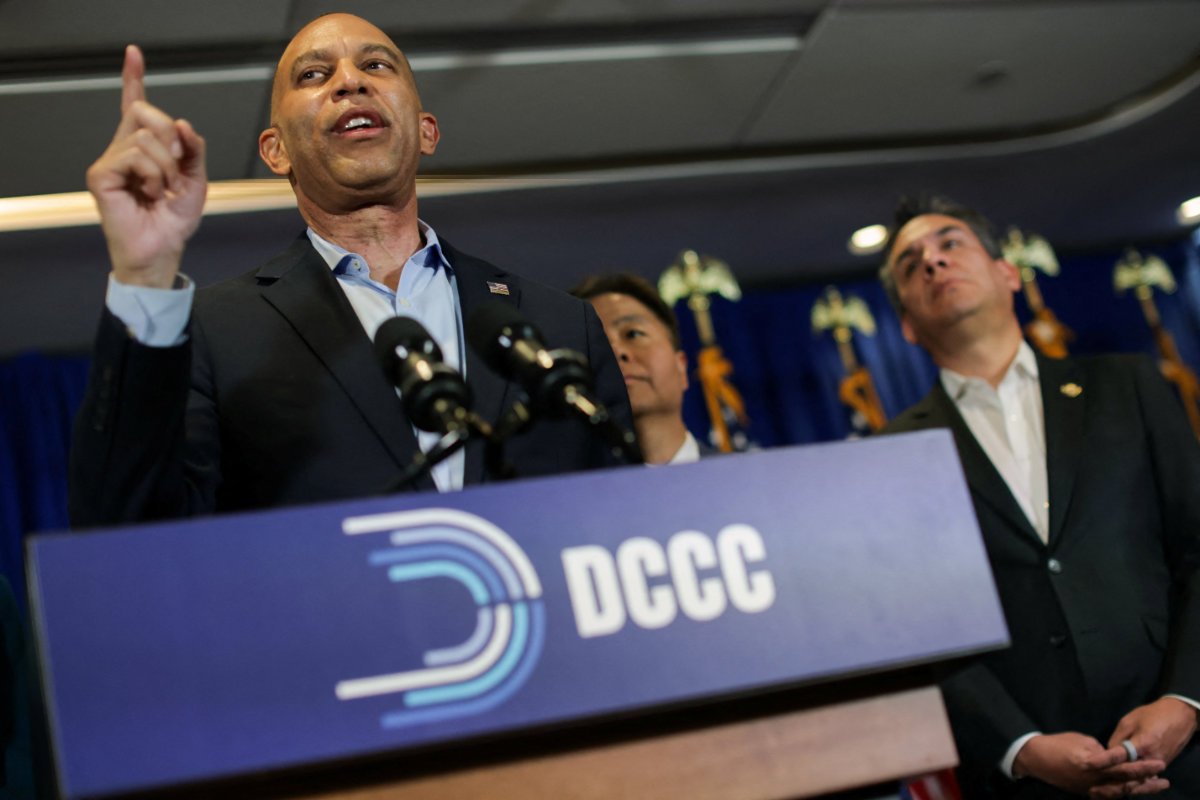
The Democrats’ sweeping victory in the 2026 midterm elections has transformed the political landscape in Washington. A party that had been facing the prospect of governing under an increasingly assertive Republican administration now finds itself with a new majority in both chambers of Congress. The scale of the result amounts to a serious electoral rebuke of President Donald Trump and his party. But an electoral defeat for Republicans is not, by itself, a governing programme for Democrats.
The morning after a landslide is often fiAfter the Landslide: The Democrats’ Majority Will Be Measured by What They Do Next
lled with celebration, declarations of vindication and competing interpretations of what voters intended. The more difficult task begins when the celebrations end. Democrats must now demonstrate that they can convert public dissatisfaction into effective government without repeating the political habits that contributed to their earlier difficulties.
A large majority creates opportunity, but it also creates exposure. With control of the House and Senate, Democrats will have greater power to shape legislation, scrutinise the executive branch and influence the national debate. They will also have fewer excuses if they fail to deliver. The central test is whether the party can use its new institutional position to address the concerns that brought voters to the polls.
A rebuke is not a blank cheque
The result should be understood first as a judgement on the political moment, not necessarily as unconditional approval of every Democratic policy or personality. Midterm elections often serve as a referendum on the party occupying the White House. Voters may be expressing frustration with economic conditions, political conduct, public priorities or the direction of the administration without endorsing an entire alternative platform.
That distinction matters. If Democrats interpret the result as permission to pursue every item on their ideological agenda, they risk confusing electoral rejection with a comprehensive mandate. Their majority will be more durable if they recognise that voters are likely to judge the new Congress by practical outcomes: household costs, economic security, access to essential services and the quality of public institutions.
The party’s challenge is to establish priorities that can command public confidence beyond its most committed supporters. A legislative majority is an instrument of government, not a substitute for public consent.
Congress must recover its constitutional purpose
The new majority also presents an opportunity to restore Congress as an effective centre of democratic accountability. The legislature is not merely a platform for partisan confrontation or a mechanism for advancing the president’s opponents. It is a constitutional institution with responsibilities that include lawmaking, budgetary oversight, investigation and the supervision of executive power.
Democrats will face pressure to use their control of Congress to investigate the Trump administration. Oversight is a legitimate and necessary function, particularly where questions arise about the use of public authority, compliance with law and the conduct of federal agencies. But investigations must be grounded in evidence, conducted through credible procedures and directed towards accountability rather than political spectacle.
A Congress consumed entirely by retaliation would squander the opportunity created by the election. Equally, avoiding scrutiny for fear of appearing partisan would weaken its constitutional role. The distinction lies in the quality of the process: transparent evidence, clear legal standards and conclusions that can withstand scrutiny.
From opposition to governing
Winning an election and governing effectively require different political skills. Opposition parties can build coalitions around criticism of the government. Governing parties must reconcile competing interests, negotiate legislation and accept responsibility for difficult choices.
Democrats will need to manage differences within their own coalition. A broad electoral victory can bring together progressives, moderates and voters whose support is based more on dissatisfaction with Republicans than on agreement with the Democratic platform. These groups may share an interest in political stability and accountable government while disagreeing over taxation, spending, healthcare, immigration and the scope of federal intervention.
The new majority will therefore be tested not only by its relationship with Republicans but also by its capacity to negotiate internally. A party that cannot establish workable priorities among its own members may find that its numerical advantage produces legislative paralysis.
The final two years of Trump’s presidency
The remaining years of President Trump’s term are likely to involve a more contentious relationship between the White House and Congress. A divided political mandate can produce institutional confrontation, particularly when the president and the legislative majority have sharply different priorities.
Yet confrontation is not inevitable in every area. Congress can defend its oversight responsibilities while remaining open to cooperation where national interests and legislative objectives overlap. Budgetary decisions, public infrastructure, economic stability and other matters of shared concern may still require negotiation.
The Democrats will also need to resist the temptation to define their entire political identity through opposition to Trump. Criticism of presidential decisions may remain central to congressional debate, but a party cannot govern successfully on rejection alone. It must explain what it intends to build, how it will finance its proposals and how citizens will experience the results.
The real measure of victory
The Democrats have won the political opportunity that comes with control of Congress. Whether they have secured a lasting change in American politics remains an open question. That will depend on whether their majority produces credible legislation, responsible oversight and visible improvements in public life.
The election has weakened the Republican position and strengthened the Democrats’ hand in Washington. It has not removed the country’s divisions, resolved its economic pressures or guaranteed agreement within the winning coalition. Nor does it eliminate the institutional constraints that shape American government.
A landslide can change who holds power. It cannot, on its own, determine how that power is used.
For Democrats, the next two years will be a test of political maturity: whether they can distinguish a mandate for accountability from a licence for revenge, turn a diverse coalition into a functioning governing majority and make Congress relevant to the everyday concerns of citizens.
The most important question after an electoral landslide is not how decisively a party has defeated its opponents. It is whether it can demonstrate that the public’s confidence was placed in capable hands. The Democrats have won the majority. Now they must show what the majority is for.
With Inputs from the New York Times