
The Israeli president has nominated former military chief Gadi Eisenkot to form a new government after an inconclusive election. Although Eisenkot has emerged as Benjamin Netanyahu’s strongest political rival, the parliamentary arithmetic, ideological divisions and competing coalition interests make his path to power exceptionally difficult.
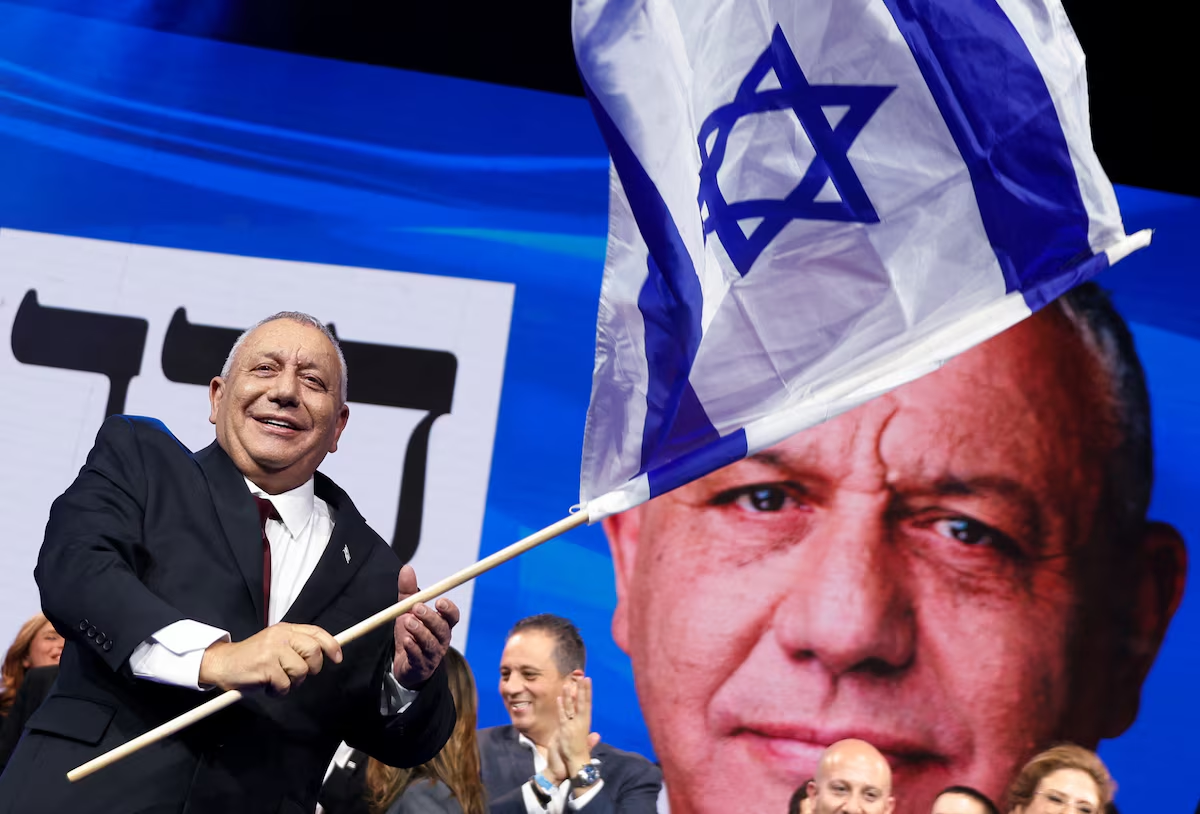
Israel has entered another consequential phase of political uncertainty after President Isaac Herzog nominated former military chief Gadi Eisenkot to form a new government, following an election that failed to produce a parliamentary majority for either of the country’s principal political camps. The decision represents a significant political challenge to Prime Minister Benjamin Netanyahu, Israel’s longest-serving leader, whose religious-nationalist coalition lost its parliamentary majority in the October 27 election.
The nomination places Eisenkot at the centre of an increasingly complicated struggle over the future direction of Israeli politics. Although Netanyahu’s Likud remains the largest single party in the Knesset, the broader coalition supporting him has fallen short of the numbers required to govern. Eisenkot, meanwhile, has secured the largest number of political endorsements for the first attempt at government formation. However, the distinction between receiving the mandate to form a government and possessing the parliamentary strength to sustain one remains substantial.
The outcome will depend not merely on individual political ambitions but also on the ability of competing parties to overcome ideological differences, negotiate acceptable arrangements and establish a coalition capable of commanding a legislative majority.
The Presidential Mandate and the Arithmetic of Power
President Isaac Herzog’s decision follows the constitutional process through which Israel’s largely ceremonial presidency designates a political leader to attempt government formation after parliamentary elections. Eisenkot has been invited to the President’s Residence and is expected to receive the formal mandate to begin negotiations.
Under the applicable timetable, he has 28 days to assemble a governing coalition, with the possibility of a further 14-day extension. This period will test his political negotiating skills and the willingness of parties with divergent political objectives to compromise.
The parliamentary numbers, however, present a formidable obstacle. Israel’s Knesset consists of 120 members, requiring at least 61 seats for an ordinary governing majority. Netanyahu’s Likud secured 27 seats, the highest number won by any individual party. Nevertheless, his wider religious-nationalist coalition managed only 53 seats, leaving it eight short of the required majority.
Eisenkot’s Yashar party emerged as the second-largest parliamentary party with 21 seats. His broader coalition, comprising four Jewish-led parties ranging from the centre-left to the right, secured 48 seats. Meanwhile, two parties representing Israel’s Arab minority obtained a combined 19 seats, an unprecedented parliamentary showing for the Arab political bloc.
These figures explain both Eisenkot’s opportunity and his predicament. He has obtained the strongest endorsement for the initial mandate, but his political alliance does not possess the parliamentary strength necessary to govern independently. His success will therefore depend on negotiations beyond his existing coalition.
Three Possible Routes to Government Formation
Eisenkot faces three principal options, each carrying significant political and ideological complications.
The first possibility is to establish a minority government with the parliamentary support of Arab parties on critical legislative and political questions. Such an arrangement could provide him with the votes necessary to survive important parliamentary decisions without formally incorporating Arab parties into the governing coalition. However, Eisenkot has previously declined to enter a political alliance with these parties, making this option difficult to reconcile with his established political position.
The Arab political leadership nevertheless endorsed his nomination. Its decision reflects growing opposition to Netanyahu’s political direction and the policies of his far-right coalition partners. Arab leaders have increasingly criticised what they regard as discriminatory and exclusionary policies directed against their communities and Palestinians more broadly. Their endorsement of Eisenkot therefore represents an attempt to influence the formation of the next government and prevent the continuation of the existing political order.
The second possibility involves negotiating an arrangement with ultra-Orthodox parties. These parties possess sufficient parliamentary representation to influence coalition formation, but their political demands and ideological priorities could complicate negotiations. Eisenkot and his political allies have historically maintained reservations about working with them. Any agreement would consequently require substantial compromises on questions of religion, state institutions and the distribution of political authority.
The third possibility is a national unity government involving Netanyahu himself. Such an arrangement could theoretically overcome the parliamentary deadlock by bringing competing political camps into a common governing structure. Nevertheless, this option appears particularly difficult because Eisenkot has repeatedly criticised Netanyahu’s leadership and explicitly ruled out serving in a government headed by him.
All three alternatives demonstrate the structural difficulty of forming a government in Israel’s fragmented parliamentary system. Political endorsements may determine who receives the first opportunity to negotiate, but they cannot independently produce the legislative majority required to govern.
Netanyahu’s Political Vulnerability
For Netanyahu, the election results represent an important political setback, although they do not necessarily signal the end of his political career. His Likud party remains the largest individual political force in parliament, and his political experience, organisational influence and established alliances continue to provide him with considerable leverage.
However, the failure of his broader coalition to secure a majority has exposed the limitations of his political strategy. His religious-nationalist alliance, which has been central to his political survival, could not translate its electoral support into a parliamentary mandate sufficient to govern.
This development is particularly significant given Netanyahu’s prolonged tenure and the centralisation of political authority around his leadership. His political future now depends on whether he can rebuild alliances, attract additional parliamentary support or prevent his opponents from assembling an alternative government.
The possibility of another political arrangement cannot be excluded. If Eisenkot fails to form a government, another candidate may receive an opportunity to undertake the task. Should subsequent attempts also fail, the Knesset may nominate another candidate. The entire process operates within an approximately 100-day framework, after which another election becomes necessary if no government can be established.
Thus, Israel faces the possibility of prolonged political negotiations, another election and continued uncertainty over the country’s executive leadership.
The Personal and Political Background of Gadi Eisenkot
At 66, Eisenkot represents a political figure whose background differs in several respects from that of Israel’s traditional political establishment. Born to Moroccan immigrant parents, he belongs to the Mizrahi Jewish community, whose historical roots extend across the Middle East and North Africa. If elected prime minister, he would become the first Israeli leader from this community.
His professional background is predominantly military. A former chief of the Israel Defense Forces (IDF), Eisenkot entered electoral politics relatively recently, in 2022. His public profile is built around military experience, national security credentials and criticism of Netanyahu’s political leadership.
Following the Hamas-led attacks of October 7, 2023, Eisenkot briefly joined Netanyahu’s wartime cabinet. His participation in the government reflected the extraordinary circumstances confronting Israel at the time. However, he subsequently returned to the opposition, where he became increasingly critical of the government’s conduct of the war in Gaza and its broader political direction.
His opposition to Netanyahu has also been shaped by personal tragedy. His son and two nephews were killed while fighting in Gaza following the October 2023 attacks. These losses have become an important part of his public political identity and illustrate the personal consequences of the continuing conflict for Israeli families.
Nevertheless, Eisenkot’s political appeal is not exclusively associated with his military background. His criticism of settler violence against Palestinians and his opposition to the far-right political leadership have helped distinguish him from Netanyahu’s governing coalition.
Security Policy and the Palestinian Question
Despite his differences with Netanyahu, Eisenkot should not necessarily be understood as representing a fundamental departure from Israel’s established security doctrine. His military record demonstrates a strong commitment to the use of military force as an instrument of national security.
During the 2006 Lebanon war, when he held a senior military command, Eisenkot became associated with the doctrine of responding to attacks through disproportionate military force, commonly referred to as the Dahiyeh doctrine. The approach involved imposing substantial costs on areas and infrastructure associated with armed groups. It subsequently became an important reference point in discussions of Israeli military strategy.
His security credentials were a central component of his electoral campaign. He presented himself as an experienced military leader capable of addressing Israel’s security challenges, particularly in an increasingly unstable regional environment.
At the same time, Eisenkot has criticised violence committed by Israeli settlers against Palestinians in the occupied West Bank. Such violence has intensified since October 2023, contributing to tensions between Israel and several Western governments. His criticism is politically significant because it places him at odds with influential members of Netanyahu’s far-right coalition, particularly National Security Minister Itamar Ben-Gvir and Finance Minister Bezalel Smotrich.
Both figures have attracted international criticism over their positions and statements concerning Palestinians. Their political influence has also contributed to tensions in Israel’s relations with Western partners.
Eisenkot’s opposition to these political figures, however, does not automatically imply a comprehensive change in Israeli policy towards the Palestinians. His political and military positions must be assessed separately. Opposition to settler violence, criticism of far-right political leadership and support for a particular security doctrine are distinct dimensions of his political outlook.
This distinction is important in understanding the potential consequences of a change in government. A new administration could alter the political tone, internal priorities and diplomatic approach of Israel without necessarily transforming the underlying foundations of its security and regional policies.
A Test of Israeli Parliamentary Democracy
The current political deadlock illustrates a broader institutional challenge within Israel’s parliamentary system. The country’s electoral arrangements allow multiple political parties to secure representation, making coalition-building an essential feature of government formation. This system provides space for diverse political interests but can also produce prolonged instability when competing parties cannot reconcile their priorities.
The present situation demonstrates that electoral victories and parliamentary majorities are not necessarily interchangeable. Netanyahu’s Likud has emerged as the largest party, yet its wider coalition lacks the numbers required to govern. Eisenkot, despite receiving the first opportunity to form an administration, faces a similar problem because his political alliance is also short of a majority.
The next 28 days will therefore be decisive. Eisenkot must demonstrate that his political endorsements can be converted into a workable parliamentary arrangement. He must also determine whether his commitment to excluding Netanyahu from government can be reconciled with the practical requirements of coalition formation.
For Netanyahu, the challenge is equally consequential. His political survival will depend on whether his opponents can establish an alternative government or whether the divisions within their ranks will ultimately preserve his position.
Israel’s political future consequently rests on negotiations that extend beyond the personalities of its principal leaders. The outcome will reveal the strength of competing political alliances, the influence of minority parties and the capacity of parliamentary institutions to resolve an electoral impasse.
The central question is no longer simply whether Netanyahu can retain power. It is whether Israel’s fragmented political establishment can produce a viable alternative government without compromising the political positions on which its competing parties have built their electoral mandates.