
Iran warns Washington against renewed military action as tensions escalate across the Strait of Hormuz. US efforts to restrict Iranian trade, reports of military incidents near Qeshm Island, and competing diplomatic initiatives highlight the growing risks of a wider regional confrontation. Meanwhile, Qatar and other regional actors continue efforts to prevent another escalation.
The confrontation between the United States and Iran has entered another uncertain phase, with military warnings, economic pressure and diplomatic manoeuvring unfolding simultaneously. Tehran has warned Washington that any renewed military aggression would invite a devastating response, while the United States is expanding its efforts to restrict Iran’s access to international trade networks, military supplies and financial resources.
The latest developments reveal a conflict that extends well beyond conventional military engagement. Control over strategic waterways, economic sanctions, regional alliances, intelligence operations and nuclear negotiations have become interconnected dimensions of the confrontation. Although both sides have maintained channels of communication, the possibility of renewed hostilities remains a serious concern for the Middle East and the wider international community.
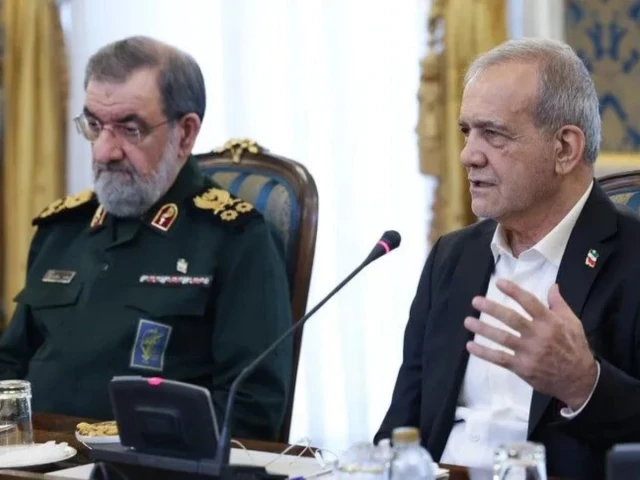
Iran’s latest warning came from Mohsen Rezaei, secretary of the country’s Supreme National Security Council, who directly addressed Washington through a statement posted on X. His remarks reflected Tehran’s increasingly confrontational position towards the Trump administration and its military strategy.
Rezaei argued that the United States had already suffered political and strategic setbacks and warned that Washington should not initiate another war against Iran. He declared that any such decision would be met with a devastating response.
The warning comes amid political changes in Washington following the November 3 midterm elections, in which Democrats secured control of both the House of Representatives and the Senate, ending the Republican Party’s congressional majorities. This electoral outcome could complicate President Donald Trump’s domestic political position, particularly regarding military operations, foreign policy spending and the administration’s approach towards Iran.
Rezaei’s statement also referred critically to senior American political and military figures, including Vice President JD Vance, Secretary of State Marco Rubio and Defence Secretary Pete Hegseth. The remarks were intended to portray the American administration as politically vulnerable at a moment when Washington is considering its next strategic steps.
However, political developments in the United States do not necessarily translate into an immediate change in its foreign policy. The country’s institutional decision-making, military commitments and strategic interests in the Middle East remain significant determinants of its approach towards Tehran.
Washington Expands Economic and Strategic Pressure on Iran
While diplomatic discussions continue, the United States is preparing to intensify its economic restrictions on Iran through a new military-coordinated initiative designed to monitor and constrain the country’s land-based trade networks.
According to a report by Reuters, the US Central Command is establishing Task Force Iron Gate, a new initiative intended to strengthen Washington’s ability to restrict the movement of Iranian weapons systems, sanctioned materials and other strategically sensitive goods across land borders and the Caspian Sea.
The task force will be based in Tampa, Florida, and will coordinate with various American government agencies. Its mandate will extend beyond conventional weapons transfers to include dual-use materials and financial activities that Washington associates with Iran’s sanctioned revenue networks.
Admiral Brad Cooper, commander of US Central Command, stated that closer coordination among American government agencies would further restrict Iran’s ability to finance militant organisations, rebuild weapons manufacturing facilities and replenish its military capabilities.
The initiative follows a prolonged American naval blockade targeting Iranian maritime trade. According to CENTCOM, the blockade has prevented Iran from exporting more than $25 billion worth of crude oil.
The development suggests that Washington is pursuing a broader strategy of economic and logistical containment. Rather than relying exclusively on naval restrictions, the United States appears interested in extending its pressure to the commercial and transportation networks that enable Iran to sustain its military and economic activities.
For Tehran, these measures present a substantial challenge. Restrictions on oil exports and access to international supply chains could intensify domestic economic pressures while limiting the country’s ability to procure sensitive technologies and military components.
The expansion of restrictions to land routes and the Caspian Sea also carries wider geopolitical implications. Iran’s regional trade relationships, particularly those involving neighbouring states and Eurasian commercial networks, could become increasingly exposed to American enforcement measures.
Strait of Hormuz: A Strategic Flashpoint
The Strait of Hormuz remains one of the most sensitive geographical and economic dimensions of the confrontation. Connecting the Persian Gulf with the Gulf of Oman and the Arabian Sea, the waterway is essential to international energy transportation. Any disruption to maritime traffic through this passage has implications far beyond the immediate interests of Iran and the United States.
Iranian media reported on Saturday that an oil tanker caught fire after striking a naval mine in the eastern Strait of Hormuz. The incident adds another layer of uncertainty to an already volatile maritime environment. Although the available reports do not establish the circumstances surrounding the incident or identify responsibility for the mine, the development highlights the vulnerability of commercial shipping in the region.
The strategic importance of the Strait means that even an isolated maritime incident can generate wider concerns about shipping security, insurance costs, energy prices and the uninterrupted movement of petroleum supplies.
Iran has repeatedly emphasised its strategic position around the waterway, while Washington has maintained that its military presence is intended to protect maritime security and safeguard international navigation. These competing positions have turned the Strait into a central element of the broader confrontation.
The question is no longer limited to which country possesses superior military capabilities. It also concerns the economic consequences of restricting access to a waterway through which a substantial proportion of global petroleum supplies normally passes.
Any sustained disruption could affect international energy markets, increase transportation costs and place additional pressure on economies dependent on imported oil. For countries in Asia, particularly those with substantial energy imports from the Gulf, the consequences could be particularly serious.
Iran Intensifies Regional Diplomatic Engagement
Despite its increasingly forceful rhetoric towards Washington, Tehran is simultaneously pursuing diplomatic engagement with regional governments.
Iranian Foreign Minister Abbas Araghchi stated that he had held telephone conversations with the foreign ministers of 12 countries over a period of 48 hours. These included Türkiye, Pakistan, Qatar, Oman, Egypt, Jordan, Saudi Arabia, the United Arab Emirates, Kuwait, Tunisia, Iraq and the Greek Cypriot administration of Southern Cyprus.
According to Araghchi, the discussions focused on regional developments, respect for national sovereignty, an end to aggression and threats, and the avoidance of foreign interference that could intensify instability.
He also advocated regional security arrangements that would not depend on the involvement of powers from outside the region.
This diplomatic initiative reflects Iran’s attempt to build regional support for its position while preventing the confrontation from developing into a broader military crisis. Engagement with neighbouring and regional governments is particularly important because any renewed conflict could affect their security, trade, energy supplies and political stability.
Pakistan’s participation in these diplomatic contacts is noteworthy. Given its geographical proximity to Iran, its relationship with Gulf countries and its broader security interests, Pakistan has considerable reasons to support regional de-escalation. A wider conflict could create economic and security pressures for Islamabad, particularly through energy markets, border management and regional instability.
The involvement of Qatar and Oman is equally significant. Both countries have historically maintained diplomatic channels with competing regional and international actors and have played important roles in facilitating communication during periods of heightened tension.
Qatar’s Mediation: An Opportunity for Diplomatic Settlement
While military pressure continues, Qatar is attempting to preserve a diplomatic pathway between Washington and Tehran.
Qatar’s Prime Minister, Sheikh Mohammed bin Abdulrahman Al-Thani, has indicated that mediation efforts are continuing despite the political and military tensions. According to his remarks reported by Al Jazeera, the American administration remains interested in finding a negotiated solution, and Washington’s willingness to pursue an agreement has not fundamentally changed following the US midterm elections.
The Qatari prime minister expressed confidence that a settlement could be achieved, while acknowledging that negotiations should not be delayed indefinitely in pursuit of an ideal agreement.
His position reflects a practical diplomatic consideration: in a conflict involving competing security demands, ideological differences and strategic mistrust, a workable agreement may be more achievable than a comprehensive settlement addressing every disagreement.
Qatar’s mediation is particularly important because direct negotiations between the two countries remain politically complicated. Indirect communication provides an opportunity to exchange proposals, clarify positions and explore possible compromises without requiring either government to make an immediate political concession.
The diplomatic process, however, faces substantial obstacles. Washington seeks restrictions on Iran’s military and nuclear capabilities, while Tehran demands relief from economic pressure, an end to the naval blockade and guarantees against renewed military attacks.
These competing priorities explain why negotiations remain difficult even when both sides express an interest in avoiding further escalation.
The Nuclear Dispute and Washington’s $20 Million Reward
The nuclear question remains another central component of the confrontation.
On Friday, US Central Command announced that the Rewards for Justice programme was offering up to $20 million, along with possible relocation assistance, for information concerning Iran’s nuclear programme.
The American initiative seeks information about facilities, equipment, personnel and movements associated with the programme, including individuals working within the scientific community.
The announcement demonstrates that Washington’s approach extends beyond economic restrictions and military deterrence. Intelligence collection and efforts to obtain information about Iran’s nuclear infrastructure are also important elements of its broader strategy.
From the American perspective, the objective is to restrict Iran’s capacity to develop or restore sensitive nuclear capabilities. For Tehran, however, such initiatives reinforce its concerns about external interference and the targeting of its strategic infrastructure and personnel.
The nuclear dispute has therefore become inseparable from the wider question of regional security. Any sustainable settlement will need to address not only technical nuclear restrictions but also sanctions, security guarantees and the political conditions under which negotiations can continue.
Without an agreed diplomatic framework, the nuclear issue risks becoming another source of military confrontation.
Trump’s Occupation Remark and the Question of Military Objectives
President Donald Trump has also made statements that have added uncertainty to Washington’s declared objectives in the confrontation.
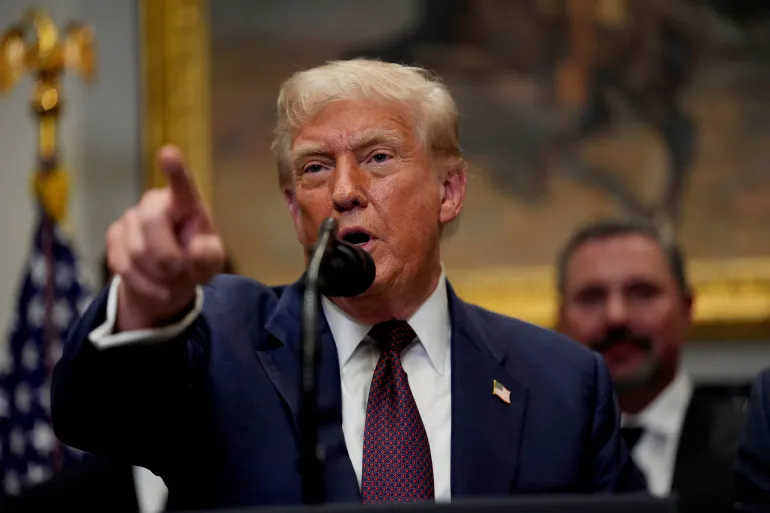
Speaking to reporters in Florida, Trump suggested that the United States could be considered an occupier in Iran. He also claimed that Washington controlled the Strait of Hormuz and was extracting unprecedented quantities of oil from the waterway.
His remarks raise important questions about the administration’s understanding of its military and strategic objectives.
Trump contrasted the confrontation with Iran with the Russia-Ukraine war, arguing that the absence of casualties in the preceding months made it difficult to describe the situation as a conventional war. He also acknowledged that American forces had carried out what he described as limited military strikes.
These statements are significant because they suggest a distinction between Washington’s military pressure and the possibility of a more extensive occupation or territorial intervention. However, presidential rhetoric does not, by itself, establish the existence of a formal American occupation or demonstrate control over Iranian territory or resources.
The Strait of Hormuz, in particular, cannot be understood simply through declarations of control. Its security depends on geography, naval capabilities, international maritime law and the behaviour of multiple regional actors.
Any attempt to impose control over such a strategic passage would carry enormous military and economic consequences.
For the international community, the central concern is whether Washington’s military strategy is intended to create negotiating leverage or whether it could gradually develop into a more extensive campaign with objectives that are difficult to contain.
JD Vance and the Quiet Diplomatic Initiative
Alongside public military warnings and economic pressure, a parallel diplomatic initiative appears to be developing within the Trump administration.
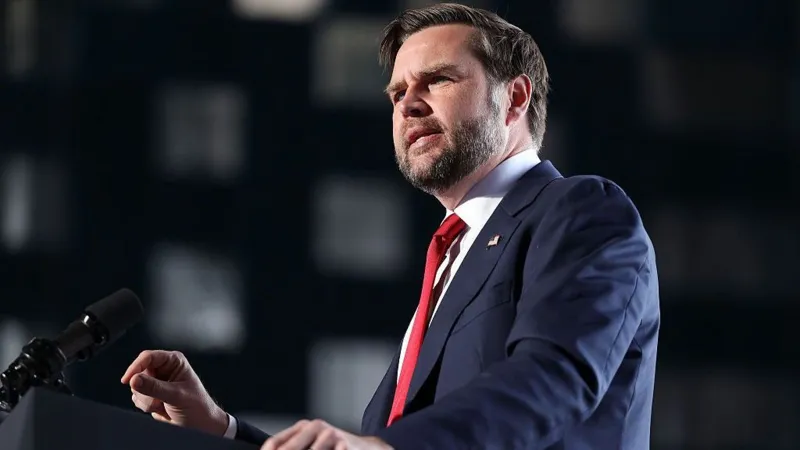
According to a report by Axios, Vice President JD Vance has been personally involved in indirect negotiations with Iran over the preceding two weeks, seeking to establish a new ceasefire and revive nuclear discussions.
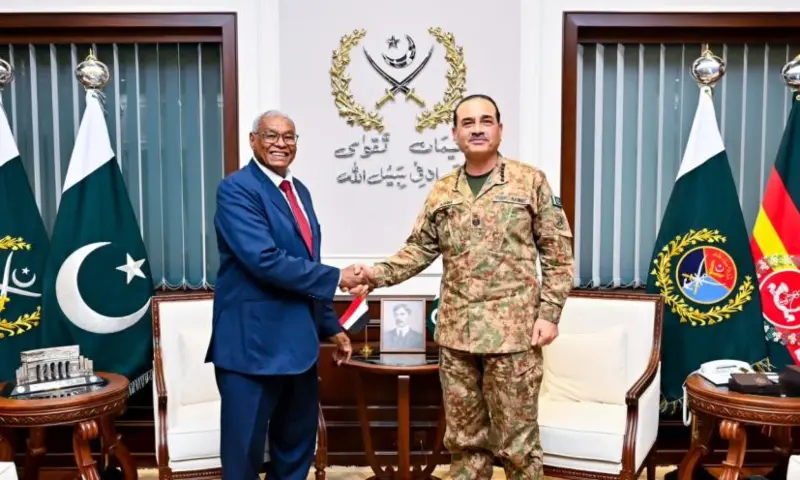
The report, citing two sources familiar with the discussions, states that Vance has maintained frequent contact with Qatari Prime Minister Sheikh Mohammed bin Abdulrahman Al-Thani, Pakistan’s Chief of Army Staff, Field Marshal Asim Munir, and other regional mediators.
White House envoy Steve Witkoff and presidential adviser Jared Kushner are also reportedly involved in the diplomatic process.
One proposal under consideration is a technical meeting between representatives of the two countries. Such a meeting could provide an opportunity to discuss the practical arrangements necessary for a ceasefire and the possible resumption of nuclear negotiations.
The report further indicates that Vance sent a letter to Mohsen Rezaei approximately two weeks earlier, proposing a return to direct negotiations. Iranian officials reportedly viewed the communication as creating positive momentum.
If these developments translate into formal negotiations, they could represent an important opening in an otherwise confrontational relationship. Vance’s reported involvement is particularly noteworthy because it suggests that the administration is maintaining diplomatic options even while strengthening military and economic pressure.
This dual-track approach is not unusual in international relations. Governments frequently combine coercive measures with negotiations to improve their bargaining position. However, the effectiveness of such a strategy depends on whether both parties believe that an agreement is preferable to continued confrontation.
Military Incidents Around Qeshm Island
Developments around Qeshm Island have further complicated the security situation.
Iranian semi-official media reported initial accounts of two missiles striking the island, although no official information was immediately available regarding the extent of damage. Separately, Iran’s army claimed that its air defence systems had intercepted and destroyed an American MQ-9 drone operating above Qeshm Island.
The Iranian military described the drone as belonging to the United States and stated that it had been targeted through its integrated air defence network. Washington had not publicly confirmed the reported interception at the time of the account.
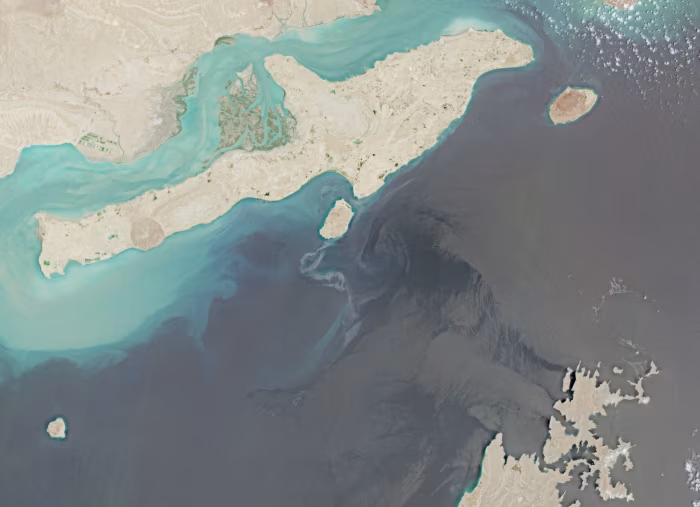
Qeshm is Iran’s largest island and occupies a strategically important position in Hormozgan province, close to the northern approaches of the Strait of Hormuz.
Its geographical location makes it particularly relevant to maritime surveillance, coastal defence and military operations around the Persian Gulf.
The reported drone incident is significant because unmanned aerial systems have become essential instruments of modern military operations. They provide intelligence, surveillance and reconnaissance capabilities, allowing armed forces to monitor developments without deploying manned aircraft into potentially hostile environments.
The destruction of an American surveillance drone, if independently established, would represent a serious military and political development. It could also complicate the diplomatic process by increasing pressure on both governments to demonstrate resolve.
Nevertheless, unverified military claims must be treated cautiously. In an environment characterised by competing narratives and limited independent access, distinguishing confirmed military developments from official statements remains essential.
Washington Warns Americans Across the Middle East
The United States has also issued a security advisory urging American citizens in the Middle East to exercise heightened vigilance.
The State Department cited an increased threat of armed attacks by Iran-supported Houthi forces in Yemen, as well as Iranian efforts to target American government officials in the region.
The warning reflects Washington’s concern that any renewed confrontation could extend beyond the immediate geographical boundaries of Iran.
The Houthis have become an important element of the wider regional security environment because of their military capabilities and their strategic position near major international shipping routes. Their involvement in a wider confrontation could expose commercial shipping, regional infrastructure and American interests to additional risks.
For the United States, the challenge is therefore not limited to defending its military installations or responding to direct Iranian actions. It also involves managing a complex network of regional security relationships and potential threats.
For neighbouring countries, this creates an additional source of uncertainty. A conflict involving Iran, the United States and their respective regional partners could rapidly affect several countries that have little interest in becoming direct participants.
Tehran Warns of Another Attack
Iranian military officials have repeatedly warned that Washington could launch another attack despite reports of American naval movements away from the region.
Army spokesman Brigadier General Mohammad Akraminia stated that the possibility of renewed American military action could not be dismissed. He suggested that Washington might consider another military operation because of its domestic political difficulties.
He further warned that any renewed attack would receive an immediate and effective response from Iranian armed forces.
According to the spokesman, Iran’s military leadership had instructed the armed forces to respond without geographical restrictions. He claimed that American bases and interests beyond West Asia and the Gulf could also fall within the reach of Iranian missiles and drones.
Akraminia additionally maintained that the Strait of Hormuz remained under Iran’s strategic control and would not reopen until Tehran’s conditions were satisfied.
These statements reflect Iran’s effort to establish a deterrence posture against further American military intervention. The underlying message is that any attack on Iranian territory could produce consequences extending beyond the immediate battlefield.
However, the credibility of deterrence depends on military capabilities, political calculations and the willingness of opposing parties to accept the potential costs of escalation.
A strategy based on threatening wider retaliation can discourage military action, but it can also increase the possibility of miscalculation when both sides interpret the other’s defensive preparations as offensive intentions.
The Larger Strategic Question: War or Negotiation?
The current confrontation illustrates the limitations of a strategy based exclusively on military pressure.
The United States possesses substantial military capabilities and considerable influence over international financial and economic systems. Its naval presence, sanctions architecture and intelligence capabilities provide Washington with multiple instruments for constraining Iran.
Iran, meanwhile, retains important geographical advantages, regional relationships and asymmetric military capabilities. Its position around the Strait of Hormuz gives it strategic relevance to international energy markets, while its missile and drone capabilities complicate the calculations of potential adversaries.
Neither side, however, can disregard the costs of a prolonged confrontation.
For Washington, another military campaign could create substantial regional instability, threaten international energy supplies and generate additional political complications at home. The midterm election results also introduce a new domestic political dimension that could influence the administration’s ability to pursue an extended military strategy.
For Tehran, continued economic restrictions, maritime pressure and military confrontation could intensify domestic economic difficulties and further constrain its international position.
The wider region would also bear considerable costs. Gulf economies, international shipping networks, energy-importing countries and neighbouring states could all experience the consequences of a prolonged crisis.
This is why the diplomatic initiatives led by Qatar, the involvement of Pakistan and other regional governments, and the reported communication between American and Iranian officials deserve particular attention.
The fundamental challenge is to convert these diplomatic contacts into a workable arrangement that addresses the immediate security concerns of both sides. A sustainable settlement would require progress on several interconnected questions: the naval blockade, freedom of maritime navigation, nuclear negotiations, sanctions relief, regional security arrangements and guarantees against renewed military aggression.
The situation also highlights the importance of regional diplomacy. Countries directly affected by instability in the Gulf cannot afford to remain passive observers of a confrontation between two major powers. Their collective interest lies in preventing the militarisation of regional disputes and preserving the institutional and diplomatic channels necessary for conflict resolution.
The central question is whether Washington and Tehran can move from strategic coercion towards a negotiated settlement before another military incident triggers a wider confrontation. Both governments continue to demonstrate military resolve, but their reported diplomatic engagement suggests that the possibility of an agreement has not disappeared.
For the Middle East, the stakes extend far beyond the immediate political interests of either government. The security of maritime trade, stability of energy markets and future of regional political relations may ultimately depend on whether diplomacy can succeed where military pressure has so far failed.
Editorial note: This article is based on the supplied reports. Military claims, battlefield incidents and accounts of diplomatic communications are attributed to the respective governments or media outlets and should not be treated as independently verified facts.