
Defence minister argues for smaller administrative units, but meaningful reform will depend on transferring constitutional authority, financial resources and institutional capacity beyond provincial capitals.
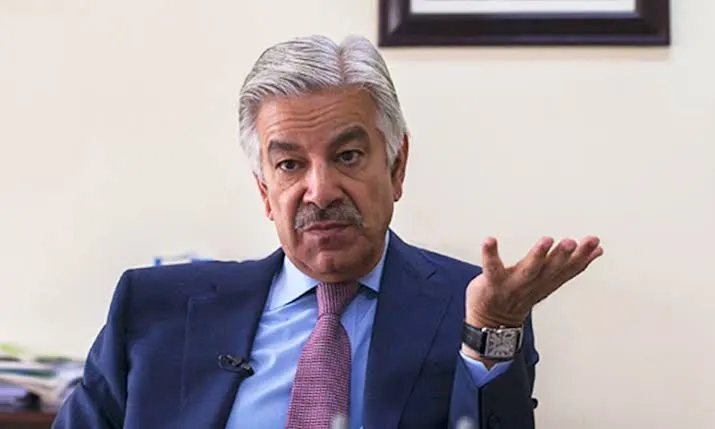
Pakistan’s debate over the creation of new provinces has returned to the political centre, with Defence Minister Khawaja Asif publicly supporting a restructuring of the country’s administrative map and suggesting that even 12 provinces could be considered. His position, however, comes with an important qualification: new provinces should be established on administrative grounds, not on the basis of ethnicity, language or narrow political interests.
Speaking to Geo News in Sialkot on Sunday, Asif said the question of creating additional provinces had been under discussion for approximately two months, with views emerging from different parts of the country. He argued that Pakistan’s growing population and expanding demands on public services required a more decentralised system of government. In his view, authority should not remain concentrated in provincial capitals such as Lahore, Karachi, Quetta and Peshawar. Smaller administrative units, he suggested, could bring government closer to citizens and improve the delivery of public services.
“If there is a proposal for 12 provinces, then make it 12,” he said, while insisting that the exercise should not be driven by linguistic, ethnic or political considerations.
The significance of Asif’s remarks lies not simply in the number of provinces he has proposed, but in the governance problem they bring back into public debate. Pakistan is a federal republic in constitutional design, yet the distribution and exercise of authority remain highly centralised at several levels. The federal government exercises considerable influence over national policy, provincial governments often retain substantial control over local administration, and elected local institutions frequently operate without the financial independence and administrative authority necessary to fulfil their responsibilities.
Creating more provinces may help address this imbalance, but changing provincial boundaries alone will not produce better government. The central question is whether restructuring will lead to genuine devolution or merely reproduce existing concentrations of power in a larger number of provincial capitals.
The case for smaller provinces
Pakistan’s administrative structure faces a persistent challenge: large populations, geographically diverse regions and uneven development are governed through institutions whose capacity and resources are not always proportionate to the demands placed upon them. In such circumstances, smaller provinces could make government more accessible, improve administrative responsiveness and create opportunities for more balanced regional development.
A provincial capital is not simply a geographical location. It is the centre from which political authority, administrative decisions, budgetary priorities and public investment are often coordinated. When these functions are concentrated in one city, distant districts can struggle to secure attention and resources. Citizens may have to travel considerable distances to access provincial institutions, while local development priorities compete with the interests of politically influential urban centres.
Smaller provinces could shorten the distance between citizens and provincial institutions. They might also make it easier for elected representatives to monitor departments, scrutinise development expenditure and respond to local concerns. A government responsible for a more manageable territory may be better positioned to understand regional economic conditions, infrastructure requirements and public service gaps.
But these advantages are not automatic. A smaller province can be just as centralised as a larger one. If its government retains the same habits of administrative control, political patronage and financial concentration, the new arrangement may simply create another powerful capital while leaving peripheral districts marginalised.
The purpose of restructuring, therefore, should not be to multiply provincial governments as an end in itself. It should be to improve the institutional relationship between the state and its citizens.
The unresolved question of local government
One of the most important aspects of Asif’s statement concerns the relationship between provincial governments and local institutions. He criticised the existing distribution of financial resources, arguing that funds transferred from the federal government remain at the discretion of provincial authorities, even though local governments are ultimately expected to deliver many essential services.
This exposes a fundamental weakness in Pakistan’s system of devolution. Local governments are often assigned responsibilities without receiving the corresponding financial resources, administrative control or continuity required to perform them effectively. Their dependence on provincial governments limits their ability to plan, spend and respond independently to local needs.
The Constitution already recognises the importance of local government. Article 140-A requires each province to establish a local government system and devolve political, administrative and financial responsibility and authority to elected local representatives. The challenge has been to translate this constitutional commitment into stable and meaningful institutional arrangements.
Provincial governments cannot credibly advocate decentralisation at the national level while resisting it within their own territories. If power is transferred from Islamabad to provincial capitals but remains concentrated there, the ordinary citizen may experience little improvement. The structure of government would change at the top, while the underlying centralisation of authority would survive.
A serious reform programme must therefore connect the debate over new provinces with the strengthening of local governments. Districts, municipalities and other elected local institutions need predictable financial transfers, clearly defined responsibilities, professional administrative support and protection against arbitrary political interference. Without these conditions, the creation of additional provinces risks becoming an exercise in administrative expansion rather than democratic decentralisation.
Administrative boundaries must not become ethnic divisions
Asif’s insistence that new provinces should not be created on ethnic or linguistic grounds raises another important question about the principles that should guide territorial restructuring.
Pakistan’s federal structure must accommodate its linguistic, cultural and regional diversity. Different communities have legitimate interests in representation, recognition and access to public resources. Yet provincial boundaries should not become instruments for political exclusion, ethnic competition or the consolidation of narrow interests.
An administrative approach would require a transparent assessment of population, geography, economic viability, access to public services, infrastructure, fiscal capacity and the ability of proposed units to govern effectively. It would also require public consultation, particularly in regions whose boundaries or administrative status might be affected.
The distinction is important. Administrative considerations should not be used to dismiss the cultural and political concerns of citizens. Nor should the language of ethnicity be used to avoid a serious discussion about unequal development and the concentration of authority. A sustainable settlement must respect Pakistan’s diversity while ensuring that territorial arrangements serve the public interest.
The objective should be a federal system in which citizens enjoy effective representation and equitable access to state institutions, regardless of the province in which they live.
The constitutional and political challenge
The proposal to reorganise Pakistan into 12 provinces has reportedly been discussed alongside the possibility of a nationwide referendum and a proposed 28th Constitutional Amendment. According to a report published in The News, one suggested arrangement would divide Punjab into four provinces, Khyber Pakhtunkhwa and Balochistan into three each, and Sindh into two.
The reported proposal also envisages that constitutional consideration could take place in the first half of 2027, with preparatory steps potentially beginning in the first quarter. These details remain proposals rather than settled government decisions. Provincial boundaries, administrative arrangements and the constitutional process have not been finalised.
Any restructuring would face a demanding constitutional and political process. Article 239(4) of the Constitution requires a constitutional amendment altering the limits of a province to be passed by at least two-thirds of the total membership of the affected provincial assembly, in addition to the constitutional amendment procedure involving Parliament. This requirement makes provincial restructuring a matter of constitutional consent, not merely an administrative decision by the federal government.
A referendum, if proposed, would not by itself remove the need to comply with constitutional requirements. Nor would political agreement at the federal level be sufficient if the constitutionally required provincial approval were absent.
The process would therefore demand negotiations among political parties, provincial governments, elected representatives and affected communities. It would also require clear answers about the distribution of assets and liabilities, public-sector employees, provincial revenues, water resources, infrastructure, public debt, representation and the future of existing institutions.
The political difficulty should not be underestimated. Provincial boundaries are connected to questions of identity, resources and political influence. Any attempt to redraw them without a credible process of consultation and constitutional agreement could deepen mistrust rather than improve governance.
Lessons from Pakistan’s administrative history
Asif also referred to Pakistan’s administrative history, recalling the One Unit arrangement under which the provinces of West Pakistan were merged into a single administrative unit before the arrangement was reversed. The experience illustrates that territorial restructuring cannot be assessed simply through administrative convenience. It must also be judged by its consequences for representation, federal balance and political legitimacy.
He cited Afghanistan’s expansion in the number of provinces as an example of administrative restructuring, noting that the country’s provincial count had increased from around eight or ten to more than 30. Such comparisons, however, must be approached carefully. The number of provinces in another country does not establish that the same arrangement would work in Pakistan. Administrative structures are shaped by constitutional systems, geography, political history, fiscal arrangements and state capacity.
Pakistan needs a model based on its own constitutional and institutional realities, rather than an assumption that more provinces necessarily mean better governance.
Devolution requires resources and accountability
The most consequential part of the debate is not how many provinces Pakistan should have, but what powers those provinces and their local institutions would actually exercise.
Decentralisation is meaningful only when political authority is accompanied by administrative capacity, financial resources and accountability. A government cannot be held responsible for service delivery if it does not control the budget, personnel and institutions required to deliver those services. Equally, transferring funds without transparent expenditure rules and effective oversight can create new centres of patronage.
Any plan for additional provinces should therefore specify the fiscal arrangements that would sustain them. It must address how revenues will be collected and shared, how development funds will be distributed, how public-sector institutions will be organised and how citizens will hold elected governments accountable.
It should also strengthen the capacity of provincial assemblies. New provinces would require effective legislatures capable of scrutinising budgets, examining legislation, overseeing executive departments and questioning administrative decisions. Without stronger legislative institutions, the creation of more provinces could increase the number of governments without improving democratic control over them.
Khawaja Asif’s remarks also contain a broader political challenge. He said politicians themselves often seek to exercise all available power, even though authority is a trust granted by the people. This observation points towards a contradiction in Pakistan’s political culture: political leaders frequently demand decentralisation from the federal government while retaining tight control over decision-making within their own jurisdictions.
The test of political commitment will be whether elected leaders are willing to transfer authority not only to new provincial governments but also to local representatives and accountable institutions.
Beyond the number 12
Pakistan does not need a debate limited to the arithmetic of provinces. It needs a national conversation about the architecture of government: which functions should belong to the federation, which should be exercised by provinces, and which should be devolved to local institutions.
The federal government must retain responsibility for genuinely national matters. Provinces should have the authority and capacity to address regional priorities. Local governments should be empowered to manage local services and development. Each level must have clearly defined functions, adequate resources and mechanisms through which citizens can demand accountability.
If the proposed restructuring follows these principles, smaller provinces could become an opportunity to strengthen the federation and make public administration more responsive. If it merely creates additional political and bureaucratic centres, the exercise could reproduce the very problems it claims to solve.
Khawaja Asif has reopened an important debate. The real measure of its success, however, will not be whether Pakistan has four, eight or 12 provinces. It will be whether a citizen in a distant district can access public services, influence local decisions and hold public officials accountable without depending on the goodwill of a distant political or administrative centre.
That is the standard by which any proposal for new provinces should be judged.