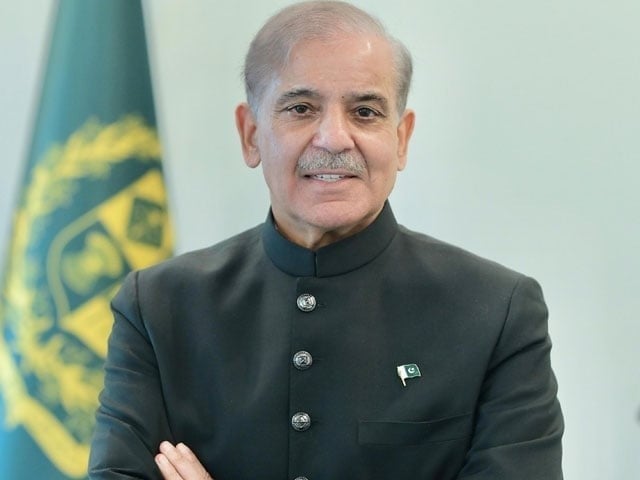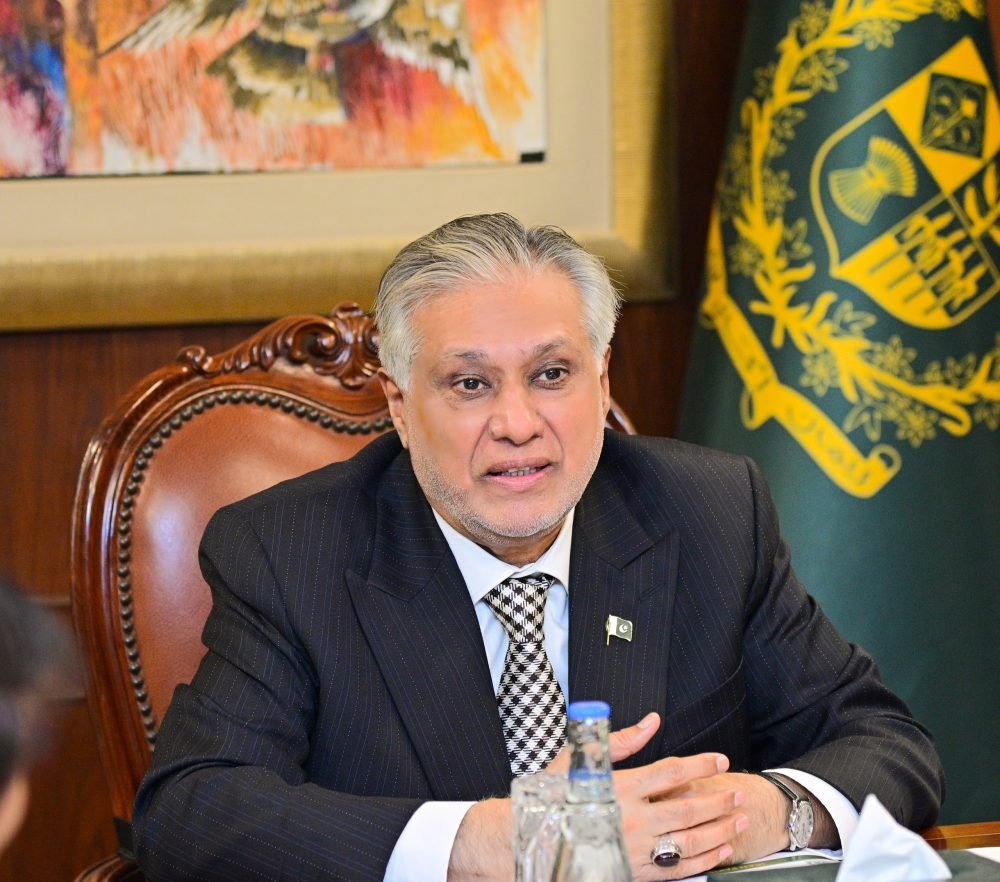

At the Margalla Dialogue 2026, Deputy Prime Minister Ishaq Dar reaffirms Pakistan’s position on the Indus Waters Treaty, Kashmir, Afghanistan and regional conflicts, calling for an international order based on sovereign equality and peaceful dispute resolution.
Pakistan will firmly protect its rights under the Indus Waters Treaty (IWT) and resist any attempt to use water as an instrument of political or strategic pressure, Deputy Prime Minister and Foreign Minister Ishaq Dar said on Tuesday. Addressing the Margalla Dialogue 2026 in Islamabad, he placed water security within a wider foreign policy framework encompassing regional stability, national sovereignty, counterterrorism and the peaceful settlement of disputes.
Dar’s remarks underline the growing importance of water in Pakistan’s national security calculations. The Indus river system is fundamental to the country’s agriculture, food production, energy generation and livelihoods. Any uncertainty surrounding the treaty that governs the sharing of its waters therefore carries consequences far beyond diplomatic relations with India.
The deputy prime minister argued that regional stability depends on respect for treaty obligations. His statement reflects Islamabad’s position that water agreements must remain governed by international commitments rather than unilateral political decisions. For Pakistan, the issue is not simply the management of a shared river system; it concerns the reliability of international agreements and the protection of a resource essential to economic and human security.
The wider address also connected Pakistan’s position on water to its longstanding concerns over Jammu and Kashmir, security challenges emanating from Afghanistan and diplomatic efforts surrounding the conflict between the United States and Iran. Dar presented these issues as part of a broader commitment to sovereignty, territorial integrity and an international order grounded in the United Nations Charter.
The Indus Waters Treaty and Pakistan’s water security
The Indus Waters Treaty remains one of the most consequential agreements governing relations between Pakistan and India. Signed in 1960 with the World Bank’s assistance, it established a framework for the use of the Indus river system and allocated rights over its eastern and western rivers. For Pakistan, which depends heavily on the Indus basin for irrigation and agricultural production, the treaty is central to national economic security.
Dar’s warning against weaponising water points to a fundamental principle of international relations: agreements governing shared natural resources cannot be treated as instruments of political coercion. Rivers cross national boundaries, and their management requires predictability, cooperation and respect for established obligations. When water becomes entangled in wider political disputes, the consequences can extend to farmers, households, energy systems and food markets.
Pakistan’s concern is particularly significant because agriculture remains a major component of its economy and a source of employment and livelihoods. Irrigation supports food production, rural incomes and several industries linked to agriculture. Uncertainty over water availability can therefore affect economic stability, investment decisions and the country’s capacity to manage climate-related pressures.
The challenge is not limited to diplomacy with India. Pakistan must also improve its own water governance through better conservation, efficient irrigation, modern storage and distribution systems, and stronger institutional coordination. Protecting treaty rights and reforming domestic water management are complementary responsibilities. International agreements can provide a framework for security, but they cannot compensate for inefficient use of water at home.
Dar’s emphasis on treaty obligations also raises a wider question about the credibility of international agreements. If states can disregard commitments governing shared resources whenever political relations deteriorate, the foundations of regional cooperation become increasingly fragile.
Kashmir remains central to regional peace
The deputy prime minister also reiterated Pakistan’s position that a just resolution of the Jammu and Kashmir dispute, in accordance with United Nations Security Council resolutions, is indispensable for lasting peace in South Asia.
He argued that leaving the dispute unresolved perpetuates mistrust and exposes the region to recurring crises. This reflects Pakistan’s longstanding position that the Kashmir question cannot be separated from the broader security relationship between the two nuclear-armed neighbours.
The issue has implications beyond bilateral diplomacy. Persistent tensions between Pakistan and India affect regional trade, connectivity, security cooperation and the prospects for economic integration across South Asia. Political and military crises also divert resources and attention from development priorities in both countries.
Dar recalled Pakistan’s response to what he described as Indian aggression in May 2025, saying it demonstrated the country’s readiness and capacity to defend its sovereignty. He stressed that Pakistan would defend its territorial integrity with determination while pursuing peace with equal commitment.
This formulation reflects the dual pressures shaping Pakistan’s foreign policy: maintaining credible defence capabilities while avoiding an escalation that could destabilise the region. For South Asia, the costs of prolonged confrontation are considerable. Both countries face challenges involving economic development, employment, poverty, climate vulnerability and public service delivery. A stable regional environment would create greater space for addressing these domestic priorities.
A durable improvement in relations, however, requires more than statements of willingness to pursue peace. It depends on sustained diplomatic engagement, restraint during crises and a willingness to address unresolved disputes through established political and international mechanisms.
Afghanistan and the challenge of cross-border terrorism
Security along Pakistan’s western border was another major theme of Dar’s address. He described terrorism originating from Afghan territory as a serious challenge and said Pakistan would continue to protect its citizens while supporting efforts towards a peaceful, stable and economically integrated Afghanistan.
He emphasised that progress towards this objective requires effective action to prevent Afghan territory from being used for attacks against other countries, particularly Pakistan.
The issue reflects a difficult reality in Pakistan-Afghanistan relations. The two countries share deep historical, social, cultural and economic connections, as well as a long and sensitive border. Instability in Afghanistan can have direct consequences for Pakistan’s internal security, border management, trade and regional connectivity.
Pakistan’s position is that counterterrorism commitments must translate into practical action. Diplomatic engagement alone cannot resolve security concerns if militant groups continue to operate across borders or if the territory of one country is used to threaten another.
At the same time, a stable Afghanistan is in the interest of the wider region. Economic integration, cross-border trade, transport connectivity and access to regional markets could create opportunities for both countries. These objectives, however, depend on a minimum level of security and mutual confidence.
The challenge for Islamabad is to combine effective protection of its citizens with sustained diplomatic engagement. A policy focused exclusively on security risks would overlook the economic and regional benefits of a stable Afghanistan. Conversely, economic cooperation cannot advance meaningfully without credible action against cross-border terrorism.
Pakistan’s diplomatic role in the US-Iran conflict
Dar also addressed the conflict involving the United States and Iran, saying Pakistan continued to pursue diplomatic efforts to sustain engagement, restore dialogue and facilitate a return to negotiations.
He described the Islamabad Memorandum of Understanding as an important foundation for further negotiations. His remarks indicate that Pakistan sees diplomatic engagement as a means of reducing tensions and preventing a wider regional confrontation.
The conflict carries direct implications for Pakistan because of its geographical proximity to Iran, its relationships across the Gulf and its dependence on regional stability for trade, energy supplies and economic connectivity. Any escalation could affect border security, regional transport routes, oil markets and the safety of Pakistani citizens and commercial interests in the wider region.
Pakistan’s diplomatic position also reflects the importance of maintaining working relationships with countries that may have competing strategic interests. Islamabad has to preserve its ties with the United States, Iran, Saudi Arabia and other Gulf states while avoiding unnecessary involvement in regional rivalries.
In this environment, mediation and dialogue can serve national interests as well as broader regional stability. Pakistan’s ability to contribute meaningfully, however, will depend on the credibility of its diplomatic engagement and the willingness of the principal parties to negotiate.
The reference to the Islamabad understanding is therefore significant, but its value will ultimately depend on whether it can facilitate substantive negotiations and produce commitments that the parties are prepared to honour.
An international order based on sovereignty and the UN Charter
Dar placed Pakistan’s diplomatic positions within a wider argument for an equitable international order based on the United Nations Charter, sovereign equality, territorial integrity and the peaceful settlement of disputes.
He said Pakistan had used its membership of the United Nations Security Council to translate these principles into practical action. The statement reflects Islamabad’s interest in a multilateral system in which international rules apply consistently and smaller states are not left vulnerable to the political or military influence of more powerful countries.
For Pakistan, the credibility of international institutions is closely connected to several of its foreign policy concerns, including Kashmir, water rights and regional security. The country has repeatedly emphasised the importance of international law and established diplomatic mechanisms in addressing disputes.
However, the effectiveness of a rules-based international order depends on more than formal commitments. It requires consistent implementation, institutional credibility and the willingness of powerful states to respect the same principles they expect others to follow. Selective application of international law weakens confidence in multilateral institutions and encourages states to rely increasingly on unilateral measures.
Pakistan’s argument for an equitable international order is therefore both diplomatic and strategic. It seeks to protect national interests through international rules while supporting a system in which disputes are resolved through negotiation rather than coercion.
China, Saudi Arabia and a diversified diplomatic strategy
Dar described Pakistan’s strategic partnership with China as a cornerstone of its foreign relations. He also highlighted continued engagement with the United States and expanding cooperation with Saudi Arabia, Türkiye, Egypt, Iran, Gulf countries, Europe and Central Asia.
This approach reflects Pakistan’s need to maintain relationships across a complex international environment. Its geographical position connects South Asia, Central Asia, the Middle East and the Arabian Sea, giving it potential strategic and economic importance. But geographical advantage alone does not produce influence. It must be supported by economic strength, institutional stability and a foreign policy capable of maintaining constructive relationships with different partners.
China remains a particularly important partner in Pakistan’s strategic and economic planning. Cooperation between the two countries covers infrastructure, connectivity, investment and regional development. At the same time, Pakistan’s engagement with the United States remains relevant to trade, diplomacy, security and international economic relations.
Relations with Saudi Arabia and other Gulf states are equally significant, particularly because of investment, energy, employment opportunities and regional security. Engagement with Türkiye, Egypt, Iran and Central Asian countries also provides opportunities to expand trade and diplomatic cooperation.
The challenge is to turn this broad diplomatic network into measurable economic and strategic benefits. Strong bilateral relationships should support investment, exports, technology transfer, regional connectivity and institutional cooperation. A diversified foreign policy must ultimately contribute to domestic economic resilience.
The Makkah defence agreement and regional security
Dar also referred to the Makkah Joint Defence Agreement involving Pakistan, Saudi Arabia and Türkiye, describing it as a defensive arrangement directed against no country and intended to contribute to regional peace and security.
He presented the agreement as evidence of Pakistan’s commitment to collective security and credible deterrence. The distinction between a defensive arrangement and an offensive alliance is important to the diplomatic message Islamabad seeks to communicate: cooperation in security matters, according to Dar, should contribute to stability rather than intensify regional confrontation.
Defence cooperation can strengthen coordination, build institutional relationships and improve the capacity of participating countries to respond to security challenges. But its wider regional impact will depend on transparency, the objectives of cooperation and the extent to which it complements diplomatic efforts.
For Pakistan, the challenge is to strengthen its security partnerships without compromising its ability to maintain constructive relations with other regional states. This requires a foreign policy that recognises the interconnected nature of security, economic cooperation and diplomacy.
Foreign policy must deliver domestic strength
Dar’s address brought together several issues that are often discussed separately: water security, Kashmir, Afghanistan, regional conflict, strategic partnerships and international law. Their connection lies in the relationship between national sovereignty and the stability of the wider regional environment.
Pakistan faces security challenges on multiple fronts, but its long-term influence will also depend on its domestic economic and institutional performance. Water security requires stronger management at home. Regional connectivity requires reliable infrastructure and trade policies. Economic diplomacy requires an environment in which investors can operate with confidence. National security requires effective institutions and the capacity to protect citizens without allowing instability to undermine development.
This is where foreign policy and public policy intersect. Diplomatic agreements can protect national interests and open economic opportunities, but their benefits depend on the institutions responsible for implementation. A treaty is only as effective as the mechanisms that uphold it; an investment partnership is only as valuable as the projects it produces; and a diplomatic understanding matters only when it helps prevent conflict and establish durable cooperation.
Pakistan’s foreign policy therefore needs to be judged not only by the number of diplomatic engagements it conducts, but also by the practical outcomes these relationships generate for national security, economic development and public welfare.
The Margalla Dialogue address presented a clear set of principles: Pakistan will defend its sovereignty, protect its water rights, seek a resolution of the Kashmir dispute, oppose cross-border terrorism and pursue diplomatic solutions to regional conflicts. It also reaffirmed Islamabad’s commitment to multilateralism and a diversified network of international partnerships.
The harder task lies ahead. Pakistan must translate these principles into sustained diplomatic engagement, effective institutions and economic policies that strengthen the country from within. Its security and international standing will ultimately depend not only on how firmly it articulates its positions abroad, but also on how effectively it builds a stable, productive and resilient state at home.