
With inputs from Tariq Mahmood Awan’s book, Beyond the Four Provinces
The debate over creating more provinces in Pakistan has increasingly become confusing, artificial and conceptually flawed. I have observed that much of this debate is driven by administrative grievances, political demands and geographical arguments without adequately understanding the constitutional nature of a federal state. This confusion is precisely why I felt the need to write Beyond Four Provinces.
My central argument is straightforward: Pakistan cannot approach the restructuring of its federal framework as though it were a unitary state. Pakistan is a federation, and its constituent units are federal units, not merely administrative units. Any debate about creating new provinces must therefore be grounded in the constitutional provisions, principles and political structure of the federation.
The distinction between federal units and administrative units is fundamental. Administrative units are generally associated with the administrative organisation of a unitary state, where the central government may create, reorganise or alter territorial divisions and their powers. Federal units, however, possess a distinct constitutional status. Their relationship with the federation is constitutionally defined, and their existence, authority and boundaries cannot be treated as ordinary administrative arrangements.
If Pakistan requires administrative units for better governance, these should be created within the existing federal units. A province may establish new districts, divisions, regions, tehsils or other administrative arrangements to improve service delivery, decentralise authority and bring government closer to the people. Such arrangements are administrative in nature and should not be confused with the creation of new federal units.
In a federation, the creation of a new federal unit is an entirely different exercise. It is not simply a matter of drawing a new line on the map or dividing an existing province to address administrative difficulties. A new federal unit must have a cultural identity, community endorsement and constitutional guarantees. It must have constitutionally protected relations with the federation as well as safeguards governing its relationship with the other existing federal units. Its formation must follow the constitutional framework of the country rather than the logic of administrative convenience alone.
Federal Units Are Not Administrative Units
The confusion surrounding the debate on new provinces begins with the failure to distinguish between federal and administrative units. In Pakistan, provinces are constituent units of the federation. They are constitutional, political and geographical entities that form part of the federal structure. They are not merely territorial subdivisions created for the convenience of the central government.
Administrative units, on the other hand, are instruments of governance and decentralisation. Their purpose is to improve the delivery of public services, facilitate administration, manage local affairs and distribute governmental responsibilities more efficiently. They can take different forms and operate at different levels, depending on the requirements of governance.
For instance, a province may establish a new tehsil, district, division or region in response to the needs of its population. These are administrative arrangements, and their creation should form part of a broader decentralisation and administrative reform programme. Locality itself can be defined at different scales: a tehsil, a district, a division or even a larger region may serve as an administrative or local governance structure, depending on the institutional design.
The purpose of such arrangements is not to alter the federal composition of the country but to make government more accessible, responsive and effective. Administrative restructuring and federal restructuring are therefore two different processes, serving different purposes and requiring different institutional approaches.
In a unitary state, administrative divisions remain subordinate to the central constitutional authority. China, for example, organises its territory through provincial-level administrative structures, but these do not possess the same constitutional status as provinces in a federal system. The central state retains ultimate authority over the administrative framework and can reorganise the powers and structures of these units within its constitutional and legal system.
A federal unit, however, is constitutionally protected in ways that an ordinary administrative division is not. This distinction cannot be ignored when discussing Pakistan’s provincial structure.
The Practical Difficulties of Administrative Restructuring
Even within an existing province, the creation of new administrative units is often a difficult and lengthy process. Establishing a new district or tehsil can take years, despite strong local demand and a clear administrative rationale. Numerous proposals encounter institutional resistance, bureaucratic delays and practical obstacles, while some never materialise.
Punjab provides a clear example of these difficulties. Even when people demand a new district because of their geographical circumstances, population needs or difficulties in accessing government services, translating that demand into an administrative decision can be extraordinarily complicated.
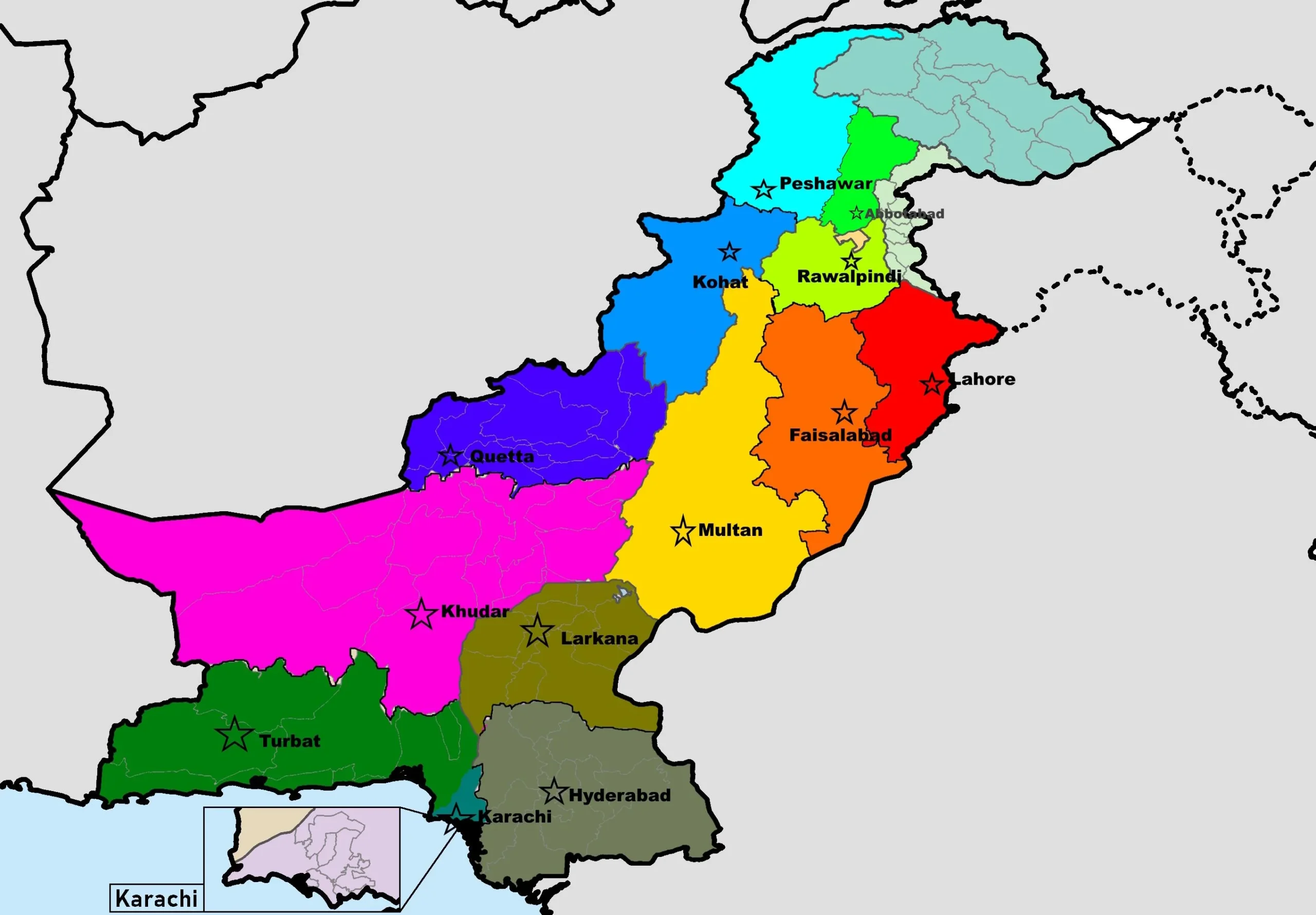
If creating a district or tehsil within an existing federal unit is itself so difficult, the process of redefining provincial boundaries or creating entirely new federal units would be far more complex. Yet our public debate often treats the creation of new provinces as though it were a straightforward administrative exercise.
This reflects a deeper conceptual problem. We have not adequately understood the difference between an administrative unit and a federal unit, and consequently, we continue to approach administrative shortcomings through the lens of provincial division.
The demand for a new province may emerge from genuine grievances, including unequal development, distance from provincial headquarters, inadequate public services, political marginalisation or a sense of regional neglect. These concerns deserve attention. However, their existence does not automatically mean that the solution must be the creation of a new federal unit. The nature of the problem must first be understood, and the institutional response must correspond to that problem.
Federal Restructuring Is Not a Substitute for Decentralisation
A federal state has its own constitutional structure, political sensitivities and institutional requirements. Changing its territorial composition is a consequential undertaking that cannot be approached in the same way as reorganising the administrative structure of a unitary state.
Redrawing provincial boundaries to resolve governance failures is neither necessarily appropriate nor a substitute for administrative reform. If citizens cannot access public offices, if local administration is ineffective, if public services are poorly delivered or if authority remains concentrated at the provincial headquarters, the answer should be sought in decentralisation, administrative restructuring and empowered local governments.
Pakistan needs a serious framework for transferring administrative authority to lower levels of governance. Local governments must be empowered to manage local affairs, undertake development, deliver public services and respond to the needs of their communities. Administrative structures should be designed around the requirements of governance rather than perpetuating excessive centralisation within the provinces.
The debate should therefore move beyond the simplistic assumption that creating more provinces is the only way to improve governance. Federal units and administrative units serve different constitutional and institutional purposes. A province is part of the federal architecture; a district, division, tehsil or region can be part of the administrative architecture within that province.
The Argument of Beyond Four Provinces
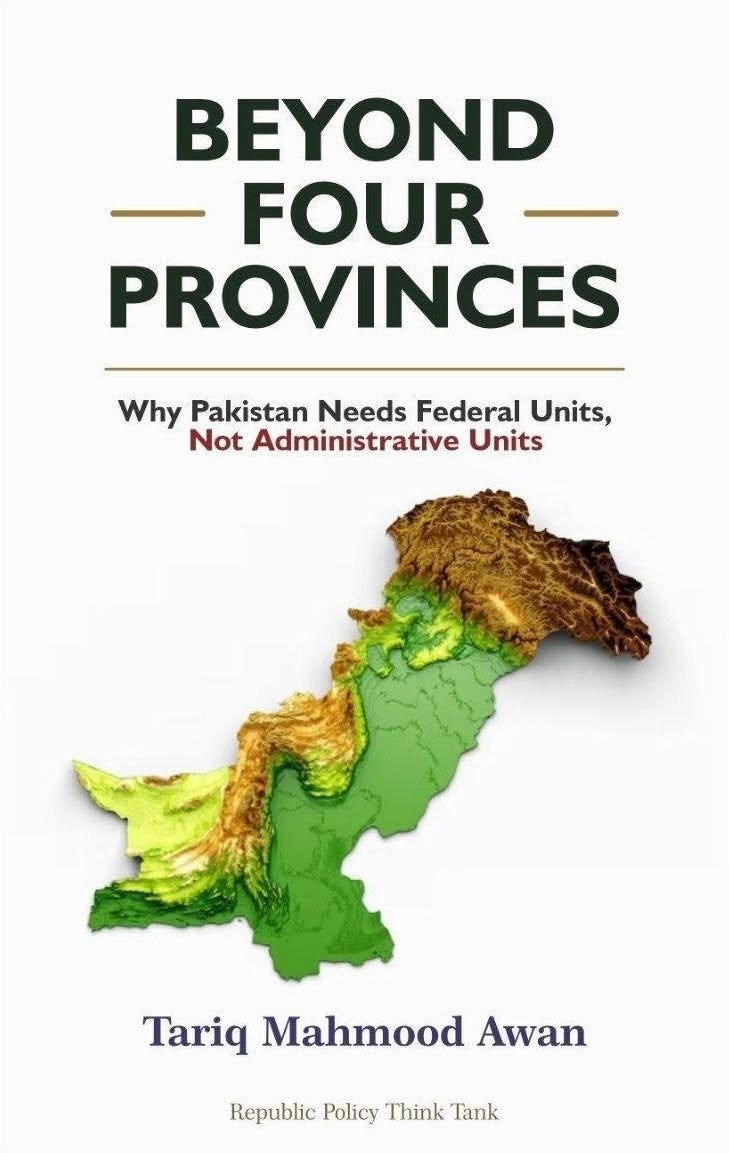
This is the distinction I have explained in my book Beyond Four Provinces. The book examines the concepts of federal units, administrative units and local governments, clarifies their different constitutional and institutional roles, and challenges the confusion that dominates Pakistan’s debate over provincial restructuring.
I have subsequently discussed the challenges confronting this framework and outlined a roadmap for reform. The objective is not to dismiss the legitimate demands of communities or deny the need for better governance. It is to identify the appropriate institutional solution instead of confusing federal restructuring with administrative decentralisation.
Pakistan needs stronger administrative institutions, more effective decentralisation and empowered local governments. It needs governance structures that bring authority, public services and decision-making closer to citizens. These objectives can be pursued through administrative units and local governments within the existing federal framework.
The creation of new federal units, where necessary, must be considered separately, with cultural identity, community endorsement and constitutional guarantees at its foundation.
The debate over Pakistan’s provinces must therefore begin with constitutional clarity. Federal units are not administrative units, and administrative problems should not automatically become demands for federal restructuring. Unless we understand this fundamental distinction, we will continue to debate provincial boundaries while neglecting the reforms that can actually improve governance.
That is why I wrote Beyond Four Provinces—to clarify this distinction, rethink Pakistan’s federal debate and propose a way forward grounded in constitutional understanding rather than administrative confusion.
Beyond Four Provinces is available at Vanguard Books and other bookstores.
For Home Delivery: 0341-4222501