
Editorial
Pakistan’s democratic system faces a structural problem that receives far less attention than electoral competition, political rivalries and changes of government: the limited institutional capacity of its legislatures. Parliament and provincial assemblies are constitutionally empowered to make laws, approve public expenditure, represent citizens and hold the executive accountable. Yet, in practice, their ability to perform these functions effectively remains constrained. This weakness has created an imbalance between elected representatives and the permanent administrative machinery of the state, allowing the bureaucracy to exercise influence far beyond its formal advisory and executive responsibilities.
The problem is not simply that bureaucrats are powerful or that politicians lack administrative experience. The deeper issue is that Pakistan’s legislative institutions have not developed the research capacity, technical expertise, institutional memory and professional support required to scrutinise government decisions independently. Where legislatures lack these capabilities, the balance of power shifts towards institutions that possess them. In Pakistan, the bureaucracy is often better equipped to understand the machinery of government, prepare policy proposals, draft legislation and navigate the legal and procedural complexities of administration. Consequently, elected representatives may formally possess legislative authority but remain dependent on the administrative apparatus for the information and expertise needed to exercise it.
This imbalance has serious implications for democratic governance. A legislature cannot effectively supervise the executive if it lacks the capacity to understand, question and independently evaluate executive decisions. Nor can it produce effective legislation if its members depend almost entirely on government departments for policy research, legal drafting and technical advice. The result is a system in which the institution constitutionally responsible for making laws and holding the government accountable can become heavily reliant on the very executive machinery it is expected to oversee.
The Bureaucracy’s Advantage in the Legislative Process
The bureaucracy enjoys an important institutional advantage: continuity. Governments change, political priorities shift and elected representatives enter and leave office, but the permanent administrative structure continues to operate. Government departments retain official records, institutional knowledge, technical expertise and familiarity with established procedures. Civil servants are routinely involved in preparing policy proposals, drafting rules, interpreting legislation and implementing administrative decisions.
These capabilities are necessary for the functioning of any modern state. The problem arises when administrative expertise becomes a substitute for legislative capacity rather than a resource available to support it. If legislators cannot independently examine a proposed law, identify its implications or challenge its underlying assumptions, the drafting and policy process can become disproportionately dependent on the executive. The institution that should determine the legal framework of government may then find itself responding to proposals prepared by the same machinery that will subsequently implement them.
This is not an argument against the participation of civil servants in lawmaking. Governments require professional administrative advice, and complex legislation often demands specialist knowledge. However, technical assistance must operate within a framework of democratic authority. Elected legislatures should have their own research services, legal advisers, policy specialists and legislative drafting support. Their members must be able to test government proposals, obtain independent assessments and propose alternatives without relying exclusively on the executive.
The distinction is fundamental: expertise should strengthen representative institutions, not make them dependent.
Political Parties and the Weakness of Institutional Accountability
The problem is compounded by the internal organisation of political parties. In many cases, political parties in Pakistan remain heavily centred on individual leaders and their immediate political authority rather than functioning as strong, democratic and institutionally organised bodies. Their internal research capacity, policy development mechanisms and systems for preparing legislators are often insufficient for the demands of modern parliamentary government.
This leadership-centred political culture weakens the independence of elected representatives. Legislators are expected to represent their constituencies, participate in lawmaking and scrutinise government performance. However, their political future may depend heavily on the approval of party leadership. The prospect of losing a party ticket, political support or access to positions of influence can discourage them from questioning powerful figures within their own political organisation.
The problem becomes particularly visible in provincial assemblies, where chief ministers exercise substantial political and administrative influence. A member of the governing party may hesitate to question the chief minister’s decisions, challenge ministerial performance or demand explanations from influential departments. Even when an issue deserves legislative scrutiny, party discipline and political considerations can discourage independent action.
Consequently, accountability becomes selective. Opposition parties may challenge the government, but scrutiny from within the governing party can remain limited. Yet effective parliamentary oversight cannot depend solely on whether a member belongs to the opposition or the treasury benches. Every elected representative should have the institutional authority and professional support to question executive decisions in the public interest.
A legislature is not merely a gathering of party representatives. It must function as an independent constitutional institution.
From Formal Powers to Effective Legislative Capacity
Pakistan’s Constitution provides legislatures with important powers, but constitutional authority alone does not guarantee institutional effectiveness. The ability to exercise those powers depends on the resources, procedures and professional support available to elected representatives.
Effective legislatures require permanent research departments capable of analysing government policies, public expenditure, economic proposals and administrative performance. Parliamentary committees need specialist assistance to examine legislation, summon relevant information and evaluate the implementation of laws. Members must have access to independent legal advice and reliable data. Legislative drafting should not remain an exclusive domain of government departments.
The budget process illustrates this challenge. Approving public expenditure is among the most consequential responsibilities of elected representatives. However, meaningful scrutiny requires the ability to examine revenue projections, departmental allocations, development spending, debt obligations and the outcomes expected from public investment. Without independent budget analysis, legislative approval risks becoming a procedural exercise rather than an effective assessment of the government’s financial priorities.
The same principle applies to legislation. A proposed law should be examined not only for its immediate political purpose but also for its constitutional validity, administrative consequences, financial implications and impact on citizens. Legislators need the capacity to ask whether a law is necessary, whether it addresses the actual problem and whether its implementation can be monitored. These are not questions that can be answered through political debate alone. They require research, evidence and institutional expertise.
Reforming the Legislature Is Essential to Reforming the State
Pakistan frequently debates civil service reform, administrative efficiency and the performance of government departments. However, these discussions will remain incomplete unless they address the institutional weakness of the legislature. Reforming the bureaucracy without strengthening the institution responsible for overseeing it risks leaving the fundamental imbalance untouched.
The objective should not be to weaken the civil service or create unnecessary confrontation between politicians and administrators. A professional bureaucracy is indispensable to the state. But it must operate under clear democratic direction, constitutional limits and effective legislative oversight. The relationship between elected representatives and civil servants should be based on institutional balance: administrators provide professional advice and implement lawful decisions, while legislatures establish the legal framework, approve public policy and hold the executive accountable.
This requires reforms within political parties as well. Parties must invest in policy research, legislative training and professional support for their elected members. Parliamentary participation should be based on preparation and performance, not merely political loyalty. Internal democratic processes should encourage debate and allow representatives to raise questions without fearing arbitrary political consequences.
Ultimately, a capable legislature is essential not only for better laws but also for a more accountable state. It gives citizens an institutional channel through which government power can be questioned, public resources scrutinised and administrative authority subjected to democratic control. Without this capacity, elections may change political leadership without fundamentally changing how power is exercised.
Understanding the Case for Legislative Reform
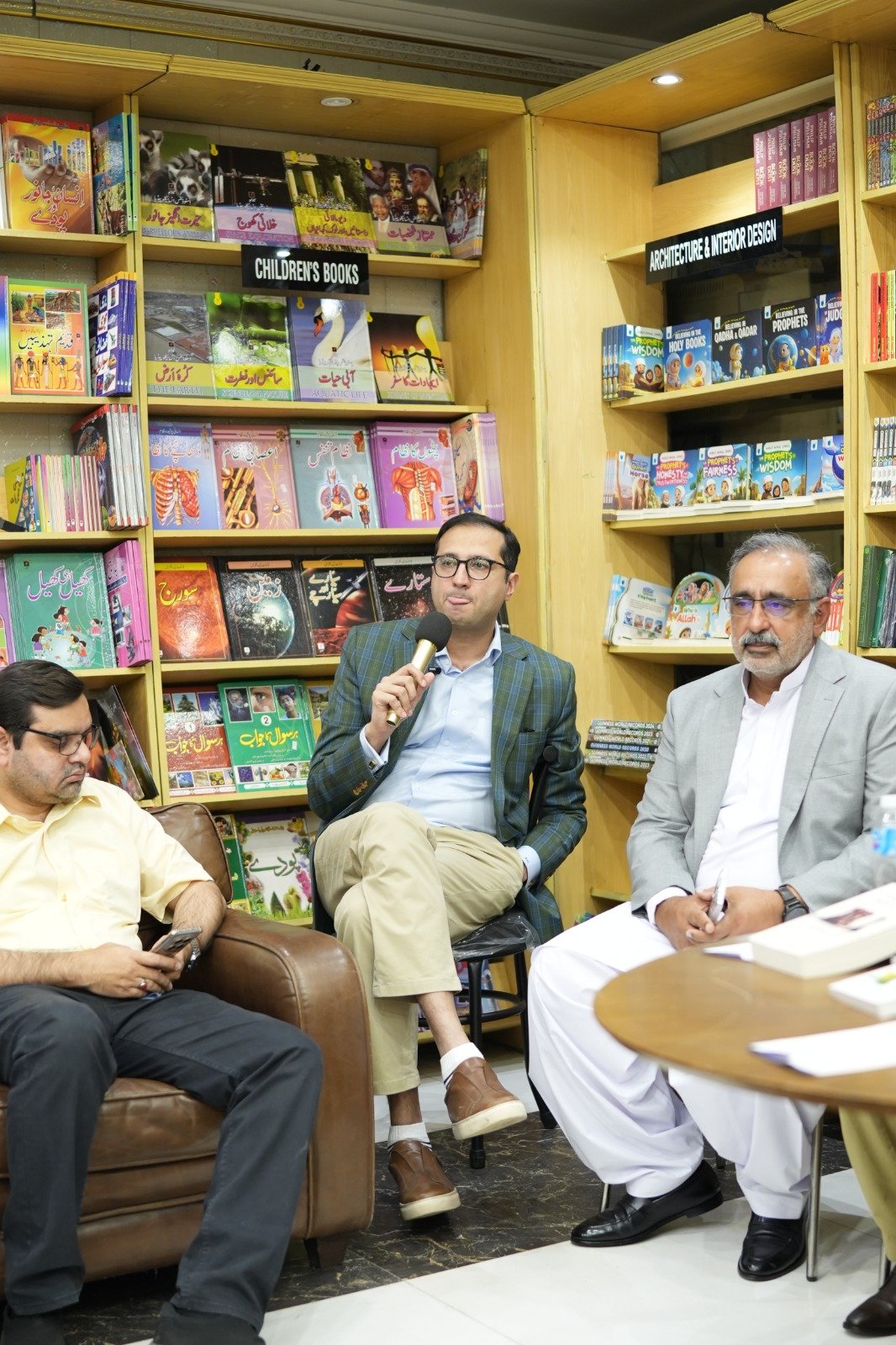
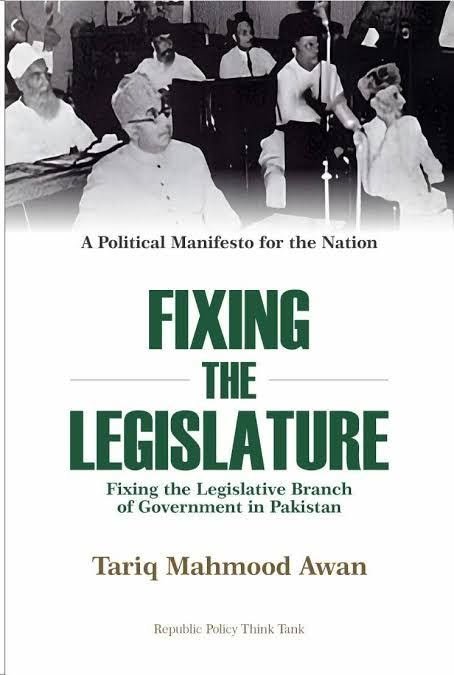
These questions lie at the heart of Fixing the Legislative Branch of Government in Pakistan, a book published by Republic Policy. It examines the institutional weaknesses that limit the effectiveness of Pakistan’s legislatures and highlights why legislative reform is indispensable to improving governance. The central challenge is to move beyond the formal existence of parliamentary institutions and develop their actual capacity to make laws, scrutinise the executive, conduct independent research and hold public authorities accountable.
Pakistan cannot build a genuinely accountable system of government while its elected institutions remain institutionally weaker than the administrative machinery they are expected to supervise. Strengthening the legislature is therefore not a narrow parliamentary concern. It is a necessary step towards restoring the balance between political authority and administrative power, improving the quality of public policy and making democratic government work in practice.
Get your copy of Fixing the Legislative Branch of Government in Pakistan and explore the case for a stronger, more capable and accountable legislature.
Order your copy on WhatsApp: 0341-4222501
Republic Policy | Governance. Institutions. Public Policy.