
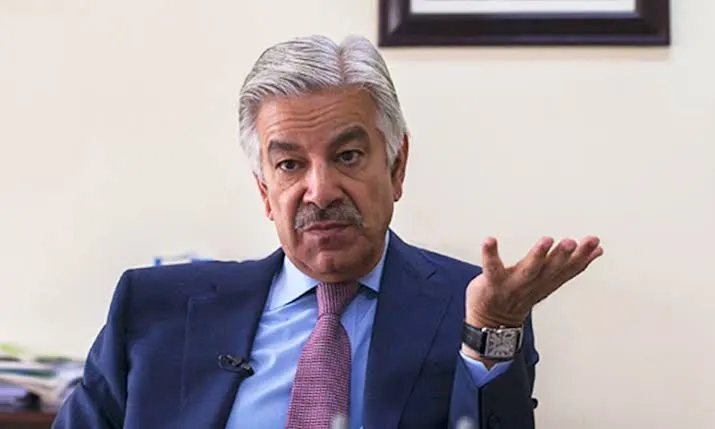

Defence Minister says discussions among stakeholders are progressing, expressing hope that consultations on provincial restructuring will produce a consensus-based outcome soon.
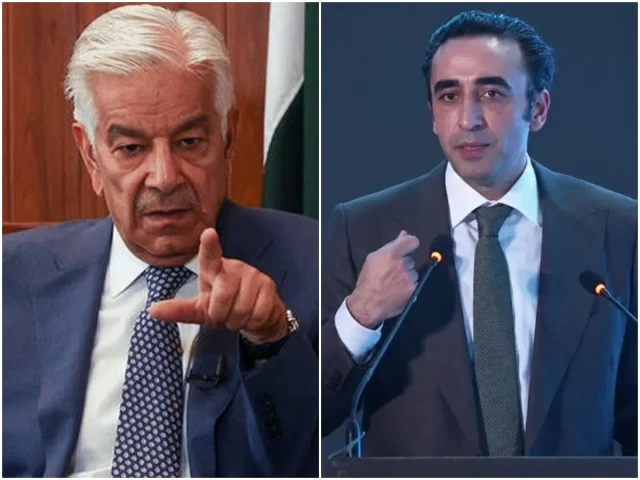
Defence Minister Khawaja Asif has called for the creation of new provinces in Pakistan, arguing that reorganising the country’s provincial structure could help devolve power and resources to the grassroots level. He has expressed optimism that ongoing discussions, consultations and meetings among political stakeholders would lead to progress on the issue through consensus in the near future.
Speaking to a private television channel, the defence minister said various quarters had presented their proposals and viewpoints regarding the creation of new provinces, indicating that the debate was gaining attention across different political and stakeholder circles. He stressed the need to reconsider the existing provincial arrangement to ensure that administrative authority and resources could reach people at the grassroots level.
His remarks have brought the debate over provincial restructuring back into focus, particularly at a time when questions about governance, decentralisation, administrative efficiency and the distribution of state resources remain central to Pakistan’s political discourse.
Devolution at the Centre of the Debate
Responding to a question about the creation of new provinces, Khawaja Asif emphasised that the purpose of provincial restructuring should be the devolution of power and resources. His position places the issue within a broader governance debate concerning how effectively the state delivers authority, public services and administrative decision-making closer to citizens.
The argument for creating new provinces has frequently centred on the geographical size of existing administrative units, the concentration of political and administrative authority, and the difficulties associated with governing large populations through centralised provincial structures. Supporters of provincial restructuring contend that smaller provinces could make administration more accessible, strengthen political representation and improve the ability of governments to respond to regional needs.
However, the debate is not limited to the number of provinces Pakistan should have. It also concerns the nature of governance within the federation, the distribution of administrative responsibilities and whether provincial governments themselves are willing to devolve authority to lower tiers of government.
Khawaja Asif’s emphasis on the transfer of power and resources to the grassroots therefore highlights an important dimension of the debate: provincial restructuring is being discussed not merely as a territorial exercise but as a potential instrument of governance reform.
Consensus and Political Consultation
The defence minister expressed confidence that the discussions taking place among different stakeholders would eventually produce results. He noted that several parties and quarters had already put forward their proposals and viewpoints, suggesting that the process involved multiple perspectives on how Pakistan’s provincial structure could be reorganised.
Consensus is particularly significant in a debate involving the constitutional and political structure of the federation. The creation of new provinces would require agreement on territorial boundaries, political representation, administrative arrangements, financial resources and the institutional framework governing the new units.
Such decisions cannot be approached solely as administrative exercises. Provincial restructuring has implications for the federation itself, as well as for the political, economic and administrative interests of the existing provinces and their populations.
The minister’s optimism about consensus suggests that consultations remain an important part of the process. Whether these discussions can translate into a concrete political and constitutional initiative will determine the direction of the debate in the coming months.
Provincial Restructuring and the Question of Governance
Pakistan’s debate over new provinces has repeatedly raised a fundamental question: whether the existing provincial arrangement is sufficient to ensure effective governance across the country or whether additional federal units are required to bring administration closer to the population.
Advocates of new provinces argue that smaller federal units could potentially improve access to government, make administrative institutions more responsive and facilitate a more balanced distribution of public resources. They contend that governance becomes increasingly difficult when large territories and populations are administered through highly concentrated provincial capitals.
The issue is particularly relevant to the relationship between political authority and administrative accessibility. When decision-making remains concentrated in distant centres, citizens in peripheral regions may find it difficult to access government institutions, influence public policy or obtain timely administrative responses. The creation of additional provinces is therefore presented by its supporters as one possible way to reorganise the state around more manageable and accessible units of governance.
Nevertheless, the effectiveness of new provinces would depend on how they are designed and governed. The establishment of additional provincial governments, by itself, would not guarantee better public administration, stronger accountability or improved public service delivery. The actual distribution of authority, resources and institutional responsibilities would remain decisive.
Devolution Must Extend Beyond Provincial Capitals
The emphasis on transferring power and resources to the grassroots also raises the question of how devolution should operate within the provinces themselves.
If provincial restructuring results only in the creation of additional provincial capitals and bureaucratic structures, without empowering local governments and communities, the intended objectives of decentralisation may remain incomplete. Power could simply move from one administrative centre to another without fundamentally changing the relationship between government and citizens.
Meaningful devolution requires that administrative and financial authority reach the levels of government responsible for addressing local needs. Provincial governments must be able to exercise their constitutional responsibilities, while local institutions must also have the capacity to manage municipal affairs, development priorities and essential services.
In this context, the debate over new provinces intersects with the broader question of administrative reform. The objective should not merely be to create smaller territories but to establish a governance structure in which authority is distributed more effectively and public institutions are accessible, accountable and responsive.
A Debate That Requires Institutional Clarity
Khawaja Asif’s remarks reflect a continuing political interest in reconsidering Pakistan’s provincial structure. His call for devolution of power and resources provides a governance-oriented rationale for the debate, while his confidence in consultations and consensus indicates that the issue is being discussed among multiple stakeholders.
The challenge ahead, however, will be to translate the broad objective of devolution into a clearly defined institutional framework. Any proposal for new provinces would need to establish how administrative responsibilities would be divided, how financial resources would be allocated, how political representation would be organised and how the relationship between provincial and local governments would function.
The discussion ultimately goes beyond the question of how many provinces Pakistan should have. It concerns how the state distributes power, how government institutions operate and how citizens participate in the decisions that affect their lives.
The creation of new provinces may become part of that process, provided provincial restructuring is pursued as a means of strengthening governance rather than an end in itself. As consultations continue, the central test will be whether the emerging proposals can establish a more effective system of devolution in which political authority and public resources are genuinely brought closer to the people.