
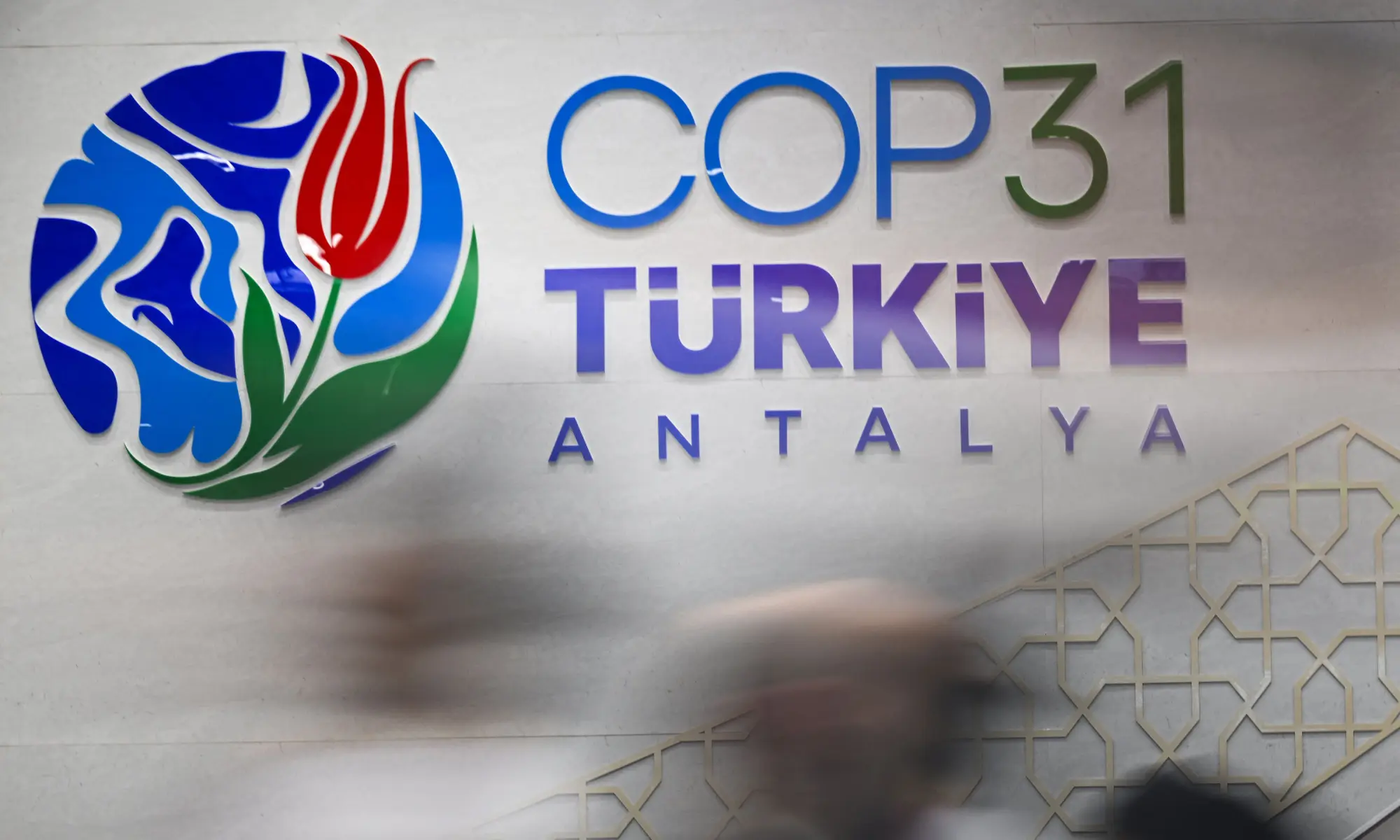

Negotiators from Europe, small island states, Latin America, Asia and Africa accused Riyadh of exerting disproportionate influence over climate talks in Antalya, as divisions over fossil fuels and carbon capture technologies threatened international consensus.
As the COP31 climate conference in Antalya extended into record overtime, a negotiator from a small island state complained that a promised meeting with the Turkish and Australian presidents of the talks had been cancelled once again. Meanwhile, Saudi officials reportedly maintained regular access to the conference leadership, raising concerns among delegates about unequal diplomatic influence at one of the world’s most consequential climate gatherings.
Negotiators from Europe, small island states, Latin America, Asia and Africa alleged that Saudi Arabia had exerted disproportionate influence over the proceedings, particularly in resisting language on reducing the world’s dependence on fossil fuels. The dispute over oil, gas and coal emerged as one of the central obstacles to reaching a political agreement, with climate-vulnerable countries insisting that any meaningful deal must explicitly address the energy sources driving global warming.
Ireland’s Climate Minister Darragh O’Brien, speaking on behalf of the European Union, expressed frustration over the role of oil-producing states in the negotiations.
“This COP, I believe, was hijacked by some oil states,” O’Brien said when asked about Saudi Arabia’s influence.
The Turkish COP presidency rejected allegations of preferential treatment, stating that no country or negotiating group had been given special access. Representatives of Saudi Arabia and Australia did not immediately comment on the allegations.
The controversy reflects a longstanding disagreement between oil-producing countries and those seeking stronger commitments to phase down fossil fuel dependence. Saudi Arabia and fellow members of the Organisation of the Petroleum Exporting Countries have consistently opposed language targeting fossil fuels, arguing that hydrocarbons will remain part of the global energy mix for the foreseeable future.
Fossil fuels were explicitly referenced in agreements reached at COP26 in Glasgow in 2021 and COP28 in Dubai in 2023. At Antalya, however, their inclusion became a contentious issue, with the European Union, small island states and other climate-vulnerable nations refusing to accept an agreement that omitted any mention of the fuels responsible for much of the world’s greenhouse gas emissions.
Absence of major powers weakens diplomatic coordination
Several negotiators argued that Saudi Arabia’s position gained greater leverage because of limited American engagement at COP31 and the absence of close coordination between Washington and Beijing. In previous climate negotiations, cooperation between the United States and China had often helped establish the political parameters for compromises among countries with competing interests.
Singapore’s Environment Minister Grace Fu said the absence of major players willing to shape the direction of negotiations had made the process more uncertain.
“Instead of having one or two major players helping define the boundaries of the discussion, those boundaries have become less clear,” Fu said.
The lack of strong diplomatic coordination among major powers left countries struggling to establish a common negotiating framework. With disagreements over energy transition, climate finance and national economic priorities already complicating the process, the absence of influential diplomatic actors further weakened the prospects of a consensus.
Low expectations from the outset
COP31 began with relatively modest expectations. Türkiye, the host country, sought to advance a pledge to accelerate global electrification and focus on implementing previous climate agreements aimed at preventing the worst consequences of global warming.
However, divisions intensified after the Turkish presidency released a revised draft cover text that omitted references to fossil fuels. The decision prompted renewed resistance from countries seeking a clear commitment to transition away from oil, gas and coal.
During the second week of negotiations, delegates attempted to reconcile competing proposals, but Saudi Arabia reportedly maintained a firm position that the final text should not mention fossil fuels. Riyadh also pushed for language supporting carbon capture technologies, which seek to capture emissions generated through industrial processes and fossil fuel use.
An Asian negotiator involved in the discussions said Saudi Arabia presented its position as non-negotiable, viewing the issue as fundamental to its economic and energy interests.
Saudi Arabia was not alone in adopting a hard negotiating stance. The European Union also strengthened its position, refusing to accept a compromise that it considered inadequate. EU Climate Commissioner Wopke Hoekstra made the bloc’s position clear when asked about the progress of negotiations on Saturday.
“It’s either going to be a good deal or it’s going to be no deal,” Hoekstra said.
Germany subsequently convened meetings with small island states and other members of the High Ambition Coalition, which includes climate-vulnerable nations, African countries and developed economies seeking stronger climate commitments.
The coalition developed a proposal supported by approximately 130 countries, demanding that any agreement at Antalya include language on transitioning away from fossil fuels while removing references to carbon capture, storage and utilisation technologies. The proposal was subsequently submitted to the Turkish presidency.
A widening divide over the future of energy
The confrontation at COP31 highlights the growing difficulty of reconciling the economic interests of fossil fuel-producing states with the demands of countries facing the most severe consequences of climate change.
For vulnerable island nations, rising sea levels, extreme weather and environmental degradation make stronger climate commitments an urgent necessity. They argue that international agreements must directly address fossil fuel dependence rather than rely solely on technological solutions or broad emissions targets.
Oil-producing countries, by contrast, maintain that the global energy transition must accommodate their economic realities and recognise the continuing role of hydrocarbons. Carbon capture technologies have become an important part of their argument, offering a pathway to reduce emissions without necessarily abandoning fossil fuel production.
The dispute is therefore about more than the wording of a climate agreement. It reflects competing visions of the global energy future, the pace of economic transformation and the distribution of responsibility for addressing climate change.
The failure to bridge these positions at Antalya underscores the challenges confronting international climate diplomacy. Without stronger coordination among major powers and greater willingness among competing blocs to compromise, climate conferences risk becoming increasingly defined by geopolitical rivalries and energy interests rather than collective action.
The Antalya negotiations have once again exposed the tension between climate ambition and economic interests, leaving countries divided over whether the world can agree on a common path away from fossil fuels while accommodating the political and economic realities of its major energy producers.