
By Sheriyar Naeem
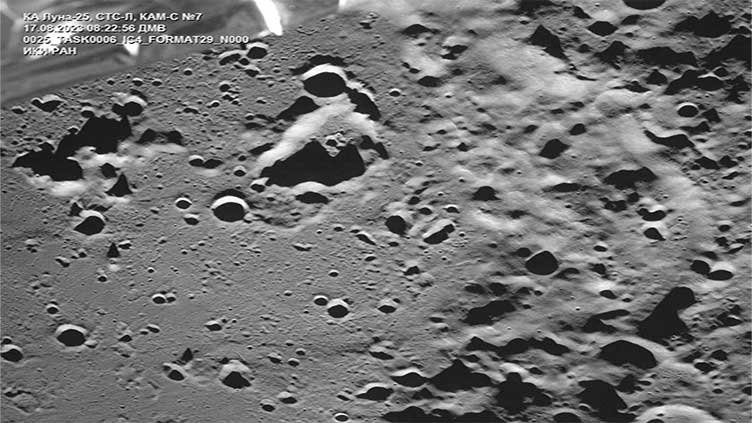
On a quiet Friday, Russia’s Luna-25 spacecraft embarked on a calculated orbital adjustment, a celestial ballet choreographed by the deft hands at Russia’s space agency, Roscosmos. The cosmic stage was set for a historic lunar landing, one that would boldly mark Russia’s return to the moon’s rugged terrain. The spotlight, or perhaps more fittingly, the shimmering lunar glow, now shifted toward Luna-25 as it readied itself for an audacious attempt: to land near the moon’s elusive south pole, a terrain untraversed by humanity before. As the world watched with bated breath, this cosmic odyssey unfolded with a meticulous orbital maneuver at 09:20 Moscow time (0620 GMT), a 40-second ballet of propulsion that sought to craft the perfect pre-landing orbit. Roscosmos declared that the performance was a symphony of success, with the spacecraft’s systems and communications harmoniously in tune.
Beyond the stars and into the moon’s embrace, Luna-25’s journey takes a pivotal turn. The moon’s south pole, where it aims to make its historic touchdown, has long been an enigma, shrouded in lunar darkness for eons. It’s a celestial region riddled with mystery and intrigue, holding secrets about our lunar neighbor’s icy resources and tantalizing hints of future human habitation. While the moon’s surface has felt the weight of human exploration before, the south pole remains a blank page in our cosmic journal, a place where we hope to write chapters of discovery and knowledge.
Yet, Luna-25’s mission carries more than just the hopes of exploration. It carries Russia’s legacy in the realm of space, a legacy seeking to reaffirm its leadership despite the geopolitical storms on Earth. In a world grappling with a war in Ukraine and geopolitical tensions, this lunar mission is Russia’s way of saying, “Look to the stars, we’re still reaching for them.” It’s a testament to the enduring spirit of exploration, transcending borders and conflicts.
And Russia isn’t the only contender in this cosmic theater. On the lunar stage alongside Luna-25 is India’s Chandrayaan-3, another spacecraft destined for the moon’s south pole. In a dance of cosmic coordination, these emissaries from Earth aim to unlock the moon’s well-guarded secrets. As they embark on these historic missions, they stand as symbols of humanity’s collective curiosity, the yearning to unravel the celestial enigma that is the moon’s south pole.
The moon’s south pole isn’t just a destination; it’s a cosmic treasure trove. Scientists have long believed that this desolate expanse holds vast reservoirs of frozen water, a resource that could revolutionize our understanding of lunar exploration. The presence of water isn’t just about quenching the thirst of future lunar settlers; it’s about creating a sustainable lunar ecosystem.
The key to unlocking these lunar riches lies in the success of Luna-25 and Chandrayaan-3. If they can conquer the challenges posed by the moon’s unforgiving south pole, they could pave the way for humanity’s sustained presence on the lunar surface. The moon could become a launchpad for deeper space exploration, a testing ground for technologies that will one day take us to Mars and beyond.
But it’s not just about scientific prowess; it’s about national pride and prestige. In a world where nations jockey for position in space, a successful lunar mission is a badge of honor. It’s a way of saying, “We have the knowledge, the technology, and the audacity to reach the stars.” For Russia, this mission carries the weight of proving its spacefaring prowess, despite the challenges it faces on Earth.
In the cosmic theater, Luna-25 and Chandrayaan-3 are the lead actors, but they aren’t alone. They’re part of a broader ensemble of spacecraft from various nations, each playing a role in humanity’s quest for cosmic understanding. The moon, our celestial neighbor, is the stage upon which this cosmic drama unfolds. And as the spotlight shifts to the lunar south pole, we’re reminded of our enduring fascination with the cosmos, a fascination that transcends borders and politics.
In the grand tapestry of the universe, the moon’s south pole may seem like a small corner. But within its rugged contours lie the hopes, dreams, and aspirations of a species that has always looked to the stars for answers. Luna-25 and Chandrayaan-3 are the torchbearers of those aspirations, emissaries of humanity’s unquenchable curiosity. As they venture into the lunar unknown, we watch with anticipation, knowing that their success could rewrite the script of our cosmic story.
In the grand cosmic tapestry, a quiet yet momentous celestial performance is underway. Russia, with eyes on the moon, orchestrates an audacious lunar mission, and the world watches with held breath. Luna-25, the spacecraft at the heart of this lunar odyssey, recently embarked on a carefully calculated orbital adjustment, choreographed by the skilled hands at Russia’s space agency, Roscosmos. As Luna-25 contemplates a historic lunar landing near the elusive south pole, it wades into uncharted cosmic waters, promising to unveil the secrets that lie shrouded in lunar darkness.
The South Pole, a Celestial Enigma: As Luna-25 prepares for its lunar encounter, the spotlight falls on the moon’s south pole, a region bathed in eternal lunar twilight. For eons, this enigmatic celestial neighborhood has guarded its mysteries, holding secrets that tantalize scientists and visionaries alike. It’s a cosmic theater where the script remains unwritten, where every crater and crevice whispers secrets of the lunar past.
The Luna-25 Spacecraft Takes Center Stage: In this lunar performance, Luna-25 assumes the role of the protagonist, a spacecraft brimming with ambition and scientific instruments. Its mission: to make a historic touchdown near the moon’s south pole. Unlike the moon’s familiar terrains, this region is untraversed, unexplored, and cloaked in uncertainty. Luna-25’s journey hinges on precision, technology, and unwavering determination.
A Cosmic Choreography of Orbital Adjustment: On a serene Friday, Luna-25 initiated an orbital dance that would set the stage for its lunar descent. The spacecraft’s propulsion system, like a maestro wielding a baton, conducted an exquisite orbital correction lasting 40 seconds. The goal was clear: to craft the perfect pre-landing orbit. The cosmic dance unfolded seamlessly, with Luna-25’s systems and communications performing harmoniously.
Cosmic Significance Amid Earthly Challenges: Beyond the celestial spectacle, this lunar mission carries profound significance for Russia. It marks the nation’s return to lunar exploration after 47 years, a testament to its enduring commitment to space exploration. In an earthly landscape marred by the war in Ukraine and geopolitical tensions, Russia seeks to reaffirm its leadership in space exploration.
India Joins the Lunar Stage: Yet, Russia isn’t the sole player in this cosmic theater. Sharing the lunar spotlight is India’s Chandrayaan-3, another spacecraft with lunar aspirations. Together, these emissaries from Earth aim to unlock the moon’s well-guarded secrets. They stand as symbols of humanity’s collective curiosity, representing the quest to unravel the celestial enigma of the moon’s south pole.
Unlocking Lunar Resources: The moon’s south pole isn’t merely a destination; it’s a cosmic treasure trove. Scientists have long speculated that this lunar expanse conceals vast reservoirs of frozen water, a resource with transformative potential. Beyond quenching the thirst of future lunar settlers, this water could fuel lunar ecosystems and propel humanity deeper into the cosmos.
Spacefaring Prowess and National Pride: The success of Luna-25 isn’t solely about scientific achievement; it’s a matter of national pride and prestige. In a world where nations vie for supremacy in space, a triumphant lunar mission serves as a badge of honor. It’s a declaration that a nation possesses the knowledge, technology, and audacity to reach for the stars.
A Cosmic Odyssey: In the grand cosmic narrative, Luna-25 and Chandrayaan-3 are the lead characters, but they aren’t alone. They’re part of a celestial ensemble, with spacecraft from various nations contributing to humanity’s quest for cosmic comprehension. The moon, our celestial neighbor, serves as the stage where this cosmic odyssey unfolds.
The Moon’s South Pole: A Cosmic Frontier: The moon’s south pole may appear small in the vast cosmos, but within its rugged contours lies the hopes, dreams, and aspirations of a species forever gazing at the stars. Luna-25 and Chandrayaan-3 symbolize these aspirations, emissaries of humanity’s unquenchable curiosity. As they venture into the lunar unknown, they carry with them the weight of exploration, discovery, and the enduring fascination with the cosmos.
A Cosmic Symphony: In the boundless cosmic expanse, Luna-25’s mission transcends geopolitical boundaries and earthly challenges. It epitomizes the indomitable human spirit that yearns to explore, discover, and understand the cosmos. As Luna-25 and Chandrayaan-3 journey toward the lunar south pole, they play a pivotal role in humanity’s cosmic symphony, a timeless melody of curiosity and exploration.
In the vast cosmos, Russia’s Luna-25 and India’s Chandrayaan-3 stand as emissaries of human curiosity, poised to unlock the moon’s age-old secrets. Their historic missions carry the weight of exploration and discovery, reaffirming the enduring quest for knowledge beyond our home planet. As these spacecraft venture toward the lunar south pole, we anticipate a chapter of cosmic exploration that may unveil vital resources and reshape humanity’s cosmic aspirations. The stars beckon, and these missions remind us that the sky is not the limit; it’s just the beginning.
Subscribe our website for latest updates:
https://republicpolicy.com/shop/
Read More