
Abdullah Kamran
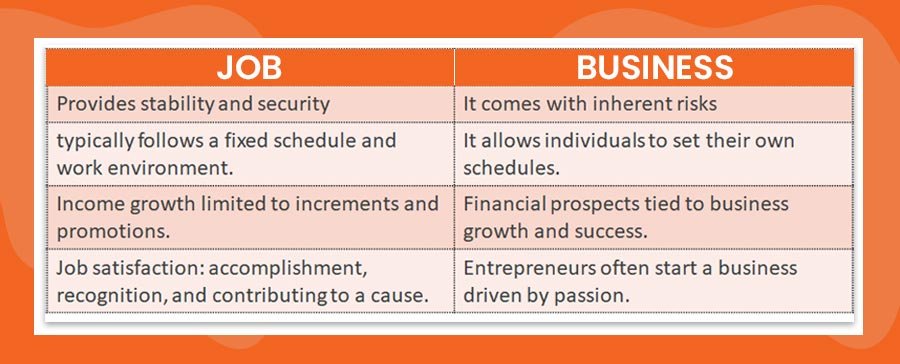
Entrepreneurship is the process of creating a business from an idea, while a job is a form of employment where one performs tasks for an employer or client. Both entrepreneurship and jobs have their advantages and disadvantages, and the significance of promoting one over the other in Pakistan depends on various factors, such as the economic, social, and political context, the availability of resources and opportunities, and the personal preferences and goals of the individuals.
One of the main arguments in favour of promoting entrepreneurship in Pakistan is that it can foster innovation, economic growth, and social development. According to a report by McKinsey, Pakistan has a large and young population, a growing middle class, and a rising digital consumption, which creates a potential for entrepreneurship based on new technologies and solutions. Entrepreneurship can also create employment opportunities, generate income, and reduce poverty, especially for the marginalized and vulnerable groups in society. Furthermore, entrepreneurship can enhance the competitiveness and resilience of the economy, as well as the diversity and inclusiveness of society.
However, promoting entrepreneurship in Pakistan also faces several challenges and risks, such as the lack of a conducive environment, the scarcity of funding and support, and the uncertainty and instability of the market. According to the Global Entrepreneurship Development Institute, Pakistan ranks 122 out of 137 countries in terms of entrepreneurship development, which indicates the difficulties and barriers that entrepreneurs encounter in the country. Some of these challenges include the complexity and inefficiency of the business registration and taxation system, the inadequacy and unreliability of the infrastructure and services, the shortage and high cost of capital and resources, and the low level of education and skills among the workforce. Moreover, entrepreneurship involves a high degree of risk and uncertainty, as entrepreneurs have to invest time and money into a business before earning an income and face the possibility of failure and loss.
Please, subscribe to the monthly magazines of republicpolicy.com
On the other hand, promoting jobs in Pakistan can also have positive impacts, such as providing stability, security, and benefits for the workers, increasing the productivity and efficiency of the economy, and improving the quality and standards of goods and services. Jobs can offer employees a consistent and predictable income, as well as benefits such as health insurance, paid time off, and retirement funds, which can enhance their well-being and satisfaction. Jobs can also enable employees to specialize and develop their skills and expertise, which can increase their value and performance in the market. Furthermore, jobs can contribute to the improvement and innovation of products and services, as well as the regulation and compliance of the industry.
However, promoting jobs in Pakistan also has some drawbacks and limitations, such as the dependence and subordination of the workers, the saturation and stagnation of the economy, and the vulnerability and exploitation of the labour market. Jobs can limit the autonomy and creativity of the employees, as they have to follow the instructions and rules of the employers or clients and may have little or no say in the decision-making and strategy of the business. Jobs can also reduce the diversity and dynamism of the economy, as they may create a surplus of supply and a shortage of demand and discourage the emergence and growth of new and innovative businesses. Moreover, jobs can expose workers to the risks and challenges of the labour market, such as competition and discrimination, low wages and benefits, and the insecurity and instability of employment.
Lastly, entrepreneurship and jobs have different implications and outcomes for individuals and society, and the promotion of one over the other in Pakistan depends on the balance and trade-off between the benefits and costs, the opportunities and challenges, and the preferences and goals of the stakeholders. A possible way to achieve this balance is to adopt a three-pronged approach, as suggested by McKinsey, which involves designing enabling policies and facilitating infrastructure, developing skills and capabilities, and fostering networks and collaborations. This approach can help create a supportive and sustainable ecosystem for both entrepreneurship and jobs in Pakistan and enable the country to realize its full potential and achieve its vision.
Please, subscribe to the YouTube channel of republicpolicy.com