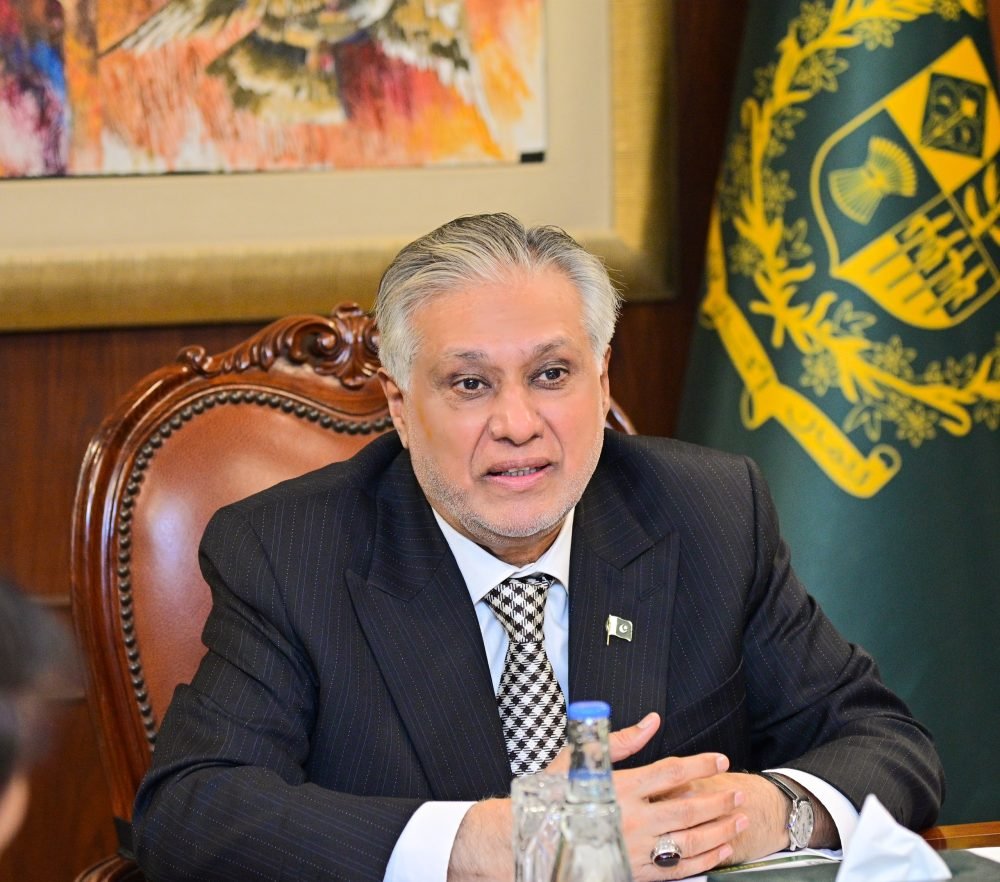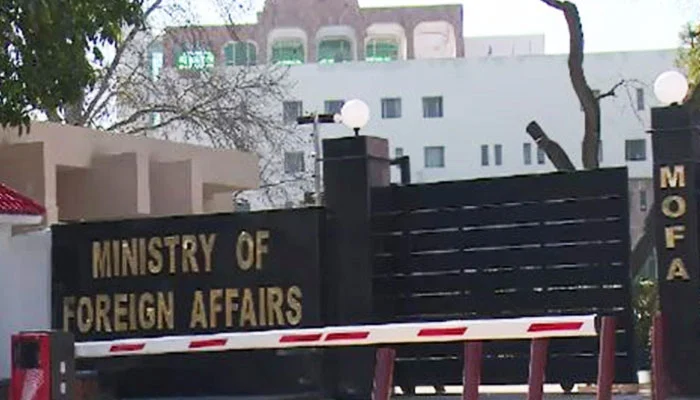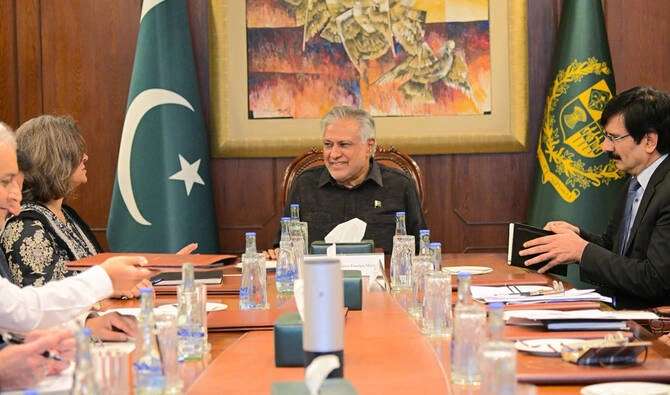

Deputy Prime Minister and Foreign Minister Senator Muhammad Ishaq Dar chaired a high-level Foreign Office meeting on Saturday to take stock of Pakistan’s diplomatic priorities and preparations for upcoming international engagements, as fighting between the United States and Iran intensified with fresh strikes across the Middle East and renewed fears over global energy security.
According to the Foreign Office, the meeting was attended by Foreign Secretary Ambassador Amna Baloch and senior ministry officials and covered follow-up actions on recent diplomatic engagements alongside preparations for the priorities ahead. It came hours after US Central Command confirmed American forces had struck Iranian coastal surveillance, air defense, and maritime facilities, along with missile and drone storage sites, marking the latest round in what was by then an eighth consecutive night of hostilities. Tehran responded by warning it would launch a full-scale offensive should American strikes continue, saying it had already hit US military sites in Kuwait, Bahrain, and Jordan. The conflict, which began on February 28, has since spread across the Gulf, disrupting shipping through the Strait of Hormuz and pushing oil prices higher.
The Foreign Office said Dar underlined the need for close coordination and effective implementation of Pakistan’s diplomatic initiatives to advance the country’s foreign policy goals and protect its national interests.
Islamabad has positioned itself as a mediator between Washington and Tehran since the war began, working to prevent it from widening into a broader regional confrontation. Maintaining cordial ties with both sides, Pakistan helped broker the Islamabad Memorandum of Understanding in June, an interim 14-point framework under which the US and Iran agreed to pursue a comprehensive settlement within 60 days, before hostilities resumed last week after Washington accused Tehran of unprovoked attacks on vessels transiting the strait. Since fighting resumed, Islamabad has repeatedly called on all sides to honor the MoU and settle their differences through dialogue rather than force.
The renewed exchanges around the Strait of Hormuz, a corridor Iran says it controls and through which a large share of the world’s oil and gas moves, have once again driven global prices sharply higher, stoking inflationary concerns well beyond the countries directly involved in the fighting.