
Mubashir Nadeem
Few regions in Pakistan present as layered and complex an electoral picture as Gilgit-Baltistan. To understand its politics, one must first abandon the instinct to generalise. This is a region where each constituency carries its own distinct social fabric, its own communal tensions, its own local hierarchies, and its own political logic. What holds true in one valley may be entirely irrelevant twenty kilometres away. It is precisely this constituency-level specificity that makes any broad survey of Gilgit-Baltistan elections a genuinely difficult undertaking.
The forces that shape electoral outcomes here are multiple and often competing. Sectarian affiliations run deep and cannot be brushed aside as mere background noise. They actively determine voter loyalties in several constituencies, sometimes more powerfully than any party programme or national political narrative. Community ties, local factions, the personal reputation of individual candidates, and a web of intersecting local interests all feed into the final result. Elections in Gilgit-Baltistan are, in this sense, intensely personal contests as much as they are political ones.
The current electoral landscape is broadly defined by a triangular contest among three major political forces: Pakistan Muslim League-N, Pakistan Tehreek-e-Insaf, and Pakistan Peoples Party. These are the dominant players, and their presence is felt across the region. But their relative strength is not uniform. In constituency after constituency, the individual candidate matters as much as, and in many cases more than, the party banner under which they stand. A candidate with deep local roots, a reputation for personal integrity, and genuine community connections can outperform a nationally prominent party. Equally, a weak or unpopular candidate can drag down a party that might otherwise be competitive. The party label opens doors, but it does not guarantee passage.
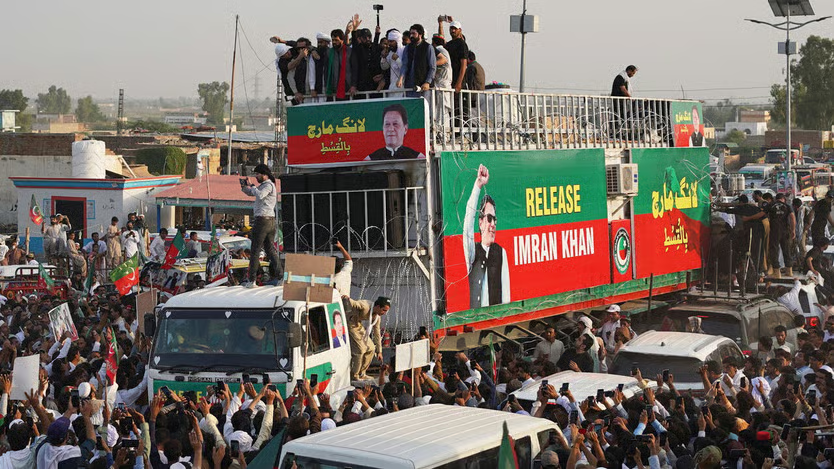
The situation surrounding PTI deserves particular attention. Unlike other major parties, PTI appears to be operating under significant constraints when it comes to open electoral activity. The space available to it for visible campaigning and public mobilisation is noticeably narrower than that enjoyed by its rivals, who are running comparatively prominent and unhindered campaigns. This asymmetry creates a distorted picture at the surface level. What appears to be limited grassroots activity does not necessarily reflect actual voter sentiment. Political support and visible campaign activity are not always the same thing, and in a region where quiet loyalties run strong, the gap between the two can be substantial.
What adds another dimension to Gilgit-Baltistan’s electoral character is the relatively high literacy rate and the comparatively advanced level of political and social awareness among its population. Voters here do not confine their thinking to local concerns alone. They look beyond the immediate candidate and consider the broader picture: the federal government’s disposition toward the region, the quality of relations between Gilgit-Baltistan and the centre, and the realistic prospects for development and economic progress. This outward-looking orientation distinguishes the electorate here from many other parts of the country, where purely local considerations dominate.
The result is a fascinating and somewhat contradictory political environment. Local identities and community affiliations pull voters in one direction, while federal political dynamics and national party alignments pull in another. Both forces operate simultaneously and neither fully cancels the other out. A voter may feel a deep sectarian or communal pull toward one candidate while simultaneously calculating which party’s victory at the regional level is most likely to secure developmental projects, infrastructure investment, or administrative attention from Islamabad. It is this interplay between the intensely local and the deliberately national that gives Gilgit-Baltistan elections their unique and irreducible complexity.
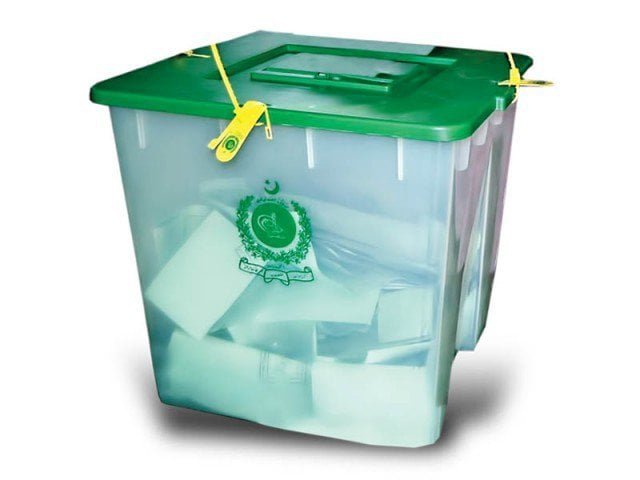
Allegations of pre-poll interference have emerged from various political quarters, as they tend to do in most Pakistani electoral contests. These concerns deserve to be taken seriously, though they are rarely the sole or even primary determinant of outcomes. What ultimately decides elections in competitive constituencies is the capacity for effective ground-level organisation on polling day itself. The party or candidate that manages to mobilise its supporters, ensure they reach polling stations, and successfully activate otherwise passive or undecided voters is the one that wins. Theoretical popularity means little if it does not translate into physical presence at the ballot box.
This is why the final days of any election campaign in Gilgit-Baltistan carry extraordinary weight. The momentum that builds in this closing phase, the quality of voter outreach, the effectiveness of local networks, and the ability to generate genuine enthusiasm rather than managed appearances, can shift outcomes in ways that earlier polling or conventional wisdom might not anticipate. A political wave in the final stretch, combined with superior organisation and disciplined voter mobilisation, can dramatically alter a contest that looked settled just days before.
Gilgit-Baltistan’s elections reward those who understand its complexity rather than those who try to simplify it.