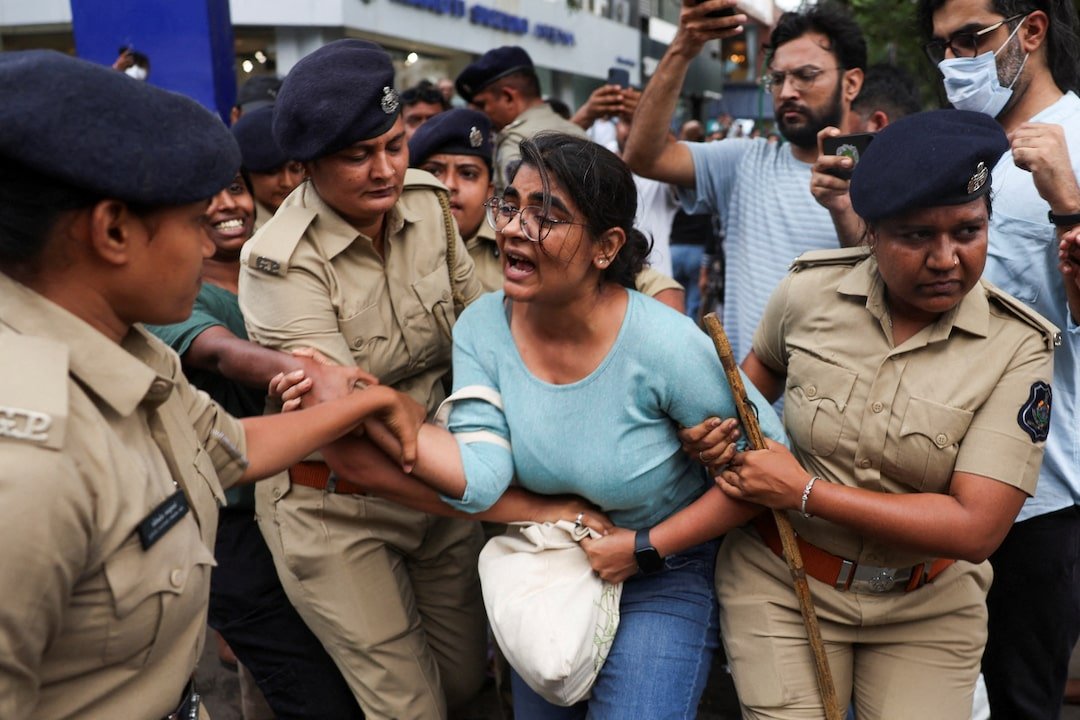

India’s youth-led Cockroach Janta Party movement said Monday that a federal minister had promised the government would consider its demands after thousands of protesters marched on parliament despite tear gas and cane charges deployed by police to disperse them.
The movement, and the scale of the protest, are being seen as the biggest public challenge yet to Prime Minister Narendra Modi in his third term, having built a following of millions on social media before drawing support from opposition parties as well.
The immediate spark came Saturday, when police forcibly moved hunger-striking activist Sonam Wangchuk to hospital, galvanizing a movement already demanding the resignation of Education Minister Dharmendra Pradhan over leaked examination papers. Members say the leak of papers for a national medical school entrance test in May, which forced roughly 2 million students to resit the exam and was linked to several suicides, reflects deep-seated corruption within the education system.
Thousands of young supporters gathered overnight at Jantar Mantar in New Delhi ahead of the march, timed to coincide with the opening day of parliament’s monsoon session. Protesters chanted “Dharmendra Pradhan quit” and “Narendra Modi quit” in Hindi, as police and paramilitary personnel fanned out across the capital to block their path.
Parallel protests took place in Bangalore and Mumbai, where police detained demonstrators and removed them in vans, according to witnesses, while in Goa, crowds held a candlelight vigil calling for Modi’s resignation.
Health Minister J.P. Nadda said he had asked for time to discuss the movement’s demands within the government, according to a post on X from Ashutosh Ranka, the group’s national spokesperson. Those demands include Wangchuk’s release, Pradhan’s resignation, and compensation of 10 million rupees, about $104,000, for the family of each student who died by suicide following the leak. Media reports put that toll at around 12. Nadda said the movement’s leaders had submitted a written memorandum after verbal discussions and appealed to protesters to end their sit-in and allow authorities to restore normalcy.
The movement’s rapid rise reflects broader frustration among young Indians over job shortages alongside what they describe as recurring exam leaks. Adi Nathan, a 21-year-old student who traveled from Meerut, said those in power were failing students and that leaked question papers had to stop. Mohammed Tabrez, 22, who came from Amroha in Uttar Pradesh to prepare for competitive exams, said simply that the corruption needed to end.
Delhi police said the protest was being handled professionally and denied using force, even as television footage showed cane charges against some demonstrators and Reuters journalists witnessed tear gas fired near parliament; some protesters responded by throwing stones. Police later appealed on X for demonstrators to remain peaceful and cooperate in maintaining public order.
The protest movement traces back to a sit-in launched last month by CJP founder Abhijeet Dipke, which Wangchuk joined on June 28 with an indefinite hunger strike. From the hospital, Wangchuk asked in a handwritten note to be allowed to join Monday’s march, even briefly, and separately offered to end his fast if the government met three conditions, including accepting responsibility for the exam leaks and broader failures in the education system, or if lawmakers and party leaders visited him in the hospital to guarantee those conditions would be met.