Republic Policy | International Affairs | October 30, 2026
JERUSALEM: Israeli Prime Minister Benjamin Netanyahu faces uncertain prospects of retaining power after his political bloc failed to secure a parliamentary majority in Tuesday’s general election, while Arab-led parties achieved unprecedented representation and emerged as potentially decisive players in negotiations over the next government.
Results published by Israel’s Central Elections Committee early Friday showed Netanyahu’s right-wing coalition winning 53 seats in the 120-member Knesset, eight short of the 61 required for a majority. The opposition bloc, led by former military chief Gadi Eisenkot, secured 48 seats, while Arab-led parties won the remaining 19.
Netanyahu’s Likud remained the largest individual party with 27 seats. However, his governing alliance suffered a substantial decline from the 68 seats it held in the outgoing parliament.
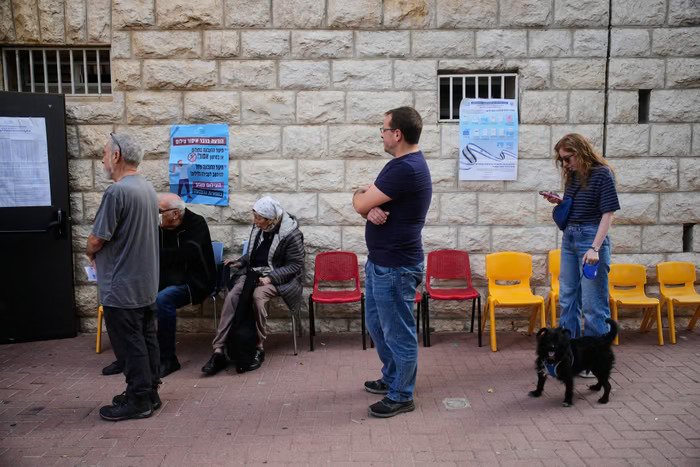
The election recorded turnout of 77.9 percent, with more than 5.7 million votes cast. The results are scheduled for formal submission to President Isaac Herzog on November 4.
The outcome leaves neither major political bloc capable of governing independently, setting the stage for complicated coalition negotiations.
Likud Alleges Electoral Interference Without Evidence
Political tensions intensified after Likud alleged that the election had been manipulated through foreign involvement and irregularities associated with Arab-led parties.
In a statement issued Thursday, Netanyahu’s party claimed the election had been stolen, suggesting that outside assistance had influenced voting patterns to weaken the governing coalition.
The allegations included claims that Qatar had financed activities intended to increase support for Arab political parties. Qatar and the parties concerned rejected the accusations.
No publicly substantiated evidence has established that the alleged interference altered the election results.
Eisenkot accused Netanyahu’s political camp of attempting to undermine public confidence in the electoral process after losing its parliamentary majority.
The controversy has raised concerns about the treatment of Israel’s Arab citizens, who constitute approximately one-fifth of the population and are predominantly of Palestinian descent.
Arab political leaders have argued that the allegations unfairly cast suspicion on a community exercising its democratic voting rights.
Election Authorities Order Investigation
Supreme Court Justice Noam Sohlberg, chairman of the Central Elections Committee, referred suspicions of possible foreign interference to Israel’s domestic security agency, Shin Bet.
Sohlberg acknowledged that the allegations had not been verified but considered them sufficiently serious to warrant examination.
Shin Bet confirmed that it was investigating suspected irregularities while emphasising that the inquiry should not be interpreted as an accusation against an entire community.
The Central Elections Committee separately rejected suggestions that widespread electoral violations had compromised the vote.
It stated that some information circulating about the investigation was unfounded and maintained that the inquiry would not affect the published results.
President Herzog called for a comprehensive investigation while warning against damaging the reputation of citizens who had participated lawfully in the democratic process.
The distinction between investigating specific allegations and questioning the legitimacy of an entire electorate has become a central issue in the political controversy.
Arab Parties Gain Unprecedented Parliamentary Influence
The election has substantially increased the parliamentary representation of Arab-led political organisations.
The Joint List secured 11 seats, while Ra’am won eight, giving the two parties a combined 19 seats.
Their representation creates an important parliamentary opportunity for Eisenkot’s opposition bloc, which would exceed the 61-seat threshold if it secured the support of all 19 Arab lawmakers.
However, such cooperation faces significant political obstacles. Several parties within the opposition bloc have expressed reservations about forming an alliance with Arab-led organisations.
Eisenkot has not ruled out cooperation, but the composition of any prospective governing arrangement remains uncertain.
Arab parties could also influence parliamentary decisions without formally joining a coalition, including votes concerning legislative leadership and government confidence.
Ahmad Tibi, a senior Joint List politician, said opposition representatives had approached him regarding the replacement of the Knesset speaker.
The increased representation reflects strong participation among Arab voters, whose political influence has historically been constrained by divisions within Israel’s parliamentary system.
Ra’am previously participated in a governing coalition in 2021, demonstrating that cooperation between Arab-led parties and predominantly Jewish political alliances is possible, although politically contentious.
Coalition Negotiations Test Israel’s Political System
Netanyahu will remain prime minister while negotiations continue over the formation of a new government.
Once the election results are formally presented, President Herzog will consult parliamentary parties before selecting a candidate to attempt to assemble a governing majority.
That candidate must secure sufficient parliamentary support to establish an administration capable of surviving confidence votes.
Potential arrangements include cooperation between opposition and Arab-led parties, negotiations involving parties from different political blocs, or alternative coalition agreements.
Each option involves substantial political differences that could complicate negotiations.
If successive attempts fail to produce a government, Israel could face another general election, prolonging a period of political uncertainty.
The outcome also carries consequences for Netanyahu personally, given the corruption proceedings against him and continuing demands for scrutiny of the security failures surrounding the Hamas-led October 7, 2023, attack.
A Test of Democratic Legitimacy and Political Representation
Beyond the immediate struggle for power, the election raises broader questions about political representation, coalition-building and confidence in democratic institutions.
The parliamentary arithmetic demonstrates that winning the largest number of seats within a political bloc does not automatically confer the authority to govern.
In a fragmented legislature, coalition agreements and the willingness of competing parties to cooperate determine whether a stable administration can be formed.
The controversy surrounding Arab voters adds another dimension. Electoral participation is a fundamental democratic right, and allegations of misconduct require credible evidence and impartial investigation rather than collective suspicion.
For Israel, the immediate challenge is to translate the election results into a functioning government while maintaining confidence in the integrity of the electoral process.
Whether Netanyahu remains in office or an alternative coalition takes power will depend on parliamentary negotiations rather than the relative strength of the two principal blocs alone.
The election has therefore left Israel confronting two interconnected questions: who can command a majority in the Knesset, and whether its political institutions can manage the transition without further undermining public confidence.