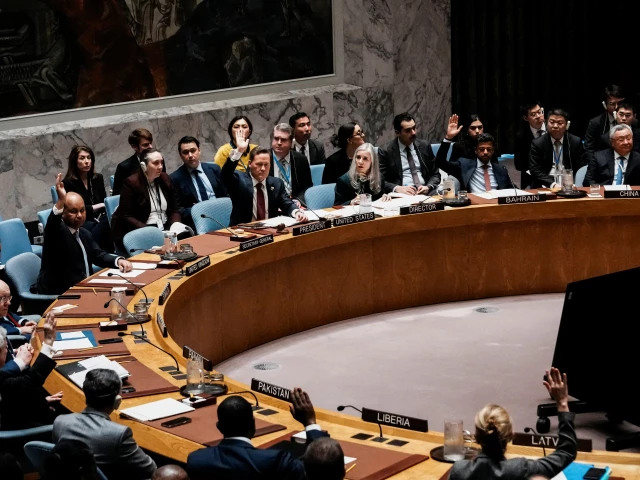

Pakistan abstained from voting on Thursday as China and Russia vetoed a United Nations Security Council resolution seeking to extend the mandate of an independent panel responsible for monitoring sanctions on Iran.
China and Russia reiterated their position that UN measures against Tehran had been terminated under the 2015 nuclear agreement between Iran and world powers. Eleven members of the 15-member Security Council supported the resolution, while Pakistan and Somalia abstained.
UN sanctions on Iran were reimposed a year ago after France, Britain and Germany accused Tehran of failing to comply with the 2015 nuclear agreement, which was intended to prevent Iran from developing nuclear weapons. Tehran has consistently denied seeking nuclear weapons.
The reimposition of sanctions also brought back provisions for an independent panel of experts tasked with monitoring possible violations and reporting its findings to the Security Council. However, the council has operated without such a panel for the past year because members were unable to reach the consensus required for appointing its experts.
By vetoing the latest resolution, Beijing and Moscow prevented an extension of the monitoring mandate and renewed their argument that sanctions imposed through previous UN measures had already been terminated under the nuclear agreement.
Following the vote, Deputy US Ambassador Jennifer Locetta said the absence of an independent expert panel would deprive the Security Council of an important source of impartial and evidence-based information about possible sanctions violations. She argued that the resulting monitoring gap would benefit Iran and those seeking to evade the measures.
The vote comes against the backdrop of heightened tensions surrounding Iran. The United States and Israel went to war with Iran seven months ago, saying their objective was to prevent Tehran from developing a nuclear weapon. US President Donald Trump had withdrawn Washington from the 2015 nuclear agreement during his first term in 2018, describing the accord as deeply flawed.
Russia and China, meanwhile, accused Western members of politicising the Security Council’s handling of the Iranian nuclear issue.
Russia’s UN Ambassador Vassily Nebenzia urged Western countries to halt what he described as dangerous actions concerning Iran, warning that they could further complicate efforts to resolve the crisis in the Persian Gulf. He maintained that disagreements over Iran’s nuclear programme could only be addressed through political and diplomatic means.
Pakistan Calls for Dialogue Over Confrontation
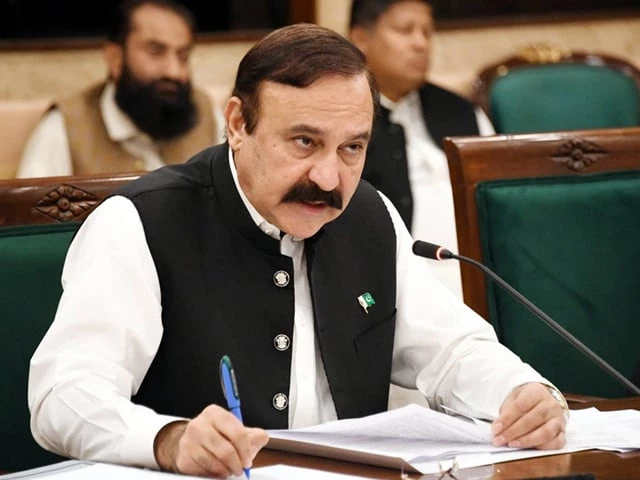
Explaining Islamabad’s decision to abstain, Pakistan’s Permanent Representative to the United Nations, Ambassador Asim Iftikhar Ahmad, reiterated Pakistan’s position that the Iranian nuclear issue should be resolved peacefully. He called for a cooperative and non-confrontational approach to achieving a lasting settlement.
Speaking during the Security Council’s consideration of the draft resolution concerning the Panel of Experts of the 1737 Committee on Iran, Ahmad said the Iranian nuclear issue had become increasingly complicated.
He pointed to continuing regional tensions and hostilities, strikes on nuclear facilities and disagreements among permanent members of the Security Council as factors that had made resolving the dispute through dialogue and diplomacy more difficult.
Ahmad recalled that in September last year the Security Council had faced two possible courses of action: allowing the termination of sanctions envisaged under the Joint Comprehensive Plan of Action to continue, or approving a six-month technical extension of Resolution 2231 to create additional time and diplomatic space.
According to the Pakistani envoy, the council instead followed a non-consensual course whose consequences continued to affect deliberations both within and beyond the Security Council.
He said Pakistan had argued at the time that a cooperative and non-confrontational approach would have provided better conditions for pursuing a peaceful and lasting settlement while maintaining consensus among council members.
Ahmad reiterated that dialogue and diplomacy remained Pakistan’s preferred means of addressing outstanding questions concerning Iran’s nuclear programme. Islamabad, he said, had consistently emphasised diplomatic engagement and the need to avoid confrontation and conflict.
Pakistan maintained that the issue should be addressed peacefully and in accordance with the rights, obligations and responsibilities of all parties concerned.
The Pakistani representative also called for an urgent renewal of diplomatic engagement and urged the parties to work collectively to resolve outstanding differences.
He said Pakistan would continue its efforts to promote regional peace and stability on the basis provided by the Islamabad Memorandum of Understanding. Islamabad also called on all parties to implement commitments made under the memorandum, return to negotiations and give diplomacy an opportunity to produce a peaceful settlement.