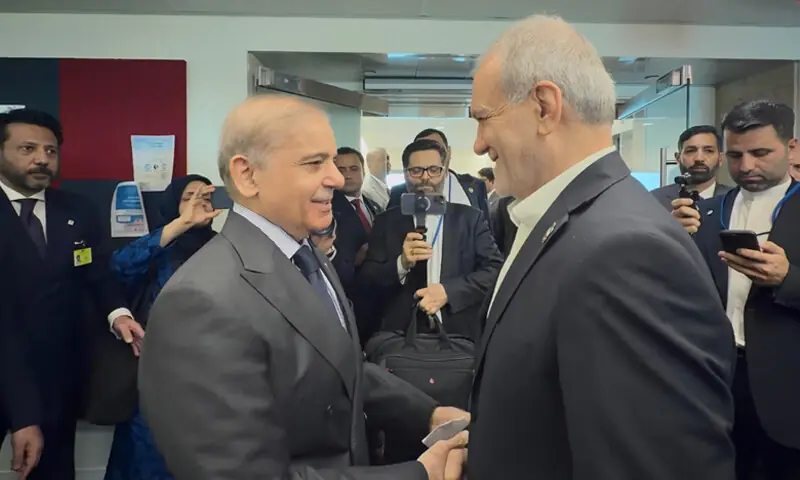

NEW YORK: Iranian President Masoud Pezeshkian has reaffirmed Tehran’s acceptance of the Islamabad Memorandum of Understanding (MoU) and expressed willingness to advance the agreement, Prime Minister Shehbaz Sharif said following their meeting on the sidelines of the United Nations General Assembly.
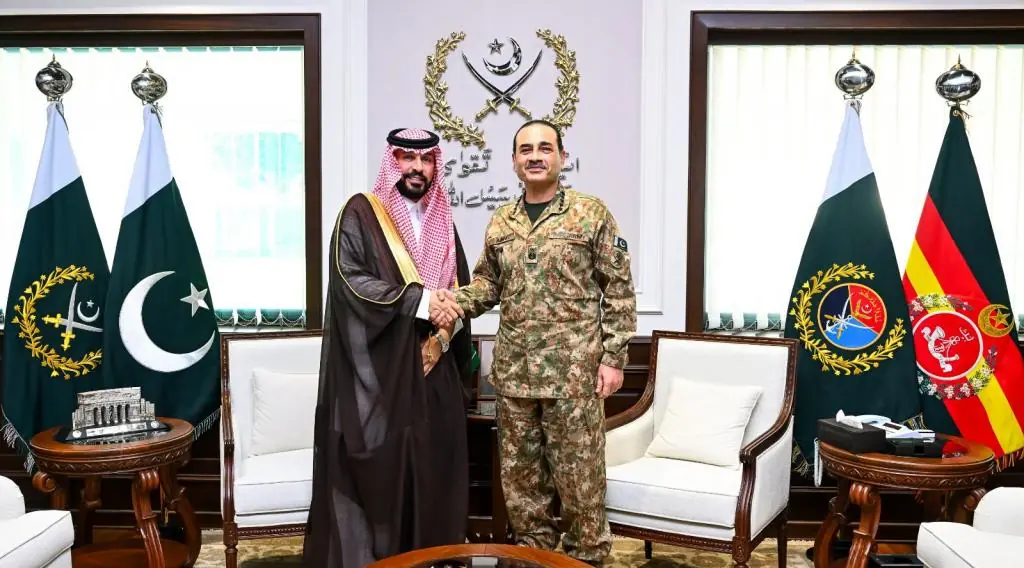
Speaking to journalists on Wednesday, the prime minister said Pakistan’s political and military leadership remained united in its commitment to accelerating peace efforts outlined in the Islamabad MoU.
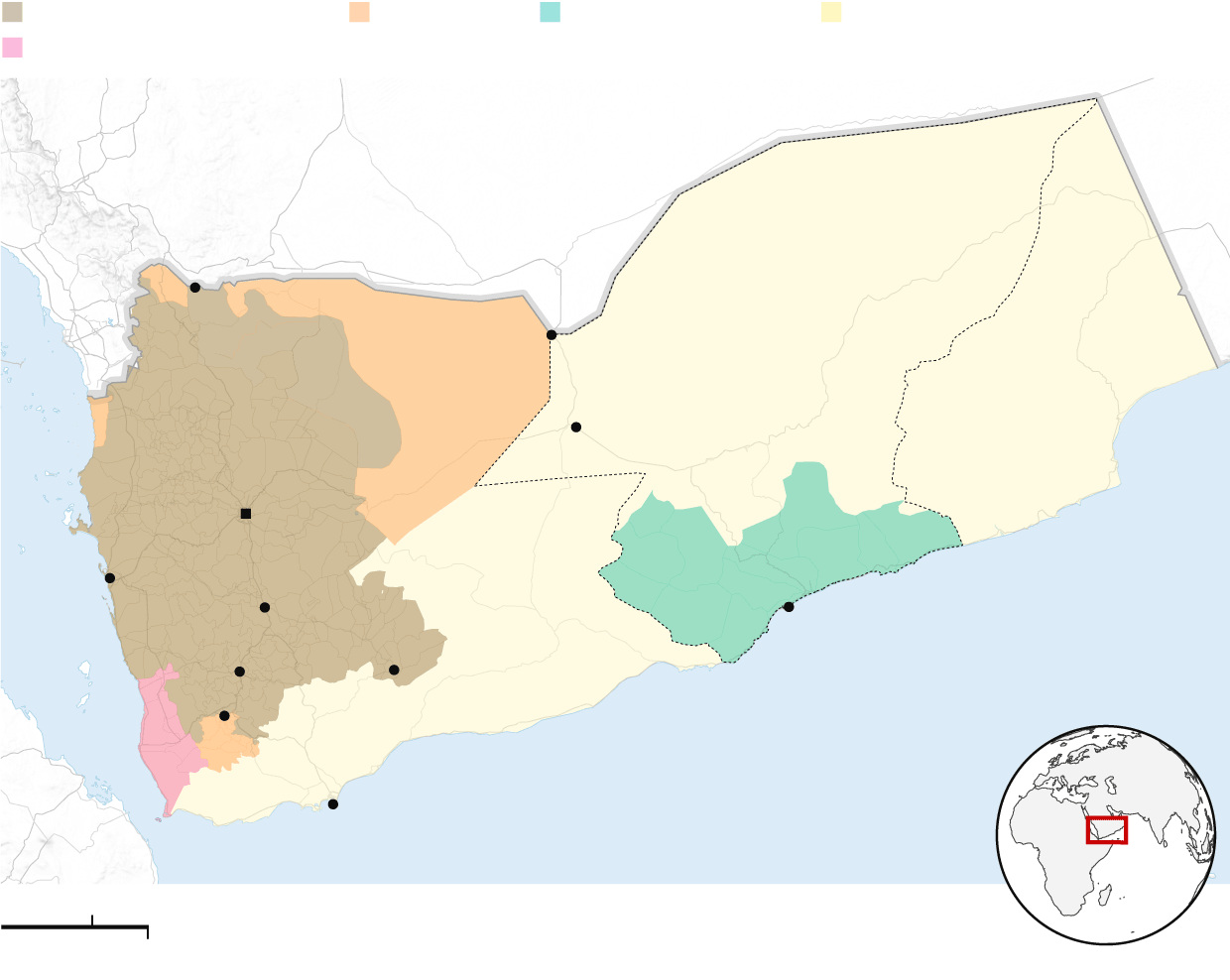
The meeting took place amid heightened regional tensions, particularly around the Strait of Hormuz and Bab al-Mandab, where recent developments have raised concerns over maritime security and regional stability.
Pakistan and Iran Discuss Regional Peace Efforts
Prime Minister Shehbaz said the situation in the two strategically important waterways required friendly countries to coordinate their efforts to reduce tensions.
He told President Pezeshkian that restoring regional peace had become an urgent priority and that Pakistan would continue working with Iran and other friendly nations towards that objective.
According to the prime minister, the Iranian president appreciated Islamabad’s diplomatic efforts and confirmed that Tehran continued to support the Islamabad MoU.
Shehbaz said Pezeshkian considered the agreement acceptable to Iran and agreed that further progress was necessary.
The prime minister reiterated that Pakistan would maintain its engagement with Iran, describing it as a neighbouring and brotherly country.
He also credited cooperation between Pakistan’s political and military leadership for progress on the diplomatic front and improvements in economic stability.
Makkah Defence Accord Discussed With Iranian President
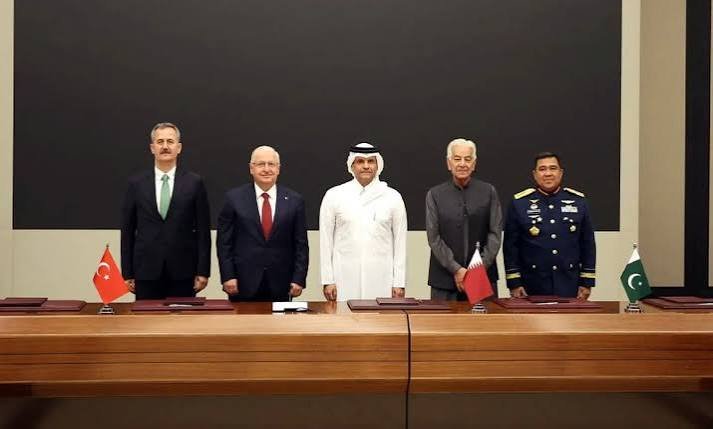
During the interaction with journalists, Shehbaz confirmed that he had briefed President Pezeshkian on developments concerning the Makkah defence accord.
Asked whether Iran had been taken into confidence regarding the agreement, the prime minister said the matter had been discussed during their meeting.
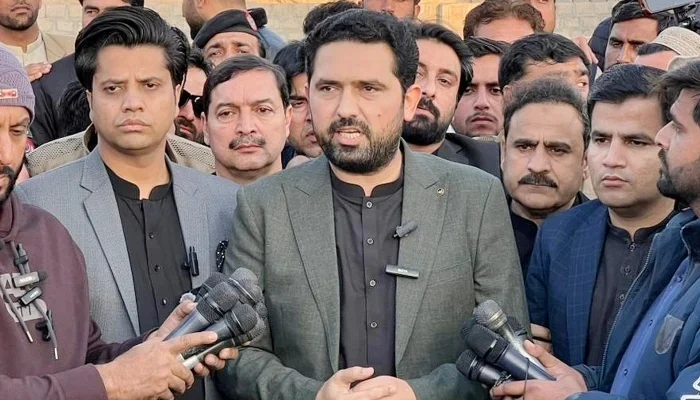
Defence Minister Khawaja Asif subsequently clarified that although Pakistan had discussed the accord with Iran, Tehran had not formally joined it.
He said Iran could become a member in the future, noting that several other countries had also expressed interest in the arrangement.
According to the defence minister, participating countries were still establishing the accord’s secretariat, after which further details would be considered.
Prime Minister Raises Concerns Over Terrorism From Afghanistan
Responding to a question about Pakistan’s security situation, Shehbaz said terrorist attacks inside the country were originating from Afghanistan.
He alleged that militants operating from Afghan territory had killed Pakistani civilians, soldiers and police personnel.
The prime minister condemned the attacks and said Pakistan was responding to terrorism and would continue its campaign against the threat.
Pakistan and European Union Review Bilateral Cooperation
Earlier, the prime minister met European Council President António Luís Santos da Costa and European Commission President Ursula von der Leyen on the sidelines of the UN General Assembly.
The discussions covered the full range of Pakistan’s relations with the European Union, including trade, economic cooperation and continued engagement under the EU’s Generalised Scheme of Preferences Plus (GSP+).
According to the Prime Minister’s Office, both sides expressed satisfaction with the growing frequency of high-level exchanges and the progress in bilateral engagement.
Shehbaz emphasised the importance of sustained interaction between senior leaders to strengthen cooperation and provide direction to the relationship.
He reaffirmed Pakistan’s commitment to expanding its partnership with the European Union and fully implementing the Pakistan-EU Strategic Engagement Plan.
Pakistan and Bangladesh Agree to Strengthen Bilateral Relations
In a separate meeting, Prime Minister Shehbaz held discussions with his Bangladeshi counterpart, Tarique Rahman.
The two leaders reaffirmed their commitment to strengthening cooperation across several sectors, including trade, investment, connectivity, education and tourism.
They also discussed expanding people-to-people contacts as part of efforts to deepen relations between the two countries.
Pakistani Business Community in US Invited to Invest
The prime minister also met Pakistani business leaders and professionals based in the United States and encouraged them to explore investment opportunities in Pakistan.
The delegations included individuals associated with information technology, artificial intelligence, automobiles, energy, construction and other industries.
Shehbaz assured them that the government was working to create a business-friendly environment and facilitate investment.
He said reforms introduced in the Federal Board of Revenue had helped address several difficulties faced by the business community.
In another meeting with representatives of the Pakistani diaspora and young professionals in the United States, the prime minister invited suggestions for improving different sectors of the economy.
He encouraged overseas Pakistanis to contribute to the country’s development and highlighted government initiatives aimed at empowering young people through information technology, artificial intelligence and modern professional skills.