
With Inputs from Tariq Mahmood Awan’s short Urdu writing on federalism and democratic governance
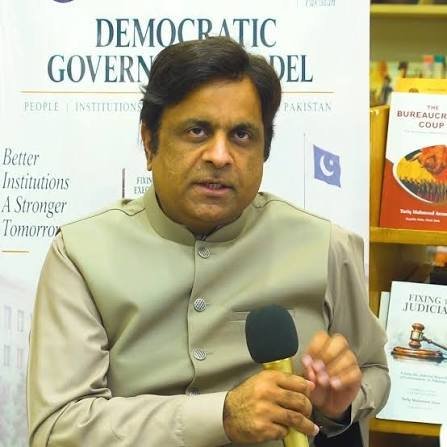
Pakistan’s governance crisis is often discussed in terms of administrative inefficiency, political instability, institutional conflict and the demand for new provinces. These are important concerns, but they do not necessarily explain the deeper structural weaknesses of the Pakistani state. In my research and writing, particularly in Fixing the Executive Branch of Government in Pakistan, Fixing the Legislative Branch of Government in Pakistan and Fixing the Judicial Branch of Government in Pakistan, I have attempted to develop a governance model rooted in the Constitution of Pakistan. This work has led me to identify two fundamental fault lines that, in my view, lie at the heart of the state’s persistent failures.
The first is the incomplete implementation of federalism, particularly administrative federalism. The second concerns the relationship between the de jure and de facto authority to form and govern the state. Unless these two structural problems are addressed, changes in the country’s administrative or territorial arrangements will have limited impact on the quality of governance.
The First Fault Line: Incomplete Federalism
Pakistan is constitutionally a federation. Its constituent units are not merely administrative divisions created by the federal government; they are federal units that collectively constitute the federation. This distinction is fundamental. A federal system requires more than the formal distribution of legislative and executive powers between the federation and its constituent units. It also requires an administrative structure that reflects the federal character of the state.
Pakistan, however, continues to operate with a largely unitary bureaucratic structure. This creates a fundamental contradiction: the Constitution establishes a federal arrangement, but the administrative machinery does not fully reflect that arrangement.
A federation cannot function effectively if its administrative institutions remain organised around a centralised and unitary conception of government. The distribution of constitutional powers becomes incomplete when the administrative authority necessary to exercise those powers is not correspondingly organised. Federal units may possess constitutional responsibilities, but their ability to translate those responsibilities into effective governance remains constrained by an administrative system that does not adequately recognise their institutional autonomy.
This is why administrative federalism matters. Federalism should not remain confined to constitutional provisions or the formal division of legislative subjects. It must also shape the organisation, authority and functioning of the administrative state.
The consequences of incomplete administrative federalism extend beyond the relationship between the federation and the provinces. They also affect local governments. If administrative authority remains concentrated within a centralised bureaucratic framework, democratic institutions at the provincial and local levels struggle to exercise meaningful control over governance. Elected representatives may hold constitutional or political positions, but their capacity to govern remains weakened when administrative structures do not correspond to the democratic and federal distribution of authority.
In such circumstances, both provincial democracy and local democracy remain institutionally constrained. The problem is therefore not simply one of administrative efficiency. It is a structural problem concerning the organisation of the state itself.
A genuine federation requires administrative arrangements that enable each level of government to perform its constitutional responsibilities. Without this, federalism remains incomplete, and the promise of democratic governance at the provincial and local levels cannot be fully realised.
The Second Fault Line: Who Actually Forms the Government?
The second fundamental fault line concerns a basic question of constitutional democracy: who has the authority to choose and establish the government?
In a constitutional democracy, the answer should be unambiguous. The people exercise this authority through free and fair elections. They elect their representatives, and those representatives form governments in accordance with the Constitution. The legitimacy of government rests on the public mandate expressed through the electoral process.
This establishes the de jure basis of political authority. But a functioning democracy requires more than the formal constitutional procedure for forming a government. The government that exists in law must also be the government that exercises authority in practice.
The de jure and de facto government must be the same.
This distinction is central to understanding Pakistan’s democratic difficulties. A constitutional system may provide for elections, elected legislatures and representative governments. Yet the democratic process cannot fulfil its purpose if the authority to determine who governs is effectively exercised outside the electoral mandate.
When the government that formally holds office does not possess corresponding authority in practice, constitutional democracy becomes weakened. The existence of elected institutions alone cannot guarantee democratic governance. Their authority must be real, and their ability to exercise the responsibilities assigned to them by the Constitution must be respected.
Free and fair elections are therefore not merely a procedural requirement. They are the foundation of the relationship between the people and the state. Through elections, citizens authorise representatives to govern on their behalf. The resulting government derives its legitimacy from public support, and its authority must be exercised within the constitutional framework.
If the de jure and de facto arrangements of government diverge, this relationship is disrupted. Political responsibility becomes blurred, institutional accountability weakens, and the constitutional chain connecting the electorate to the government loses its effectiveness.
The issue is not simply who occupies public office. It is who possesses the legitimate authority to form the government and exercise the powers of the state. Unless this question is settled in accordance with the Constitution and the popular mandate, democratic institutions cannot function as intended.
Why Administrative and Territorial Changes Are Not Enough
These two fault lines are closely connected. The first concerns the distribution of administrative authority within the federation. The second concerns the democratic legitimacy through which political authority is established. One is about how the state is organised; the other is about who has the right to govern it.
Together, they shape the foundations of governance in Pakistan.
This also explains why debates about the number of provinces or the creation of additional administrative units cannot, by themselves, resolve the country’s governance crisis. Whether Pakistan has four provinces or fifty, the basic problems will persist if federalism remains administratively incomplete and the relationship between de jure and de facto government remains unsettled.
The creation of new federal units may be considered within the constitutional framework, just as administrative units may be established to improve the delivery of public services. But neither measure automatically corrects the deeper institutional weaknesses of the state.
If a new federal unit inherits the same unitary bureaucratic structure, its creation will not necessarily produce meaningful federalism. Similarly, if an existing province is divided into smaller administrative territories without addressing the democratic authority of elected governments, the underlying governance problem will remain.
Territorial restructuring cannot substitute for institutional reform. Nor can administrative rearrangement compensate for the absence of an effective constitutional relationship between the people, their elected representatives and the machinery of the state.
The sequence of reform therefore matters. Pakistan must first address the foundations of governance. Only then can changes in its administrative and territorial structures produce their intended results.
Fixing the Foundations of the State
The two fundamental fault lines identified here point towards a clear direction for reform.
First, Pakistan must implement federalism in its substantive form, including administrative federalism. The administrative structure of the state must correspond to its constitutional character as a federation. Federal units must be able to exercise their constitutional responsibilities through appropriate administrative arrangements, while local governments must also have meaningful institutional space within the governance system.
Second, the constitutional principle of democratic government must be upheld in practice. Free and fair elections must determine the composition of representative governments, and the authority to govern must remain with those who possess the public mandate. The government established through constitutional procedures must also be the government exercising authority in reality.
These are not separate or optional reforms. They are essential conditions for a functioning constitutional state. Without administrative federalism, the distribution of powers remains incomplete. Without the alignment of de jure and de facto government, the democratic mandate loses its practical meaning.
Pakistan’s governance debate must therefore move beyond the assumption that every failure can be addressed through a new administrative arrangement, another institutional restructuring or a change in territorial boundaries. Such measures may have a role, but they cannot replace the correction of the state’s foundational weaknesses.
The central task is to make Pakistan function according to the constitutional principles on which its governance system is supposed to rest. Federalism must become an administrative reality, and democratic authority must reflect the will of the people.
Until these two fundamental fault lines are corrected, Pakistan will continue to struggle with governance, regardless of how many provinces or administrative units it creates. The state must first fix the way it is governed; only then can changes in its structure deliver meaningful and lasting results.