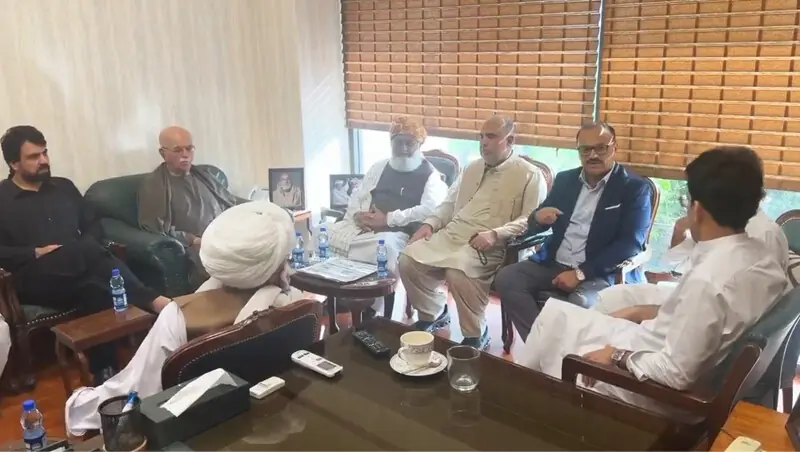

LAHORE: The PPP and PML-N have renewed efforts to address their differences as coordination committees of the two coalition partners met on Saturday following months of strained relations.
The PML-N-led federal government currently enjoys a two-thirds majority in the National Assembly with the support of the PPP, making cooperation between the two parties important for the stability of the ruling coalition.
According to people familiar with the meeting, discussions were not entirely smooth. Relations between the parties had deteriorated during contentious election campaigns in Azad Jammu and Kashmir and Gilgit-Baltistan.
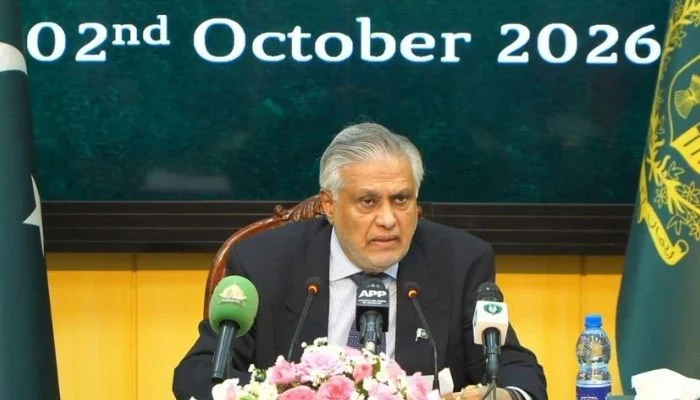
The PPP delegation comprised former prime minister Raja Pervaiz Ashraf, Punjab Governor Sardar Saleem Haider Khan, Hassan Murtaza, Qamar Zaman Kaira and Ali Qasim Gilani. The PML-N was represented by Deputy Prime Minister and Foreign Minister Ishaq Dar, National Assembly Speaker Sardar Ayaz Sadiq, Adviser to the Prime Minister on Political Affairs Rana Sanaullah and Khawaja Saad Rafique.
During the meeting, the PPP complained that it was bearing a significant political cost as a coalition partner because of what it described as the government’s shortcomings on several public issues. The party raised concerns over inflation, increasing petroleum prices, the continuing agricultural crisis, load-shedding and delays in holding local government elections.
The PML-N, however, argued that the PPP was behaving more like an opposition party than a coalition partner. It accused the PPP of using public grievances for political advantage while being aware that some issues, including petroleum prices and inflation, were influenced by factors beyond the government’s direct control.
According to one participant, discussions became heated at certain points before tensions subsided. Both parties recognised that continued cooperation was necessary because they remained important political guarantors of the existing system.
Punjab Inspector General of Police Rao Abdul Karim was also invited by the PML-N to respond to the PPP’s concerns regarding policing. The PML-N further assured its coalition partner that it would receive its agreed share in development schemes.
The PPP responded that similar commitments had been made previously but had not been implemented.
The participant said the mistrust accumulated during months of political disagreements was unlikely to disappear after a single meeting and could require further talks and confidence-building measures. Both sides nevertheless agreed to implement earlier decisions, hold coordination meetings more regularly and cooperate to improve governance.
The parties also decided to continue consultations and seek solutions to coalition-related disagreements through mutual understanding and in what they described as the national interest.
Relations between the PPP and PML-N had become particularly tense following the PML-N’s success in the first phase of elections in Azad Jammu and Kashmir, which triggered a public exchange of criticism between the coalition partners.
More recently, the PPP questioned Prime Minister Shehbaz Sharif’s silence over the debate surrounding the creation of new provinces and called on him to clarify his position.
The PPP had previously maintained that the creation of any additional federating units must follow the procedure prescribed by the Constitution. However, the PPP-led Sindh government subsequently secured passage of a resolution in the provincial assembly opposing any further division of Pakistan’s existing four provinces.