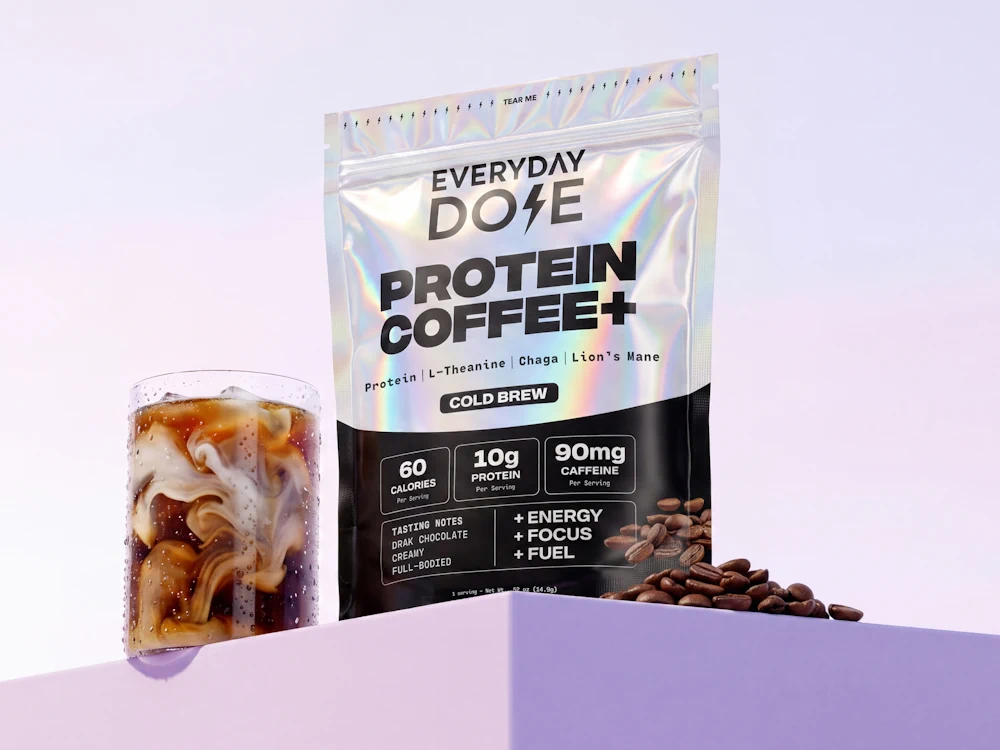

Scroll through coffee content on social media and protein is impossible to avoid, stirred into cold brew, foamed atop lattes, or packed into ready-to-drink cans promising a caffeine hit alongside a hefty macro count. It looks like a permanent shift in how people drink coffee. But the industry has seen this pattern before: a nutrient briefly reshapes menus, then settles into a quiet niche.
Why Protein Coffee Is Everywhere
Protein’s dominance didn’t emerge from nutrition science alone, but from three trends converging at once: fitness-focused social media, the rapid rise of GLP-1 weight-loss medications, and marketers attaching protein to everything from cereal to soda. In the US, Gallup reports that 11% of adults currently take a GLP-1 drug, up from just 3% in 2024, with 15% having used one at some point. Because these medications suppress appetite, users are commonly advised to prioritise protein to preserve muscle mass while losing weight, pushing the nutrient to the centre of wellness conversations generally.
Coffee became a natural landing spot. The “proffee” trend, protein powder blended into iced coffee, has generated more than 20 million related TikTok posts. Ready-to-drink brands moved early, and Starbucks followed in September 2025 with a protein cold foam and latte line offering up to 36 grams of protein per 16-ounce cup. For most consumers, the appeal is simple convenience: one cup delivers caffeine and a substantial protein dose without adding a shake or separate meal to the morning routine.
Kyle Thibaut, chief executive of Everyday Dose, said he’s watched this pattern play out directly among his customers, who began adding protein to the company’s existing coffee product on their own, prompting the company to build a dedicated protein coffee line around that behaviour.
Health and Wellness Marketing
Research has documented black coffee’s health benefits, from antioxidants to modest metabolic support, for decades. Even so, marketers have recently repositioned coffee as a “healthy” category in its own right, a shift with real commercial weight behind it. The global protein coffee market is projected to grow from $6.67 billion in 2026 to $11.53 billion by 2034, a pace that has drawn roasters, retailers, and major consumer packaged goods companies eager to claim a share of the functional beverage boom. The broader functional coffee category, spanning everything from adaptogens to added vitamins, is expanding just as fast, projected to grow from $4.98 billion in 2026 to $8.48 billion by 2031, signalling that “healthy” coffee has become a formal product segment rather than a passing marketing trend.
For brands, a functional claim allows an ordinary cup of coffee to command a premium price. For consumers, though, the labelling can blur the line between coffee that genuinely supports health and coffee simply borrowing wellness language to justify a higher price tag. Protein coffee, in that sense, may just be the latest costume in a familiar story: butter coffee promised sustained energy, collagen coffee promised skin and joint benefits, mushroom coffee promised calm focus, and each eventually settled into a small, loyal niche rather than becoming the new normal.
Thibaut argues the deeper shift extends beyond any single ingredient, describing growing consumer expectation that everyday products deliver more without sacrificing taste, and stressing that habit, not hype, is the real test of whether something lasts.
Health as the New Customisation
Younger consumers increasingly treat their coffee order as a form of self-expression, and social media has made visible health choices part of that. Adding protein, adaptogens, or collagen now functions the way oat milk or flavoured syrup once did, a customisation signalling values as much as taste. Thibaut sees this as an opportunity rather than a threat, describing a shift from subtraction to addition that gives brands a broader canvas for innovation, provided added benefits don’t come at the expense of what made the product enjoyable in the first place.
That opening is unlikely to stay fixed on protein for long. Fibre is already emerging as the next focus, named by food and beverage forecaster Datassential as the leading health trend expected to follow protein in 2026, as attention shifts toward gut health. Thibaut, however, cautions against chasing such shifts reflexively, arguing that rising interest in fibre doesn’t diminish protein’s relevance, and that brands should focus on genuine need rather than trend-cycling.
New Health Trends Already Emerging
Coffee brands are already experimenting with prebiotic and gut-friendly additions in cold brew and ready-to-drink lines, applying the same convenience logic that made “proffee” popular. Over half of consumers say they’re interested in trying “fibermaxxing,” with curiosity strongest among Gen Z, the same demographic that pushed protein into the mainstream in the first place. If coffee brands chase fibre with the same urgency they chased protein, the category risks a familiar cycle: a rushed rebrand, a brief sales spike, and another ingredient already waiting in the wings.
Still, a protein or fibre launch can be a genuine opportunity for a coffee brand, one worth using to revisit sourcing, formulation, and taste rather than simply chase a hashtag. The brands taking that approach are the ones most likely to outlast the current craze.