
Fajar Rehman
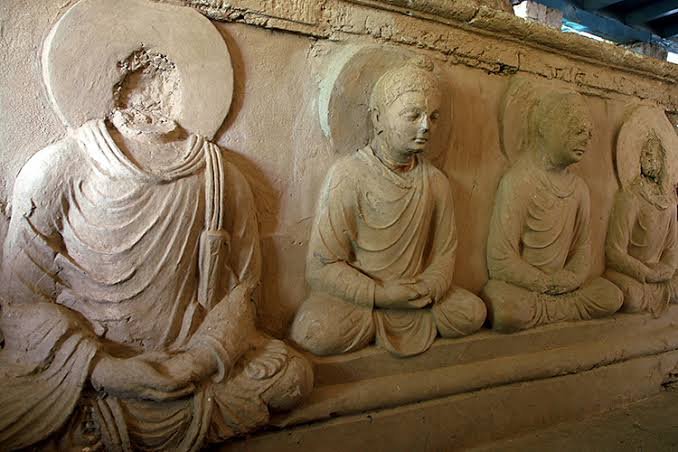
Taxila is not merely a field of scattered stones and broken columns. It stands among the finest archaeological landscapes in all of South Asia, a living record of civilisations that rose, flourished, and left behind monuments that speak across centuries. Walk through its ruins and you walk through Greek settlers, Persian administrators, and South Asian craftsmen, all leaving their mark on the same soil. Among its treasures, two sites stand above the rest. Mohra Moradu remains one of the best-preserved Buddhist monasteries anywhere in the ancient region of Gandhara. Sirkap, an ancient city laid out on a careful grid, carries within its stones a rare and extraordinary fusion of Greek, Persian, and South Asian architectural traditions. What makes these sites precious is not simply their age. It is their authenticity, the fact that what stands today is largely what was built then. That authenticity earned Taxila its place on the Unesco World Heritage list, a recognition that carries both prestige and responsibility.
That authenticity is now in question, and the question is a serious one. Unesco has reportedly raised concerns that recent work at these two sites crossed a line, moving from conservation into something closer to reconstruction. The allegation is specific and troubling: original ancient walls, it is claimed, were replaced or built higher using modern masonry techniques. This is not a small technical dispute. If true, it means that portions of what visitors and scholars believed to be ancient fabric are, in fact, new construction dressed in old form. Unesco has gone further, warning that unless these interventions are reversed, Taxila risks being placed on the List of World Heritage in Danger, with the eventual and far more serious possibility of complete delisting.
The Punjab archaeology department has pushed back firmly against this characterization. Their position is that the work undertaken was necessary conservation, aimed at stabilising fragile and vulnerable remains that were at risk of collapsing or eroding further without intervention. This is not an unreasonable claim on its face. Ancient structures, especially those built of unfired brick, rubble, and lime mortar, do require ongoing stabilisation to survive centuries of weather, seismic activity, and simple decay. The question is not whether intervention was needed. The question is whether the intervention that took place respected the boundary between preserving what exists and manufacturing what does not.
Without an independent technical assessment, it would be unwise for anyone, including this writer, to declare which side is correct. But there is a detail here that should give pause. Unesco has specifically requested heritage impact assessments, compatibility studies, laboratory testing of materials, detailed architectural drawings, and before-and-after documentation of the affected areas. This is not the language of a bureaucratic formality. This is the language of an organization that suspects something has gone wrong and wants the evidence to confirm or dispel that suspicion. When a body with Unesco’s technical expertise asks for this level of documentation, it usually means their concerns rest on more than casual observation.
Pakistan should approach this moment with both urgency and humility, because the stakes extend well beyond Taxila itself. Being placed on the danger list would be a significant international embarrassment, a public acknowledgment that the country failed to protect one of its most celebrated heritage sites. Delisting entirely would be worse still, a genuine diplomatic and cultural loss, and one that would land at a particularly inconvenient time. Pakistan is currently working to secure international recognition for several other historic sites, and a scandal at Taxila would cast a long shadow over those efforts, inviting exactly the kind of scrutiny that could derail them.
It is worth remembering what conservation actually means, because the word is sometimes misunderstood or misused. Conservation is not about making ruins look tidy, complete, or visually impressive for tourists and photographs. It is the disciplined, restrained preservation of what genuinely remains from the past. Where new work becomes unavoidable, it must be kept to an absolute minimum, thoroughly documented at every stage, and designed in a way that can be reversed if it later proves to have been a mistake. Anything beyond that threshold stops being conservation and starts becoming something closer to fabrication, however well-intentioned.
Given all of this, the path forward for the government should be clear. Every record related to the work at Mohra Moradu and Sirkap should be shared openly and completely with Unesco, with nothing withheld. Any further construction or intervention at these sites should be paused immediately until the matter is resolved. Independent conservation experts, free from departmental pressure or reputational stakes, should be invited to inspect the sites directly and render an honest technical judgment. Wherever intervention is found to have damaged the original fabric, it should be reversed, however costly or inconvenient that process may be.
Taxila’s past, once it has been overwritten by modern hands, cannot simply be rebuilt or restored to its original truth. What is lost in this way is lost permanently. Protecting Taxila is not a courtesy extended to Unesco or to the international community. It is a debt Pakistan owes to its own history, and one that grows more expensive to repay with every year of delay.
The best-selling books of Republic Policy Think Tank, including the landmark book The Bureaucratic Coup, are available at Vanguard Books, Liberty Books, Readings, Kitab Sarai, Sang-e-Meel, Saeed Book Bank Islamabad, National Book Foundation, and others across Pakistan. Contact for home delivery: 0300 9552542.