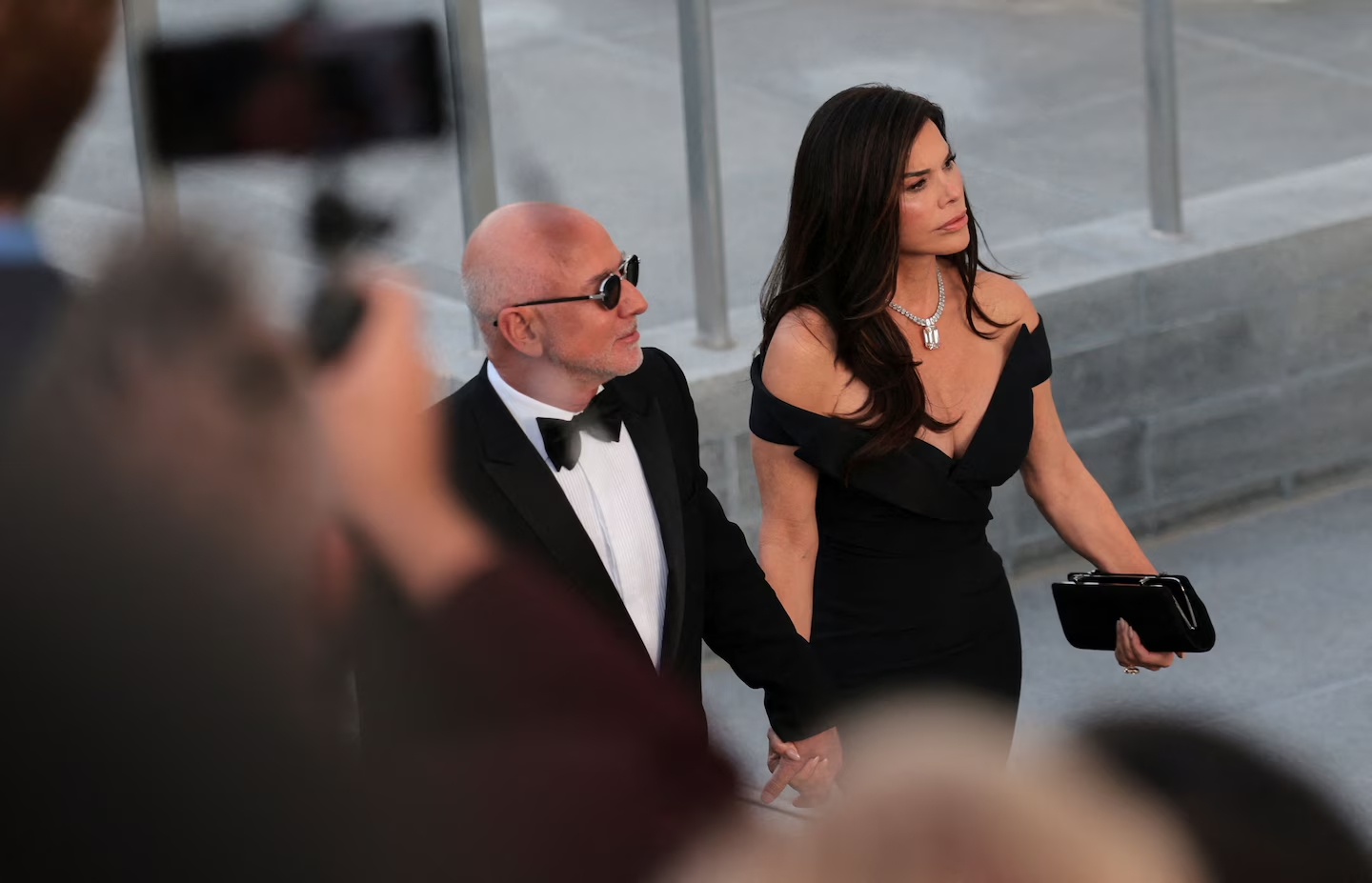

WASHINGTON: President Donald Trump hosted Chinese President Xi Jinping at a state dinner in the White House East Room on Thursday, bringing together senior government officials, artificial intelligence executives and prominent American business leaders as Washington and Beijing sought to stabilise their strained relationship.
The dinner concluded a day of formal diplomatic ceremonies and highlighted the economic connections between the United States and China, even as the two countries compete over advanced technologies, manufacturing and global influence.
Among the guests were executives whose companies develop leading AI systems, depend on Chinese manufacturing and consumers, or operate digital platforms restricted in China.
The evening’s menu included sea bass coated with toasted sesame seeds.
AI Industry Leaders Attend Amid Debate Over Technology and Security
Several prominent figures from the artificial intelligence industry attended the dinner at a time when American technology companies remain divided over how quickly AI should advance and what role governments should play in regulating its development.
OpenAI chief executive Sam Altman was among the guests. Altman has recently advocated slowing the pace of AI development and strengthening international cooperation on oversight to address potential risks.
Those positions differ from the Trump administration’s emphasis on accelerating technological development. Nevertheless, OpenAI has largely avoided the direct confrontation with the administration experienced by rival AI company Anthropic.
OpenAI president Greg Brockman also attended. Brockman and his wife have contributed $25 million to a political action committee aligned with Trump.
OpenAI restricts access to its models from China and has frequently identified Chinese technological competition as an important consideration in its discussions with US policymakers.
Elon Musk, a Trump ally and founder of SpaceXAI, was another attendee. Musk has previously supported calls for greater caution in developing advanced AI systems.
Former White House AI and cryptocurrency adviser David Sacks and Nvidia chief executive Jensen Huang were also present.
Sacks and Huang have taken a different position on AI development, questioning warnings about catastrophic risks and arguing that companies should bear primary responsibility for managing the technology’s safety.
Sacks helped shape the Trump administration’s approach to accelerating AI development. Although he left his White House position earlier this year, he remains involved in technology policy discussions.
Nvidia’s China Business Remains a Sensitive Issue
Nvidia’s presence highlighted the tension between American national security concerns and the commercial importance of China’s technology market.
The semiconductor company has sought continued access to Chinese customers and received permission from the Trump administration last year to sell certain advanced AI chips in China.
The decision drew criticism from some national security specialists and Democratic lawmakers, who argued that supplying such technology could help China narrow the gap with American AI developers.
For Nvidia, the Chinese market remains commercially significant, while US export controls and wider trade restrictions continue to shape its business opportunities.
Apple, Tesla and Amazon Remain Connected to Chinese Manufacturing
The dinner also included executives from major American companies whose supply chains and sales remain closely connected to China.
Apple executive chairman Tim Cook attended as the company continues to adjust its global manufacturing operations in response to tariffs and trade uncertainty.
Although Apple has moved some production to India, China remains its principal assembly centre for iPhones sold internationally.
China is also an important consumer market for Apple. The company’s business relationships there, including its compliance with local censorship requirements, have periodically attracted political scrutiny in Washington.
Musk attended not only as an AI industry figure but also as the head of Tesla, which maintains extensive manufacturing and commercial operations in China.
Tesla’s Shanghai factory plays a significant role in the company’s global production network, while Chinese consumers represent an important market for its electric vehicles.
In an interview with Chinese state broadcaster CCTV ahead of the dinner, Musk praised Tesla’s Shanghai operation. The company nevertheless faces strong competition from Chinese electric vehicle manufacturers.
Amazon founder Jeff Bezos was also among the guests.
Amazon’s online marketplace depends heavily on Chinese sellers. According to Marketplace Pulse, businesses based in China account for more than half of the platform’s global sellers.
Many products sold through Amazon, including its private-label merchandise, are manufactured in China and have been affected by US tariffs.
Google and Meta Executives Attend Despite Restrictions in China
The presence of Google and Meta executives underscored another dimension of US-China commercial relations: the limited access American digital platforms have to Chinese internet users.
Google chief executive Sundar Pichai attended the dinner alongside company co-founder Sergey Brin.
Google introduced its search engine in China in 2006 but withdrew it from mainland China in 2010 following cyberattacks and disputes with Chinese authorities over censorship requirements.
The company now maintains a limited presence in China, primarily through advertising services for Chinese exporters.
Google has also announced plans to shift production of its Pixel phones, watches and earbuds away from China by next year.
Meta chief executive Mark Zuckerberg attended despite the continuing restrictions on the company’s major platforms in China.
Facebook, Instagram and WhatsApp remain blocked under the country’s internet controls.
Zuckerberg previously pursued opportunities to expand Meta’s presence in China, including efforts to engage Chinese officials and demonstrate his interest in the country.
His approach changed as TikTok gained international popularity. From 2019 onward, Zuckerberg increasingly criticised China’s model of internet censorship and raised concerns about Chinese technological competition in discussions with American policymakers.
Dinner Reflects Economic Interdependence Amid Strategic Competition
The gathering brought together executives with differing interests in the future of US-China relations.
AI developers face questions about technological competition and international regulation. Semiconductor manufacturers must navigate export restrictions, while consumer technology companies remain dependent on Chinese factories, materials and customers.
Social media and internet companies, meanwhile, continue to confront restrictions on access to the Chinese market.
Their attendance at the White House dinner illustrated the range of commercial and technological issues surrounding Washington’s relationship with Beijing as the two governments pursue diplomatic engagement alongside continuing strategic competition.