
Water has played a defining role in the development of human civilisation. From early settlements along the Nile, Tigris-Euphrates, Yangtze and Indus river systems to modern societies, reliable access to water has supported agriculture, livelihoods, urban growth and economic development. The management and control of water resources have consequently influenced both the prosperity and vulnerability of societies throughout history.
Even in the modern era, water remains fundamental to human survival, food security, economic activity, energy generation and environmental sustainability. Its strategic importance, however, has also made transboundary water resources a recurring source of disagreement between states.
Disputes over allocation, access and the respective rights of upstream and downstream countries have frequently become intertwined with wider political, economic and strategic tensions. Examples can be found in relations between Ethiopia and Egypt, Turkey, Syria and Iraq, China and Laos, and Pakistan and India. Countries have generally attempted to manage such disagreements through treaties, institutional arrangements and water-sharing mechanisms, sometimes facilitated by third parties.
Indus Waters Treaty as a Framework for Cooperation
In South Asia, the 1960 Indus Waters Treaty between Pakistan and India emerged as a significant mechanism for managing shared water resources.
Following nearly a decade of negotiations facilitated by the World Bank, the two countries reached an agreement governing the allocation and use of waters within the Indus river system. The treaty also established institutional arrangements and mechanisms for resolving disputes.
Despite subsequent wars and prolonged periods of political and diplomatic tension between India and Pakistan, the treaty continued to provide a framework through which water-related disagreements could be managed.
India’s Decision Opens a New Phase
The situation entered a period of renewed uncertainty after India decided to place the Indus Waters Treaty “in abeyance” following the Pahalgam attack in 2025.
Pakistan rejected the decision, arguing that the treaty contains no provision permitting its unilateral suspension. Islamabad has also characterised attempts to stop or divert waters allocated to Pakistan under the treaty as an act of war.
The development has added another contentious dimension to already strained relations between the two neighbouring countries.
Wider Implications for Pakistan and Transboundary Water Governance
The issue carries particular significance for Pakistan because of the country’s substantial dependence on the Indus Basin. Any prolonged uncertainty surrounding the treaty therefore raises broader questions concerning water availability, agricultural production, food security and long-term economic stability.
Beyond bilateral relations, the dispute also raises important questions about international agreements governing shared rivers and the durability of transboundary water arrangements during periods of geopolitical confrontation.
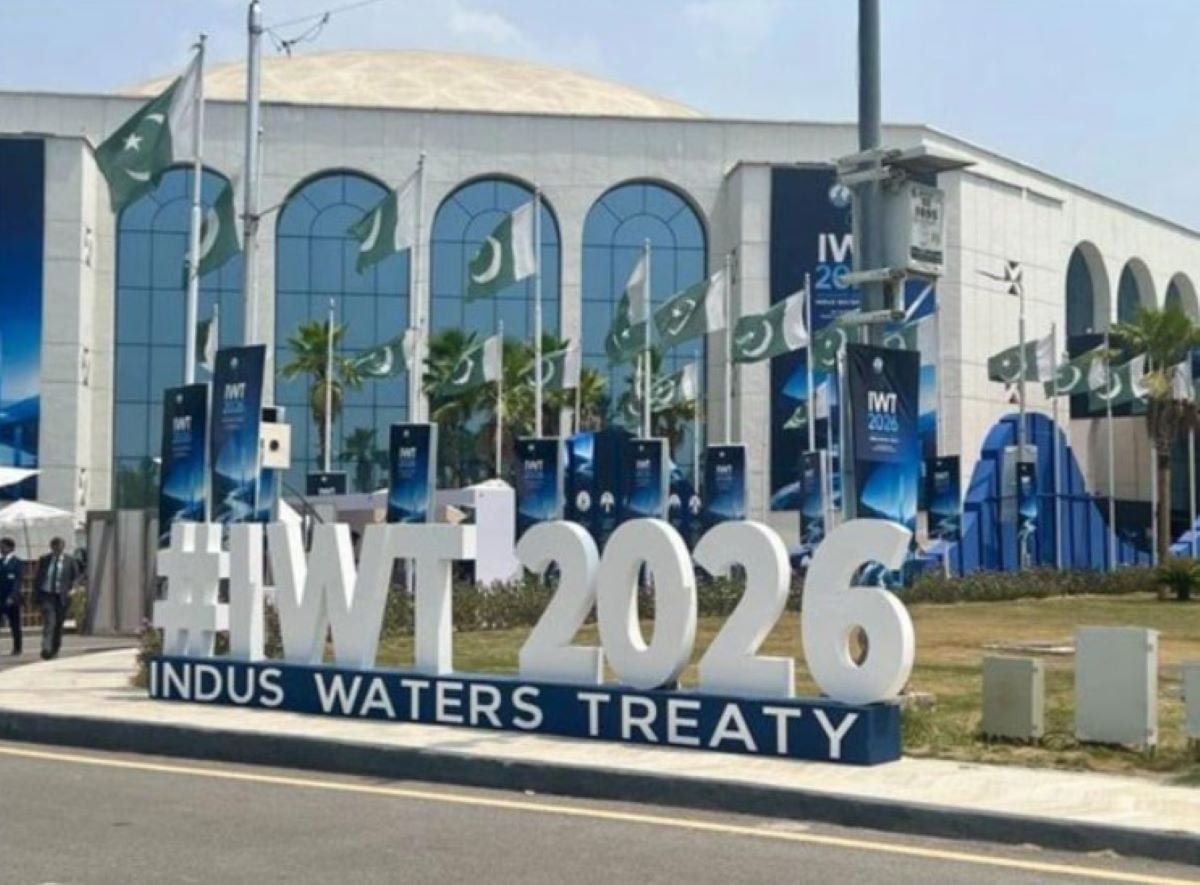
The special report, “Weaponising Waters: Historical, Legal, and Strategic Dimensions of IWT Suspension,” examines these developments through their historical, legal and strategic dimensions, with particular attention to the implications of the current dispute for Pakistan and the wider governance of transboundary water resources.