
Nosheen Rasheed
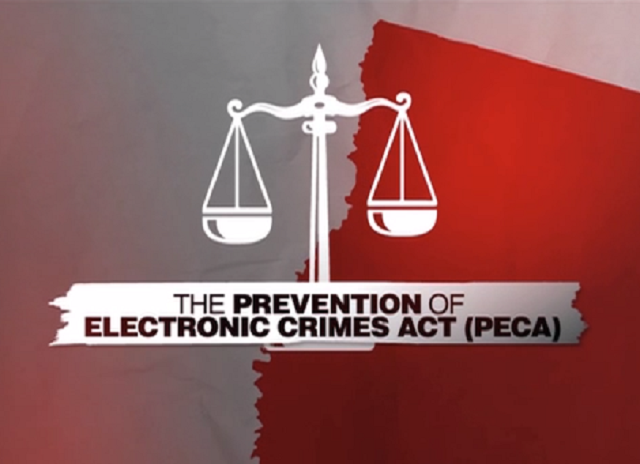
The Punjab government’s implementation of the Prevention of Electronic Crimes Act (PECA) has generated significant debate across political and civil spheres. Introduced as a legislative framework to combat cybercrime, online harassment, and digital fraud, PECA was envisioned as a modern safeguard against the growing misuse of digital technologies. In principle, such laws are essential in an era where online threats—from identity theft to cyberbullying—pose tangible risks to individuals, businesses, and public institutions. However, the practical application of the law, particularly in Punjab, has sparked concerns about its potential misuse against political opponents and dissenting voices.
At its core, the PECA Act criminalizes various forms of online misconduct, including defamation, spreading false information, incitement through digital platforms, and unauthorized access to digital accounts. These provisions, on paper, aim to protect citizens’ rights, prevent financial loss, and maintain social stability in the increasingly digitized public sphere. Globally, similar laws exist in multiple jurisdictions, reflecting the necessity for governments to keep pace with technological changes and to regulate harmful online behavior.
Yet, the challenge arises not from the law’s intention, but from its implementation. In Punjab, political analysts and human rights observers have noted a pattern: PECA appears to have been employed selectively, often targeting individuals critical of government policies, media personnel, activists, and opposition leaders. Rather than solely addressing cybercrime or genuine threats, accusations suggest that the law has been leveraged as a strategic tool to suppress dissent and control the narrative in the public domain.
Several high-profile cases underscore this concern. Individuals expressing critical opinions about the provincial administration on social media platforms have faced investigations, arrests, or intimidation under the provisions of PECA. The ambiguity in defining what constitutes “fake news” or “defamatory content” allows authorities considerable discretion, raising questions about accountability and impartiality. In a democratic setup, laws that grant such discretionary powers without rigorous safeguards can risk becoming instruments of political expediency rather than public protection.
Critics argue that the misuse of PECA reflects a broader trend in governance where legal frameworks, initially designed for public welfare, are repurposed to consolidate political control. In this context, PECA becomes less a tool against cybercrime and more a mechanism for political signaling: a message to critics that dissent may have legal repercussions. Such an approach has multifaceted implications. Firstly, it erodes public trust in legal institutions. Citizens may perceive the judiciary and law enforcement as extensions of political agendas rather than neutral arbiters of justice. Secondly, it stifles healthy debate and freedom of expression, core pillars of democratic governance. Individuals and media organizations may self-censor to avoid potential legal consequences, thereby narrowing the space for critical inquiry and informed public discourse.
From an academic perspective, the scenario in Punjab illustrates a fundamental tension in regulatory law: the balance between security and liberty. Digital legislation, by its very nature, must navigate the fine line between preventing harm and preserving fundamental freedoms. PECA’s broad definitions and punitive provisions highlight the risks inherent in laws that are technologically and legally opaque. While the state has a legitimate interest in curbing cybercrime, overreach or selective enforcement can transform protective legislation into a coercive instrument. Comparative studies suggest that jurisdictions with robust checks and transparency mechanisms—such as independent review boards, judicial oversight, and clearly defined parameters for investigation—tend to minimize misuse while achieving the law’s intended objectives.
Furthermore, the use of PECA as a political instrument may have long-term societal consequences. When citizens perceive laws as instruments of political retaliation, social cohesion is undermined, and political polarization intensifies. Public discourse shifts from issue-based debate to a climate of fear and caution, where individuals prioritize self-preservation over civic engagement. This environment not only diminishes democratic vitality but also impacts innovation, as digital entrepreneurs and media professionals may avoid topics that are controversial or critical of government policies.
However, it is essential to acknowledge that PECA’s misuse does not inherently delegitimize its purpose. Cybercrime remains a growing global challenge, and without legislative tools, governments would struggle to safeguard citizens against online fraud, harassment, and security breaches. The solution, therefore, is not the abandonment of PECA but the recalibration of its enforcement mechanisms. Greater transparency, clearer definitions of punishable offenses, independent oversight, and robust safeguards against arbitrary application can ensure that the law fulfills its protective function without being co-opted for political ends.
In conclusion, the Punjab government’s PECA Act embodies both promise and peril. As a legislative framework, it is a necessary adaptation to the digital age, designed to protect citizens and maintain social order in cyberspace. Yet, its selective application against political opponents reveals the potential for misuse in a politically charged environment. The challenge lies in striking a balance: upholding the law’s intended purpose while safeguarding civil liberties and ensuring that political expediency does not compromise justice. For Pakistan’s democracy to flourish, the PECA Act must serve as a shield for citizens, not a sword against dissent.