
Fajer Rehman
Pakistan’s electricity sector has long been a study in institutional failure. Decades of mismanagement, unchecked theft, opaque billing, and mounting circular debt have left the system financially hollowed out and operationally exhausted. The consumer pays. The exchequer bleeds. And the structural rot deepens with each passing year. Against this backdrop, the government has now placed a significant bet on technology as the instrument of rescue. The agreement between the Power Division and the International Finance Corporation to deploy around ten million smart metres is the most ambitious digitisation effort the sector has seen. Whether it will prove transformative or merely expensive depends on factors that go far beyond the metres themselves.
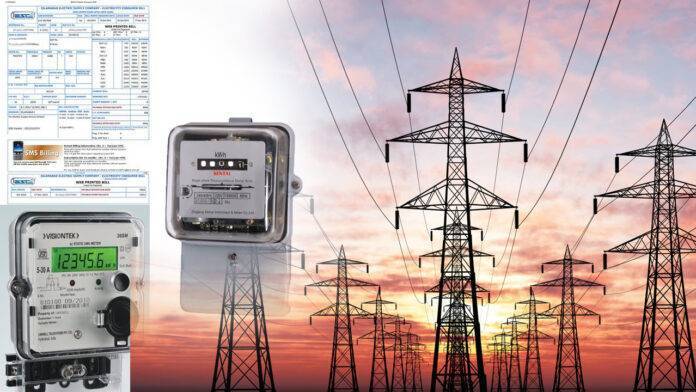
The logic behind smart metering is straightforward and compelling. Traditional electricity metres are passive devices, dependent on manual reading, vulnerable to tampering, and open to the kind of human interference that has historically drained revenue from the system. Smart metres change this equation fundamentally. They allow real-time monitoring of consumption, enable automated billing, and reduce the physical touchpoints through which manipulation has traditionally entered the chain. By removing the human intermediary from routine billing and reading, the technology narrows the space for corruption and error simultaneously. This is not a minor administrative improvement. It strikes at one of the root causes of the sector’s financial distress.
The scale of Pakistan’s electricity losses is staggering. Line losses, both technical and commercial, have consumed resources that should have sustained the grid, funded maintenance, and kept tariffs manageable. Commercial losses, which include theft and non-payment, represent a particularly stubborn problem because they are not merely technical failures. They are social and institutional ones. Electricity theft in Pakistan is not the act of a marginal few. It is a widespread practice embedded in informal economies, enabled by collusion between consumers and field staff, and tacitly tolerated in areas where enforcement carries political costs. Smart metering, by automating detection and billing, can make such theft significantly harder to conceal. That is a genuine advance.
The financial case for the transition has also improved. A reported forty percent reduction in procurement costs for smart metres signals that this technology is no longer the prohibitively expensive option it once was. As global supply chains have matured and competition among manufacturers has grown, the per-unit cost has fallen to levels that make large-scale deployment financially defensible. The phased rollout strategy, beginning with mandatory installation for new connections and extending progressively to commercial and industrial users, reflects a pragmatic sequencing that prioritises the highest-value segments first. These are rational choices. The initiative, on paper, holds genuine promise.
But paper and practice are two different countries in Pakistan, and the distance between them is where good policies go to die. The assumption that smart metres are foolproof deserves honest scrutiny, not because the technology is inherently flawed, but because no technology is immune to the ingenuity of those determined to subvert it. Across the world, smart metering systems in far more regulated environments have been compromised. Hackers have intercepted signals. Technicians have developed bypass techniques. Black markets for metre manipulation have emerged even in countries with robust enforcement infrastructure. Pakistan’s own institutional history leaves little room for complacency. Where there is a financial incentive to cheat a system, and where enforcement is weak or corruptible, the loophole will be found. The digital nature of the metre does not automatically neutralise the analogue nature of human behaviour.
This is not an argument against the initiative. It is an argument for approaching it with clear-eyed realism rather than technological enthusiasm. The installation of smart metres is a necessary condition for reform. It is not a sufficient one. The gains promised by digital metering will only materialise if the complementary institutional architecture is in place. This means investing heavily in cybersecurity and anti-tampering protocols from the outset, not as an afterthought. It means training and monitoring field staff who install and maintain the metres, since a compromised installation defeats the entire purpose. It means building a data management and analytics capability that can identify anomalies in real time and trigger rapid enforcement responses. And it means ensuring that the legal and regulatory consequences for theft and manipulation remain credible deterrents.
The deeper challenge is cultural. Pakistan’s electricity sector does not merely have a technology deficit. It has an accountability deficit. Years of subsidised tariffs, political interference in enforcement, and institutional tolerance for non-payment have created a culture in which cheating the power utility is not widely regarded as a serious civic offence. Smart metering can raise the technical cost of theft. It cannot, by itself, rebuild the civic ethic that meaningful reform ultimately requires. That work must happen through governance, not gadgetry.
None of this diminishes the importance of what is being attempted. Digital transformation of the power sector has been long overdue, and the Power Division deserves credit for moving decisively on an initiative that previous governments repeatedly deferred. If executed with genuine rigour, smart metering can deliver measurable improvements in revenue recovery, reduce the financial haemorrhage in distribution, and create the data infrastructure needed for smarter sector planning. The investment is substantial, and the expectations attached to it are high.
But Pakistan has a long history of ambitious infrastructure projects that underperformed because the hardware arrived without the institutional software to run it. Smart metres must not become the latest entry in that ledger. The technology is ready. The question, as always, is whether the system around it is.