
Masood Khalid Khan
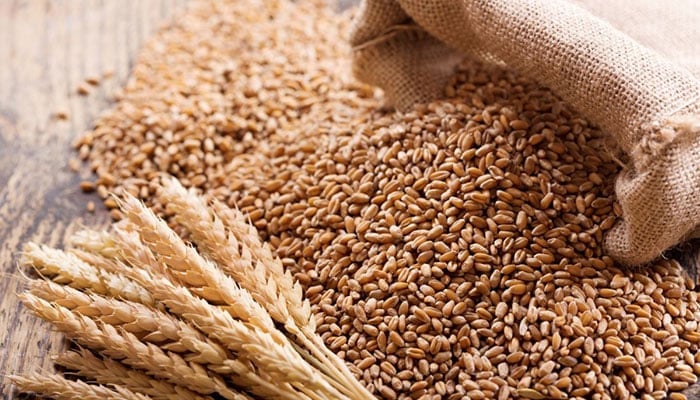
Every year, as the wheat crop ripens across Pakistan’s fields, the same quiet dread returns to the men who grew it. Smallholder farmers, who make up the overwhelming majority of wheat producers in this country, begin asking the same question they asked the year before: will they recover what they spent? The answer, year after year, has been uncertain at best and devastating at worst. This year, that uncertainty has deepened. And the reasons reveal not just a seasonal crisis, but a structural failure that has been ignored for far too long.
The most immediate grievance this season is one that should embarrass any serious government: a shortage of threshers at the precise moment farmers need them most. The PTI Kissan Wing has raised this alarm, and it deserves to be heard. Manufacturing disruptions caused by power outages and restricted business hours during peak harvesting season have reduced the availability of threshing machinery across farming communities. To the urban eye, this may seem like a minor logistical inconvenience. To a farmer watching his ripened wheat stand in the field, it is a potential catastrophe. Delayed threshing means grain shattering. It means exposure to unseasonal rains. It means quality degradation that cannot be reversed and losses that cannot be recovered. These are not abstract risks. They are the difference between a difficult year and a ruinous one.
That this shortage was allowed to develop at all speaks to a policy establishment that does not think ahead. The harvesting season follows the same calendar every single year. The equipment needs are entirely predictable. Yet here we are, again, managing a crisis that could have been prevented with basic planning. The failure is not one of capacity. It is one of will and attention.
The pricing question compounds the misery. The government’s announcement of an official support price of Rs3,500 per maund came too late to matter for many farmers. By the time the figure was declared, a significant number of smallholders in south Punjab had already sold their produce to middlemen at distress prices, driven by immediate cash needs and a complete lack of confidence that the official price would translate into actual procurement. This is a pattern that repeats itself so reliably it can no longer be called an oversight. It is a design feature of a system that consistently favours intermediaries over producers.
Input costs tell the rest of the story. Fertiliser prices have risen sharply. Diesel, which powers every piece of farm machinery and every trip to market, has become increasingly expensive, partly as a consequence of the energy price pressures rippling outward from the Middle East crisis. When a farmer calculates what he spent to grow his crop and compares it to what he is being offered, the numbers do not add up. Demands for a higher support price are not greed. They are arithmetic.
The weather has delivered its own punishment this season. Rain and hailstorms have swept through parts of south and central Punjab, damaging standing crops and raising serious concerns about total output. This is no longer a rare event to be absorbed as bad luck. Climate volatility is now a permanent feature of Pakistan’s agricultural reality. Yet the official response remains stubbornly reactive. There is no early warning system that translates into farmer support. There is no climate adaptation framework that reaches the village level. There is only damage assessment after the fact, followed by promises that dissolve before the next season.
The Punjab government has identified eleven private companies to procure strategic wheat reserves of between three and three and a half million tonnes at the official support price. That announcement exists. Whether it will be implemented with the transparency and speed that struggling farmers actually need remains, as always, to be seen. Procurement announcements in Pakistan have a long history of existing primarily on paper.
Agriculture is described, routinely and correctly, as the backbone of Pakistan’s economy. It employs tens of millions of people. It anchors food security for a population already facing serious and growing hunger. It is the foundation upon which rural livelihoods, provincial revenues, and national stability are built. Yet it is governed with a level of ad hocism that would be considered scandalous in any other sector of comparable strategic importance.
The wheat farmer does not ask for charity. He asks for functional machinery at harvest time, a fair price announced before he is forced to sell, and a procurement system that actually reaches him. These are not extraordinary demands. They are the minimum obligations of a state toward the people who feed it.
Pakistan cannot afford to keep failing its farmers. The economy is already under pressure. Food insecurity is already rising. The margin for continued neglect has run out. The harvest season will not wait for the government to find its sense of urgency. It never does.