
Zafar Iqbal
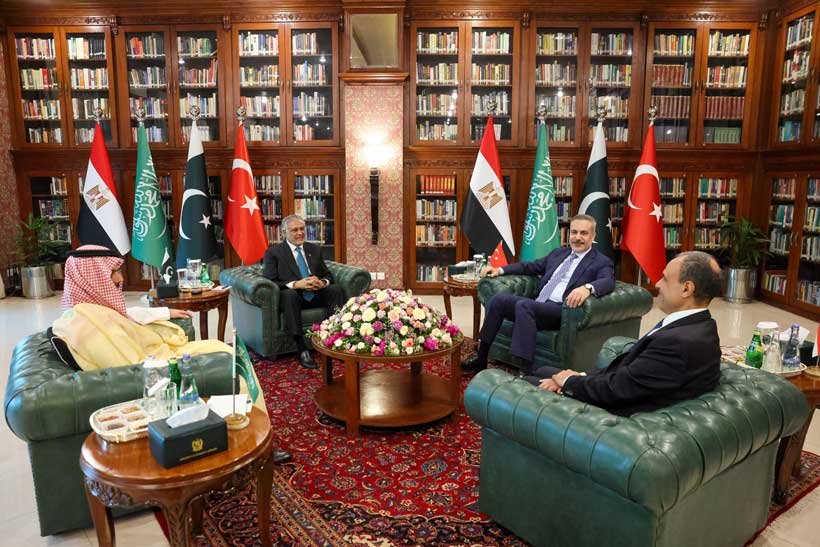
Pakistan’s recent financial reassurance from Saudi Arabia has arrived at a moment of acute economic sensitivity, offering short-term stability but also reviving long-standing questions about the structural fragility of the country’s external sector. The Kingdom has not only committed an additional $3 billion in deposits but has also extended its existing $5 billion facility for a further three years, now secured until 2028. On paper, this represents a significant cushion for an economy repeatedly exposed to balance-of-payments pressures and external financing constraints.
The timing of this support is critical. Pakistan’s foreign exchange reserves remain under strain, squeezed by overlapping obligations and uncertain global conditions. The United Arab Emirates’ decision not to roll over a $3.5 billion facility has removed a key layer of liquidity support. At the same time, the repayment of a $1.4 billion Eurobond has further tightened the external account. These outflows are not occurring in isolation; they are unfolding alongside heightened volatility in global oil markets, driven by geopolitical tensions in the Middle East. For a country heavily reliant on energy imports, such volatility quickly translates into fiscal pressure, import bill expansion, and currency instability.
In this context, Saudi Arabia’s financial intervention plays an immediate stabilising role. It helps Pakistan meet the minimum reserve thresholds required under its ongoing IMF programme, reduces near-term concerns about exchange rate volatility, and sends a reassuring signal to international investors and rating agencies. In economies like Pakistan’s, where sentiment often moves markets as much as fundamentals, such signals are not trivial. They help anchor expectations, discourage speculative pressure on the rupee, and provide policymakers with temporary breathing space.
From the perspective of the finance ministry, describing this support as “timely and critical” is therefore justified. Without these inflows and rollovers, Pakistan would likely face sharper external pressure, potentially forcing more abrupt adjustments in currency valuation, imports, or monetary policy. The immediate value of such bilateral support lies in its ability to prevent disorderly adjustment in a fragile macroeconomic environment.
However, a more critical examination reveals that this pattern of financial assistance is not new, nor is it structurally transformative. Instead, it reflects a recurring cycle in Pakistan’s economic management—one in which external financing gaps are repeatedly bridged through bilateral deposits, rollovers, and short-term inflows. While these arrangements provide stability, they also highlight the absence of durable external sector strength.
At the heart of this issue lies Pakistan’s persistent inability to generate sufficient export-led foreign exchange earnings. The economy remains heavily reliant on imports, particularly in energy and industrial inputs, while export growth has remained relatively stagnant in comparison to regional peers. This structural imbalance means that even during periods of economic stability, Pakistan continues to face chronic external financing needs.
In such circumstances, external support from friendly countries becomes essential not only as a cushion but almost as a recurring requirement. Yet this creates a paradox. Each round of assistance averts immediate crisis but simultaneously reinforces long-term dependency. Rather than transforming the structure of reserves or improving self-sufficiency, it often merely postpones adjustment pressures.
This dependency also has implications for economic policymaking. When external inflows are expected to arrive periodically, there is a risk that urgency around structural reforms diminishes. Critical areas such as tax base expansion, export diversification, energy efficiency, and industrial productivity reforms tend to progress slowly, as short-term stability reduces immediate pressure for difficult adjustments. Over time, this creates a cycle where external financing substitutes for internal reform rather than complementing it.
Moreover, reliance on geopolitical goodwill introduces an additional layer of vulnerability. Financial inflows linked to diplomatic relationships are inherently uncertain, influenced by regional dynamics, strategic considerations, and shifting global alliances. This makes Pakistan’s external position not only economically fragile but also geopolitically contingent. Stability, in such a framework, becomes conditional rather than structural.
There is also a psychological dimension to consider. Repeated episodes of external bailouts or deposits can shape market expectations in ways that reduce incentives for long-term fiscal discipline. While markets may temporarily stabilise following announcements of financial support, underlying risks remain unless accompanied by deep economic restructuring. In the absence of such reforms, each new cycle begins from a position of vulnerability.
None of this diminishes the immediate importance of Saudi Arabia’s support. On the contrary, in the current environment, it is essential for maintaining short-term macroeconomic stability and meeting international obligations. It provides Pakistan with valuable time—time that must be used wisely.
The real policy challenge lies in converting this temporary relief into long-term resilience. This requires moving beyond a reactive economic model toward a proactive strategy focused on export competitiveness, domestic resource mobilisation, and energy transition. Without these shifts, external support will continue to function as a stabilising bridge between recurring crises rather than a pathway out of them.
In conclusion, Saudi Arabia’s latest financial commitment offers Pakistan crucial short-term relief at a delicate economic juncture. Yet it also underscores a deeper reality: stability achieved through repeated external rollovers is inherently fragile. For Pakistan, the central question is not how to secure the next inflow, but how to ensure that future inflows are no longer a structural necessity.