
Dr Bilawal Kamran
There are economic problems that announce themselves loudly, through currency crises, balance of payments emergencies, and IMF negotiations conducted in full public view. And then there are the quieter collapses, the ones that build slowly beneath the surface until the damage is so deep that reversing it requires far more than a budget line or a policy note. Pakistan’s domestic savings crisis belongs firmly in the second category. It has been decades in the making, it has been consistently ignored by successive governments, and it now represents one of the most serious structural threats to the country’s long-term economic health.
The numbers tell a story that should have provoked urgent action years ago. Pakistan’s gross domestic savings rate has fallen from 17.4 percent of GDP in 1992 to just 6.4 percent in 2024, a three-decade collapse that the Pakistan Institute of Development Economics has recently brought back into focus through a detailed policy note. To translate that into plain terms: Pakistanis today save just six rupees out of every hundred they earn. In a country that has spent much of the past thirty years lurching from one economic crisis to the next, this is not a minor statistical footnote. It is a fundamental weakness that makes every other problem harder to solve and every recovery more fragile than it needs to be.
Domestic savings are not simply a measure of household prudence. They are the foundation on which sustainable economic growth is built. When households and businesses save, those resources become available for investment in infrastructure, industry, technology, and innovation. They create a domestic pool of capital that can finance growth without relying on external borrowing. They provide a buffer against global shocks, against currency volatility, against the sudden tightening of international liquidity that has repeatedly caught Pakistan exposed and vulnerable. When that foundation erodes, economies are left dependent on the availability of foreign financing, which arrives with conditions, fluctuates with global sentiment, and disappears precisely when it is needed most. Pakistan knows this pattern intimately. It has lived it repeatedly. Yet the savings rate has continued to fall.
Understanding why requires looking honestly at the circumstances in which ordinary Pakistanis make financial decisions. According to PIDE, approximately 94 percent of household income in Pakistan is consumed by essentials: food, housing, energy, transport, and education. What remains after these necessities is a sliver, and that sliver is further eaten away by inflation that has consistently outrun the returns available on bank deposits. A household watching its purchasing power erode in real terms while a savings account offers negative returns after inflation is not being irrational when it turns to gold, real estate, cash holdings, or foreign currency. It is responding logically to a system that has made formal saving unattractive and informal stores of value comparatively more reliable.
The tax regime compounds the problem considerably. Withholding tax rates on interest income from bank deposits are high for those who are registered as tax filers and significantly higher still for non-filers. The practical effect is to compress the net return available within the formal financial system to a point where participation simply does not make sense for a large portion of the population. People do not avoid formal savings instruments out of ignorance or cultural preference. They avoid them because the incentive structure has been designed, whether intentionally or through accumulated neglect, to push them elsewhere. Fixing the savings crisis therefore requires fixing the incentive structure, and that means confronting the tax treatment of financial savings directly and seriously.
PIDE’s proposed National Savings Mobilisation Package addresses this challenge from several directions simultaneously, and the proposals deserve more than polite acknowledgment from policymakers. The package calls for widening access to formal saving and investment channels, including Sukuk, Shariah-compliant instruments, voluntary pension schemes, Takaful products, regulated gold funds, and digitised National Savings products. This is important because a significant portion of Pakistan’s population has religious reservations about conventional interest-bearing instruments, and the absence of accessible, credible Islamic finance alternatives has pushed savings further toward informal channels. Bringing these instruments into the mainstream, making them genuinely accessible rather than nominally available, would open the formal savings system to a much larger share of the population.
The proposal to simplify know-your-customer requirements for small-balance savers addresses another real barrier. The documentation burden required to open formal accounts or access savings products is disproportionately heavy for low-income households, informal sector workers, and people in rural areas who may lack the paperwork that urban, salaried individuals take for granted. Reducing this friction is not a minor administrative detail. It is a prerequisite for inclusion, and inclusion is a prerequisite for mobilising the savings that currently sit outside the formal system entirely.
Targeted tax incentives for long-term savings, stronger protections for small depositors, and dedicated measures to bring women, pensioners, and informal sector workers into the formal savings ecosystem round out the package. Each of these reflects a recognition that the savings crisis is not uniform across the population. Different groups face different barriers and respond to different incentives. A policy response that treats the entire problem as a single uniform challenge will fail. One that is differentiated, targeted, and built around the actual behaviour of actual savers has a genuine chance of producing results.
The proposed annual savings mobilisation dashboard, designed to track progress and ensure accountability, is also worth taking seriously. Pakistan has no shortage of reform announcements that disappear between one budget cycle and the next. A public tracking mechanism creates at least the possibility of holding government to account for whether the savings rate is actually moving, rather than simply whether the right words have been said.
None of this will matter, however, unless policymakers genuinely internalise what is at stake. Pakistan cannot keep growing through borrowed money and external dependence while the domestic savings base continues to shrink. The two trajectories are incompatible. One leads toward resilience, self-sustaining growth, and reduced vulnerability to external shocks. The other leads toward the cycle that Pakistan has already been trapped in for thirty years.
The diagnosis is clear. The solutions are available. What remains is the political will to act before the window for meaningful reform closes entirely.
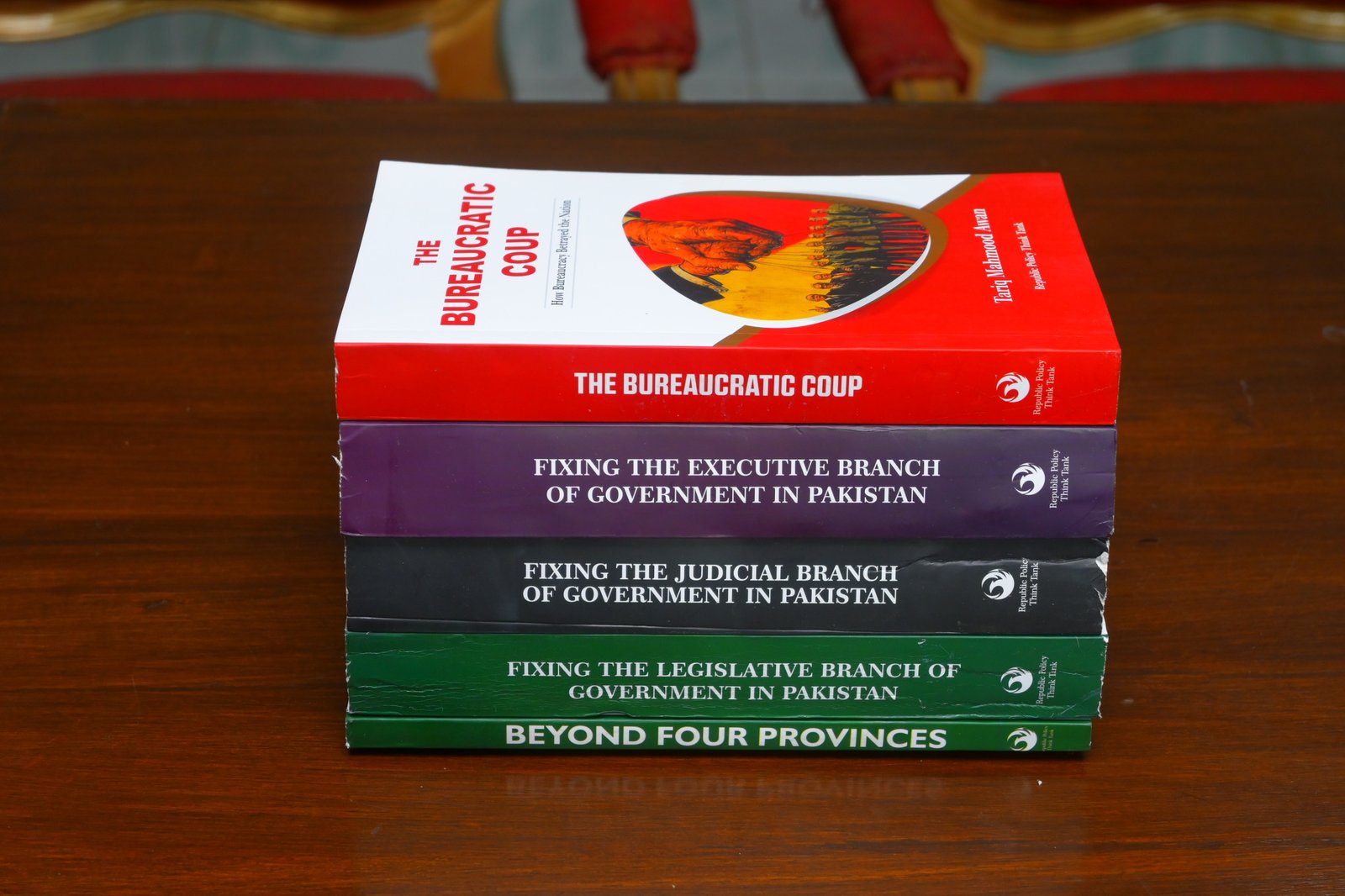
The best-selling books of Republic Policy Think Tank, including the landmark book The Bureaucratic Coup, are available at Vanguard Books, Liberty Books, Readings, Kitab Sarai, Sang-e-Meel, Saeed Book Stores, and others across Pakistan. Contact for home delivery: 0300 9552542.