Dr Bilawal Kamran
Numbers rarely lie, even when governments wish they would. The Pakistan Economic Survey 2025-26 has laid bare a public health landscape that should alarm every citizen, policymaker, and parliamentarian in the country. Officials will point, as they always do, to incremental gains in this indicator or that. But step back and place these figures beside the South Asian average, and a far less flattering picture emerges. Pakistan is not merely lagging behind its neighbours. It is falling further behind, year after year, despite repeated warnings from health experts, economists, and development practitioners who have spent decades cautioning against the price of chronic under-investment in human health.
Consider life expectancy first, because it tells the whole story in a single number. A Pakistani born today can expect to live 67.8 years. The South Asian average stands at 72.6 years. That gap of nearly five years is not an abstraction. It represents lost decades, multiplied across more than two hundred million people. Five years of life, denied not by fate but by policy choices, by underfunded clinics, by hospitals that lack basic equipment, by a system that treats healthcare as an afterthought rather than a foundation.
Maternal mortality tells an even darker story. For every hundred thousand live births in Pakistan, 155 mothers die. The regional average is 120. Strip away the statistical language, and what remains is this: Pakistani women are dying in childbirth at rates their counterparts elsewhere in South Asia have already left behind. Infant mortality compounds the tragedy further, running at more than double the regional average. These are not isolated failures. They point to a maternal and child healthcare system that is, in large parts of the country, simply not functioning as it should. Rural clinics without trained birth attendants. Emergency obstetric care that exists on paper but not in practice. Referral systems that break down precisely when minutes matter most.
Then there is the question of nutrition, perhaps the cruellest indicator of all because its damage compounds silently across an entire generation. Millions of Pakistani children remain stunted, their physical and cognitive development undermined before they have had a real chance at life. Stunting is not simply a health statistic. It is a determinant of future earning potential, of educational attainment, of the kind of workforce Pakistan will have in twenty years’ time. A stunted child today becomes, all too often, an undernourished worker tomorrow, less able to compete, less able to contribute, less able to break the cycle of poverty that produced the stunting in the first place.
Layer onto this Pakistan’s comparatively high birth rate, and the scale of the challenge becomes unmistakable. Rapid population growth does not occur in a vacuum. It places relentless pressure on health systems, schools, and social welfare structures that are already operating well beyond their capacity. Every additional citizen born into an overstretched system makes the next citizen’s access to quality care marginally harder to secure. Without serious investment in family planning services and reproductive health, Pakistan is not simply standing still relative to its neighbours. It is actively losing ground.
Here is where the conversation inevitably turns to money, and here is where Pakistan’s economic managers reach for their favourite explanation: fiscal constraints. Resources are limited, they say. Competing priorities exist. Difficult choices must be made. All of this is true, as far as it goes. But it does not go far enough, because the real issue facing Pakistan is not the absence of resources. It is the absence of priority.
Look at countries that have transformed their health outcomes over a generation — Sri Lanka, Bangladesh, even Vietnam outside the region — and a common thread emerges. None of them treated healthcare as a discretionary expense to be trimmed whenever the budget tightened. Each treated it as an investment, on par with infrastructure or industrial policy, deserving of sustained and protected funding regardless of which government held office. The returns on that investment are not abstract either. A healthier population is a more productive one. Reduced disease burden lowers household poverty, because families are not bled dry by catastrophic medical expenses or lost working days. And a population that does not require expensive emergency interventions for preventable conditions eases long-term pressure on public finances rather than adding to it.
This is the argument Pakistan’s policymakers must internalize, and quickly. Healthcare spending is not a drain on the exchequer. It is one of the most reliable multipliers available to any government serious about long-term growth. Every rupee spent on maternal health, on childhood nutrition, on primary care infrastructure, returns itself many times over in the form of a workforce capable of actually driving the economy forward.
What makes Pakistan’s current trajectory especially troubling is that these figures are not abstract economic indicators confined to a survey document. They are the lived reality of millions of citizens — mothers who do not survive childbirth, children whose growth is permanently stunted, families pushed deeper into poverty by medical bills they cannot afford. Behind every percentage point lies a human story, and collectively those stories form an indictment of decades of policy neglect.
The path forward demands that health, alongside education, move from the margins of national planning to its very centre. It demands public investment substantially greater than what currently exists, sustained across political cycles rather than subject to the whims of whichever party holds power. It demands accountability for how health budgets are spent, not merely how large they appear on paper. Pakistan cannot continue treating its health sector as an expense to be minimized. The country must start treating it as the foundation on which every other development goal — economic growth, poverty reduction, human capital formation — ultimately depends. The alternative, as the Economic Survey itself makes clear, is to keep paying an ever-steeper economic and social price for a neglect that has already gone on far too long.
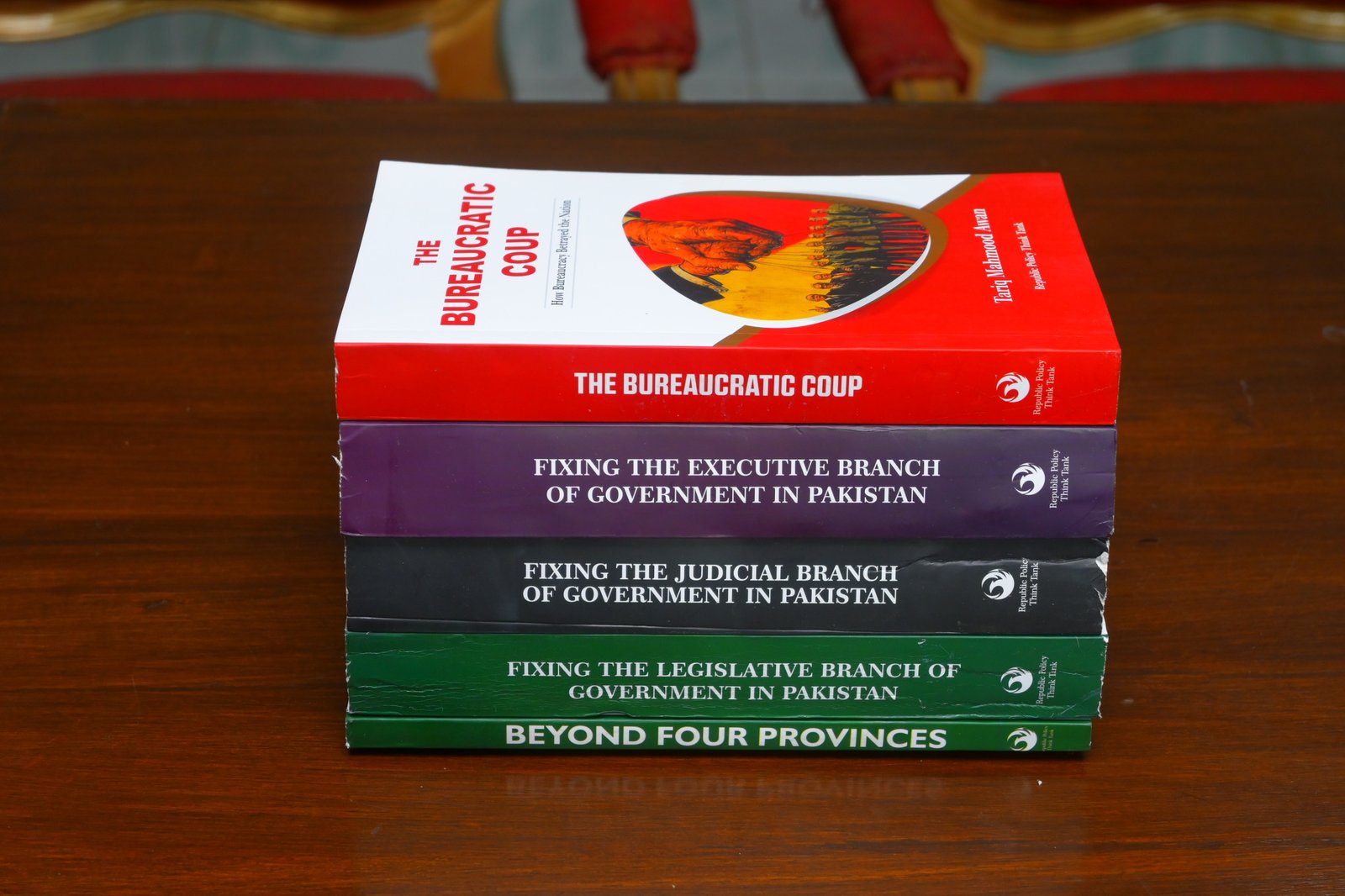
The best-selling books of Republic Policy Think Tank, including the landmark book The Bureaucratic Coup, are available at Vanguard Books, Liberty Books, Readings, Kitab Sarai, Sang-e-Meel, Saeed Book Stores, and others across Pakistan. Contact for home delivery: 0300 9552542.